

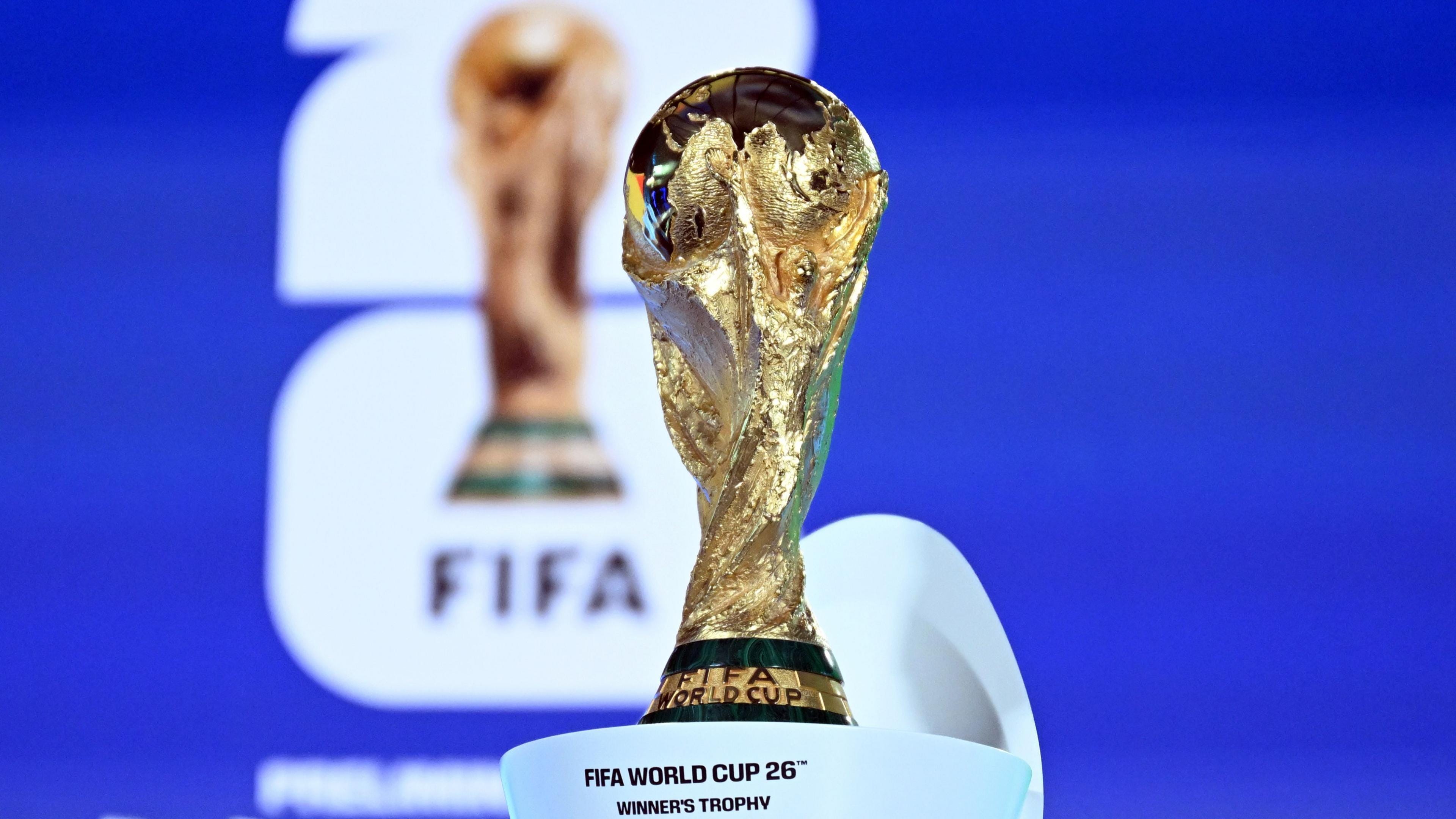
I used to love the World Cup with the sort of daft, greedy devotion that makes no sense until you have lived it.
Spain 1982 sits somewhere in the fog of childhood. Mexico 1986 was my first proper one. I was nine, Liverpool had just won the double for the first time, English clubs were banned from Europe after Heysel, and the World Cup felt like a door being kicked open.
Here were players you had heard about, read about, maybe glimpsed in short bursts on television, walking into your living room as if smuggled in from another planet. Maradona owned it, of course. It was his tournament in the way the moon owns the night sky. He made the game look lawless and holy at once.
Yet it was not only him. Platini, Zico, Michael Laudrup, Enzo Francescoli, names that sounded like spells. I was allowed to stay up for England and Scotland games, which felt like a moral victory in itself. Most of the rest belonged to highlights, memory and imagination.
By Italia 1990, I was hooked. Boarding school made proper viewing awkward. Exams, activities, all those inconvenient interruptions to a global football festival. Still, the tournament seeped into everything. Gazza’s tears. Toto Schillaci’s eyes. Cameroon kicking down the door. Nessun Dorma turning football into opera for people who had never asked for opera.
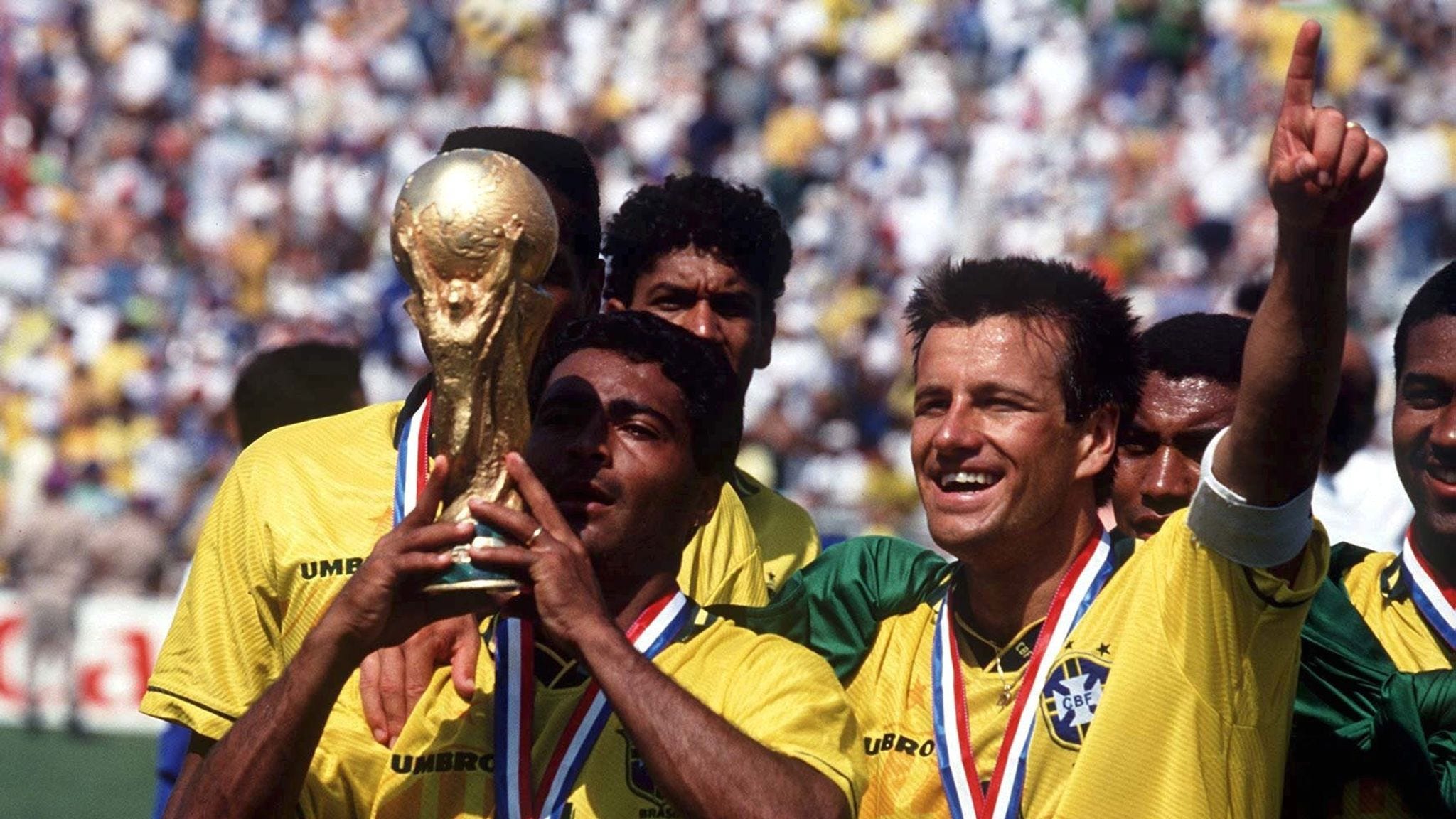
Then came USA 1994, and for me, peak World Cup fandom.
No England. No Scotland. Oddly, that helped. I watched as a neutral, liberated from dread. I was at college, rich in time if not much else, fuelled by cider, crisps and cheese sandwiches. If two games clashed, two televisions were pressed into service.
That tournament had its own hard, strange glamour. Ireland beating Italy in New York still feels like a fever dream. Ray Houghton’s goal, the Giants Stadium heat, Jack Charlton pacing with that haunted majesty of his. Maradona’s goal against Greece was a final burst of lightning before the lights went out. His celebration into the camera looked thrilling then and tragic almost immediately after.
Bergkamp was silk. Baggio was grace carrying exhaustion on his back. Romario played as if the penalty box were a private room. Stoichkov snarled and scored. Hagi bent games to his will. Brazil vs Netherlands was magnificent. Bulgaria shocking Germany felt like the drawbridge being pulled up on an old order.
Then Baggio missed in Pasadena. Football has rarely looked so lonely.
Greed has priced out tournament romance
Something went after that.
Part of it was age. Part of it was access. The mystique faded because the world became easier to watch. The best players were no longer distant figures from grainy broadcasts and magazine profiles. They were in Serie A, La Liga, the Champions League and, increasingly, the Premier League. The unknown became known. The rare became routine.
I still followed World Cups. I still cared in patches. Often I only properly arrived around the quarter finals, when the tournament had shed some excess and found its pulse. That is not noble. It is just true.
Even so, I have never gone into a World Cup with less appetite than this one.
World Cup 2026 should feel enormous in the right way. Three host nations. Forty eight teams. One hundred and four matches. Mexico City staging the opener at the Azteca, a ground steeped in football’s deepest ghosts. The United States, Mexico and Canada offering scale, money, stadiums, noise and reach.
Instead, it already feels swollen, expensive and faintly joyless.
The expansion is sold as inclusion. There is some truth in that. More nations get their moment. That matters. No serious football person should sneer at countries beyond the old elite getting a place on the stage.
The problem is the smell around it. Everything feels stretched to maximise inventory. More games, more broadcast slots, more hospitality, more markets, more sponsors, more chances to turn devotion into yield. There is a difference between growing football and carving it into saleable units.
Ticket prices have become one of the tournament’s defining stories before a ball has moved. Dynamic pricing at a World Cup feels like a moral defeat dressed as commercial innovation. Resale fees, transport spikes, hotel costs and late policy wrangles over water bottles have helped create a sense that fans are being treated as walking payment terminals.
Football has always taken money from its public. This feels more brazen. Less grateful. More contemptuous.
That tone runs through the fan reaction as well. Strip away the fury and profanity and a simple grief remains. People who grew up loving this tournament feel it has been removed from them. They speak of boycotts, indifference, disgust, empty seats, corruption and greed. Some will watch anyway. Some will not. Many will hover between principle and habit, which is where football usually traps us.
Politics has walked straight onto pitch
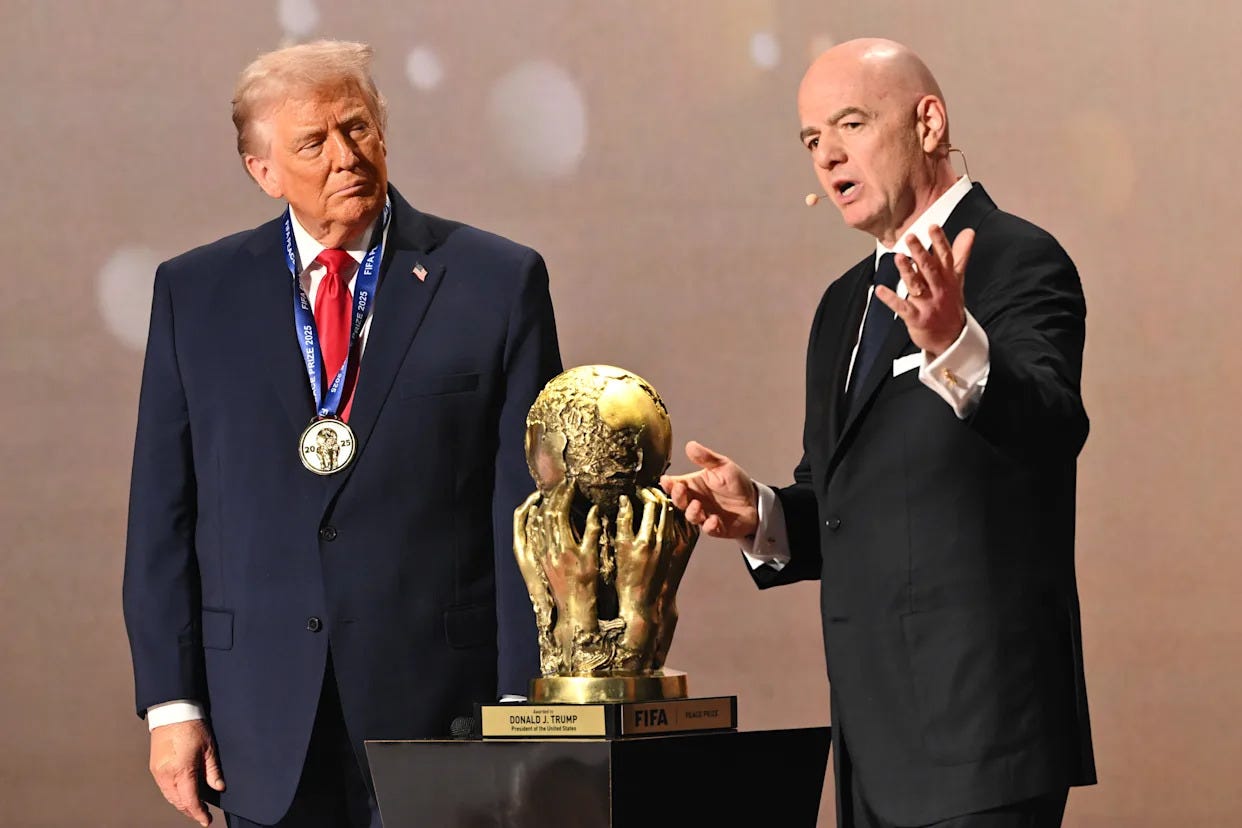
Gianni Infantino is my main bugbear in all of this.
He speaks in the language of uplift while presiding over a machine that looks more and more like a travelling revenue extraction project. The words are always grand. Humanity. Unity. Inclusion. History. The delivery keeps returning to money, access, power and spectacle.
Add Donald Trump to the picture and the stomach tightens.
A World Cup in the United States already carried political weight. With Trump central to the mood around it, that weight becomes heavier. He does not feel like a host of football. He feels like a man who sees the tournament as a stage, with the trophy, the cameras and the presidents of federations all arranged as props.
Football should not pretend it can live outside politics. It never has. Argentina 1978, Russia 2018, Qatar 2022, all carried their own shadows. Yet 2026 feels unusually blunt. Visa restrictions, travel bans, immigration enforcement, the denial of entry to officials, the complications around Iran, the presence of security agencies, all of it presses against the tournament before it has even started.
A World Cup calling itself welcoming cannot shrug when parts of the world struggle to attend. A tournament claiming to represent everybody cannot look relaxed when a referee is reportedly unable to enter because of where he is from. A governing body that talks about inclusion cannot sound convincing while supporters from some competing nations face barriers that others do not.
The World Cup used to feel like one of the few occasions when football could pretend to gather the planet into a single argument. Everyone came with their flags, songs, grudges, hopes and bad predictions. It was chaotic and imperfect, yet it felt shared.
Now the world arrives with lawyers, visa rules, security briefings, border politics, price algorithms and executive boxes.
Climate concerns add another layer of discomfort. A tournament spread across a continent, with teams, fans, media and officials flying vast distances, asks serious questions of a governing body that claims environmental responsibility. Heat will be a football issue as well as a public health one. Players cannot simply run through extreme conditions because the calendar demands it.
None of this means the football will definitely be poor. The ball has a habit of rescuing the people who mishandle it. A great goal can make you forget the boardroom for ten seconds. A fearless underdog can bring back the old thrill. A penalty shootout can still turn the room airless.
That is why FIFA gets away with so much. The game keeps bailing out the institution.
Beautiful game has never looked uglier
Maybe I am just an old grouch now.
That possibility has to be entertained. Every generation believes its own football memories were purer. They rarely were. Spain 1982, Mexico 1986, Italia 1990 and USA 1994 all had politics, money, compromise and nonsense around them. Football innocence is usually something we invent later.
Yet nostalgia does not explain everything.
There has been a shift in scale and tone. The World Cup no longer feels like a tournament first and an industry second. It feels like an industry that permits a tournament to break out in scheduled intervals. The language of growth has eaten the language of joy.
Forty-eight teams may produce stories worth telling. It may also produce long stretches that pass UK viewers by entirely, hidden behind awkward kick-off times and diluted jeopardy. I can already see myself checking scores in the morning, half interested, mildly guilty, waiting for the serious business to begin.
That is a sad admission from someone who once ran two televisions to avoid missing group games between countries I had no connection to.
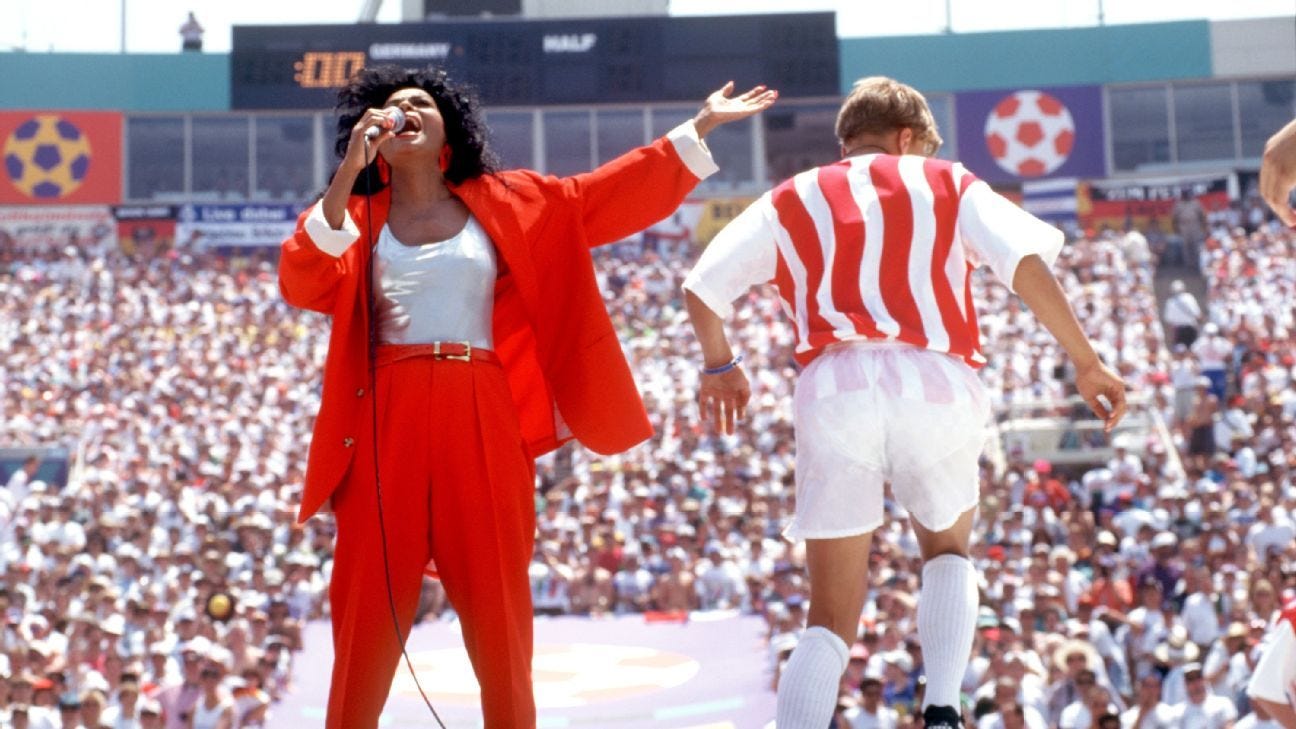
USA 1994 gave me a World Cup of abundance without making the game feel cheap. It had heat, colour, chaos and stars. It had Diana Ross missing a penalty in the opening ceremony, Maradona burning bright then disappearing, Hagi painting from distance, Romario prowling, Baggio dragging Italy to the final and then standing alone under the Californian sky.
World Cup 2026 has abundance of a different sort. More matches. More nations. More money. More politics. More noise. More reasons to look away.
The old thrill may still flicker. Some player unknown to most of us will have three brilliant weeks. Some giant will fall. Some match will remind us why we fell for this daft game in the first place. Football remains capable of ambushing cynicism. That is its best trick.
Still, I cannot shake the feeling that the tournament has arrived carrying too much baggage and too little charm.
The World Cup once sold wonder. Now it sells access packages.
It once made the game feel bigger. Now it often makes the people running it look smaller.
I used to count down to this tournament. This time, with two days to go, I feel more weary than excited. The beautiful game has never felt so ugly.