

Michael Carrick had spent the week trying to put out one fire. By four o’clock on Saturday, he had an entirely new one to deal with.
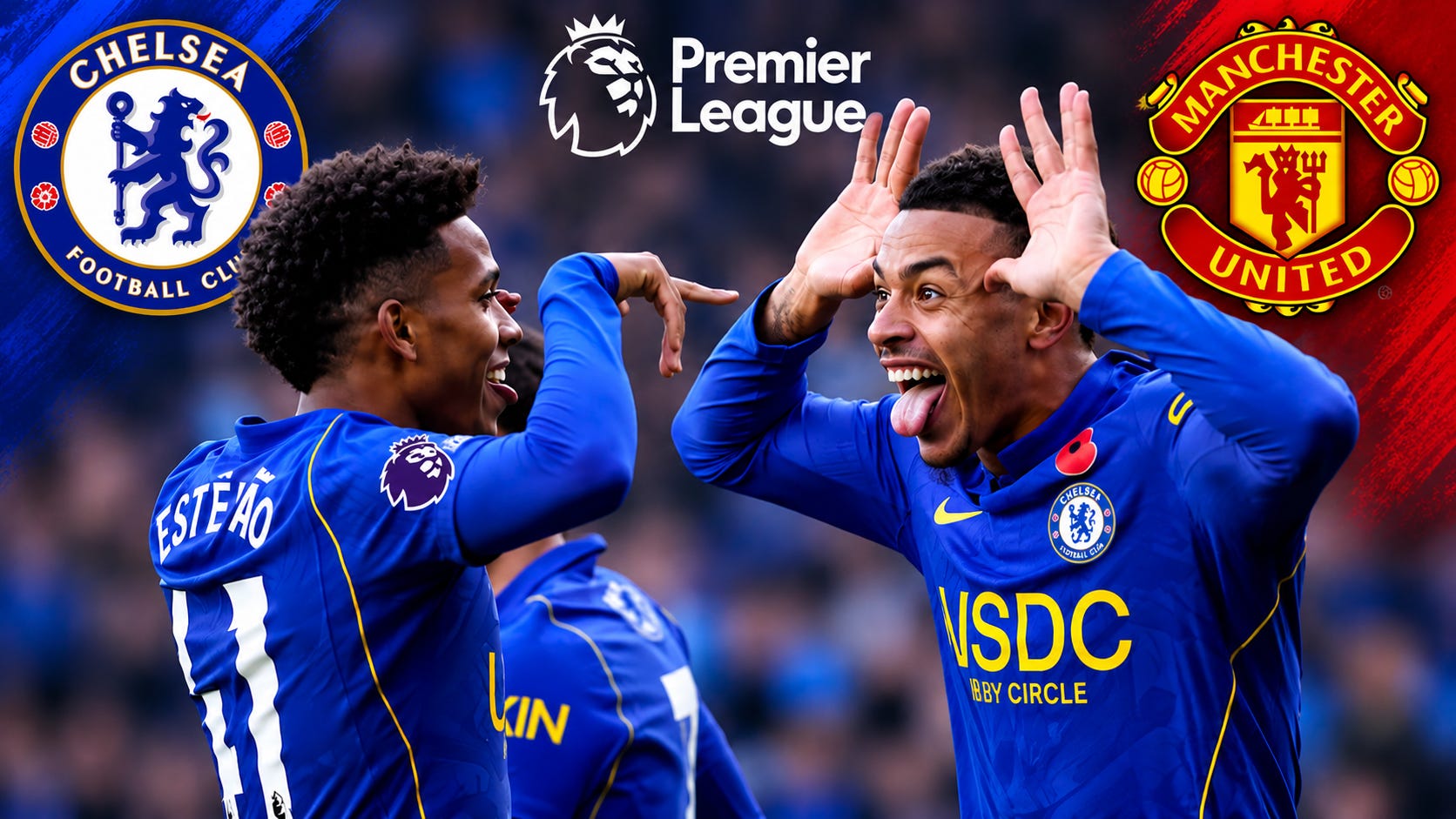
Manchester United lost 2-0 at Chelsea, reduced to ten men just after the hour mark, and left Stamford Bridge with their winless run in all competitions stretched to nine games. It was not supposed to go this way. Carrick had used the international break and the days since to repair his relationship with Bruno Fernandes, who started and was restored to the captaincy after the pair cleared the air following the midfielder’s public criticism of the coaching staff. The hope inside the club was that Saturday would mark the start of a recovery. Instead, it produced one of the more chastening afternoons of Carrick’s time in the job.
Morgan Rogers put Chelsea ahead five minutes into the second half, running onto a loose ball won by Romeo Lavia and calmly chipping Senne Lammens from close range. United had actually started that half with some promise, and had been unlucky not to lead before it, Matheus Cunha’s close range header ruled out by the finest of offside margins. The disallowed goal mattered. Had it stood, this is a very different afternoon to write about.
A game that slipped away after half time
The turning point came just after the hour. Lisandro Martinez, already on a yellow card, brought down a Chelsea attacker inside the box and was shown a second caution, meaning an automatic dismissal and a penalty. Cole Palmer, back in the side after a one match suspension, sent the penalty low into the bottom corner. Lammens got a hand to it but could not keep it out. Chelsea had their cushion, and a Manchester United side already missing Luke Shaw, Patrick Dorgu, Kobbie Mainoo and Benjamin Sesko to injury now had to see out more than half an hour with ten men against a Chelsea team full of attacking intent.
It could have been considerably worse. Estevao had two further goals ruled out during the second half, and Lammens produced a string of saves to keep the deficit at two rather than three or four. That United restricted the damage to a losing margin of 2-0, given the circumstances, will offer Carrick a thin sliver of credit further down the line. It will not feel like much consolation today.
What made the result sting more than most recent defeats was the context surrounding it. Reports in the days before kick off suggested Manchester United’s co owner, Sir Jim Ratcliffe, was planning to travel to England specifically to watch this fixture in person, having not yet seen his club win at Stamford Bridge since taking his stake in the club. The suggestion from those close to the situation was that another defeat in front of him would make Carrick’s position very difficult to defend. Whether or not that account proves accurate, the mood among supporters at full time told its own story. Home fans sang for Carrick’s sacking, more in mischief than genuine concern for a rival’s wellbeing. United’s own travelling support responded by singing their backing for their head coach, a reminder that plenty inside Old Trafford still believe the problems run deeper than one man in a tracksuit.
A fragile truce exposed again
The timing could hardly have been crueller. Just days earlier, this publication covered the clear the air meeting between Carrick and Fernandes that followed the midfielder’s criticism of the coaching staff after the defeat at Como, and his subsequent benching for the home loss to Bournemouth. That conversation appeared to have worked. Fernandes returned to the side and the armband for this trip to Chelsea, and the hope was that a more settled dressing room might translate into a more settled performance on the pitch. For a half, it did. United competed, created the better first half chance of the game, and looked capable of taking something from a difficult fixture. Martinez’s dismissal undid that in a matter of seconds, and with it went any sense that one good week of man management had solved a problem that has been building since the summer.
That is the uncomfortable truth facing Carrick now. The dressing room issues might genuinely be calmer than they were a fortnight ago. The results have not followed. Manchester United have taken just seven points from their first nine Premier League matches of the season, a return that leaves them deep in a congested relegation picture rather than anywhere near the top half their squad was assembled to compete in.
What the hierarchy do next
Nobody at Old Trafford is pretending this is a comfortable position. United’s recruitment in midfield over the summer was supposed to bring balance and control. Instead, the team has looked short of both for long stretches of matches, and a manager already under pressure now finds himself managing a crisis he did not create but will be judged on regardless. The reported cost of removing him, thought to run into several million pounds, has previously been cited as a reason for patience from a hierarchy wary of further upheaval after a string of managerial changes in recent years. Whether that patience survives this particular defeat, in front of the ownership, is a question only the next few days will answer.
There is at least a short window before the next reckoning. United travel to face Roma in the Champions League on Tuesday, a fixture that offers a different kind of test and, perhaps, a different kind of opportunity. A positive result there would not erase Saturday’s afternoon, but it would buy time, and time is clearly the one thing in shortest supply at Old Trafford right now. A repeat performance would make the conversations happening behind the scenes very difficult to put off any longer.
For a club with United’s history and resources, afternoons like this one are becoming uncomfortably familiar. The names and the specifics change. The pattern, for now, does not.
If you enjoyed this, consider subscribing to It Was Always… Football for more on the stories shaping the Premier League and beyond.