


VAR and the slow erosion of football’s soul
There was something quietly liberating about last weekend’s FA Cup ties. No long pauses, no crowd left staring at a big screen in a kind of collective dread, no goals celebrated with fingers crossed. For a few hours, football breathed again. Of course, we all know it was only a temporary release. VAR is here to stay. The genie escaped years ago and it will not be coaxed back into the bottle.
That does not mean acceptance should be confused with surrender.
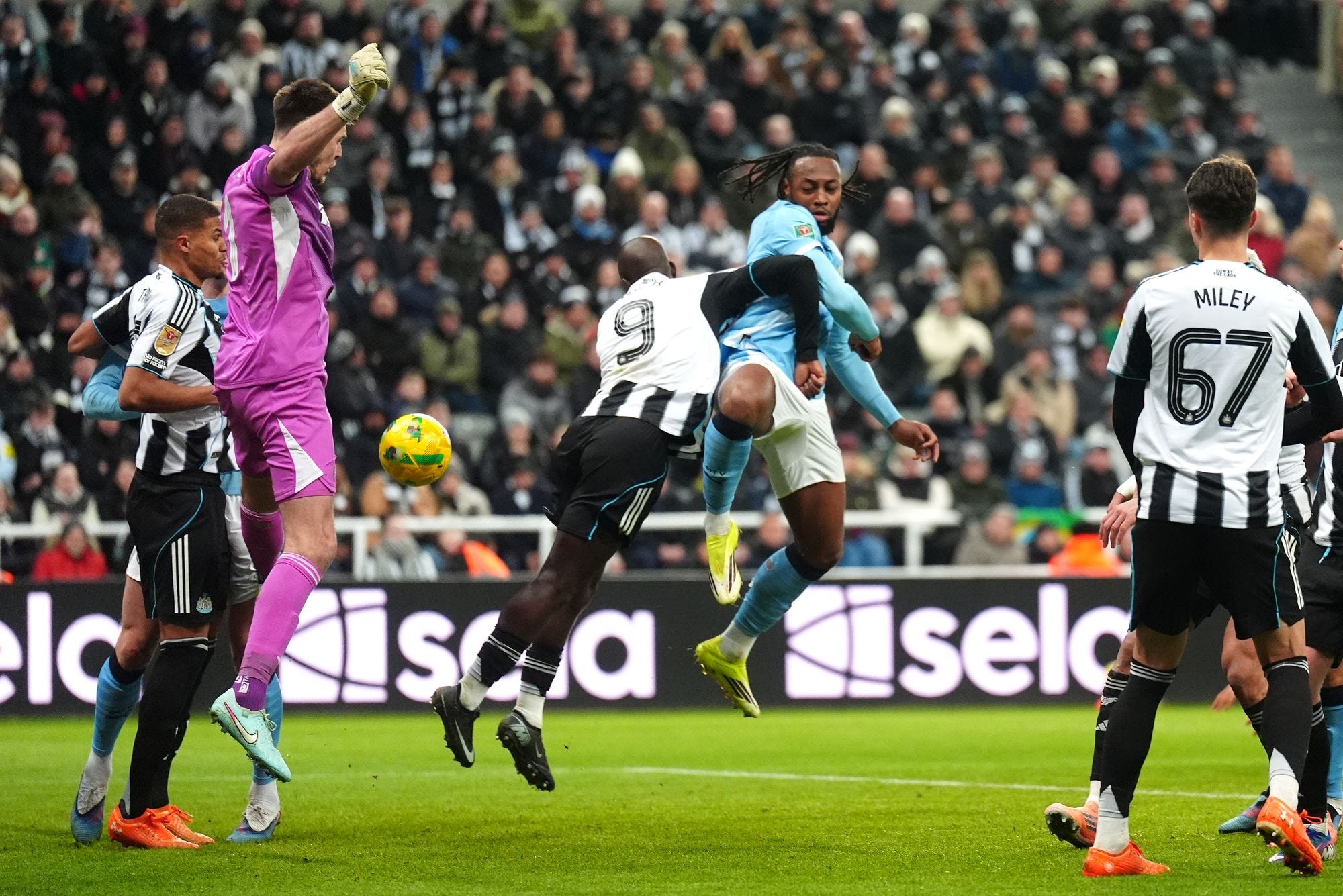
The controversy at St James’ Park, following the disallowed goal in Newcastle’s cup defeat to Manchester City, brought the issue roaring back into view. Not because it was uniquely awful, but because it was so depressingly familiar. A goal scored, joy ignited, then slowly strangled by process. Six minutes of forensic examination to arrive at a decision that was, depending on your perspective, either technically correct or entirely against the spirit of the game.
I have no stake in Manchester City or Newcastle. That distance helps. What remains is a growing conviction that VAR, in its current form, has become an obstacle to football rather than a support to it.
Subjective offside and the hunt for faults
The official reasoning was that Erling Haaland, standing in an offside position, interfered with play by engaging a defender and affecting the goalkeeper. That is permissible within the laws. Few argue otherwise. The real problem lies elsewhere.
This was not an error crying out for correction. It was an interpretation, layered upon an interpretation, reached only after technology designed to make things simpler failed, forcing officials back to line drawing and frame freezing. When a decision takes that long, it stops being about clarity and starts to feel like a search. Not for truth, but for a reason to disallow a goal.
Football was never meant to be an exercise in microscopic doubt. Offside was once binary. On or off. You knew it in the ground, the assistant knew it on the touchline, and everyone moved on. Now we have subjective offside, a phrase that should trouble anyone who cares about the game. If you need several minutes, multiple angles and drawn lines to decide whether a player has had a material impact, then by definition the offence is not clear and obvious.
That phrase matters. VAR was sold on it. Clear and obvious errors. Not marginal calls. Not debates over whether a defender might have reacted differently in an imagined alternative reality.
If you watched that goal live, without VAR, there would have been no outcry. No sense of injustice. The goalkeeper was beaten cleanly. The defender was not realistically stopping the shot. Football recognised it instantly as a goal. VAR did not.
Time, trust and the theatre of delay
Perhaps the most corrosive element of VAR is time. Six minutes to decide whether a goal should stand drains the life from the occasion. The longer it goes on, the less confidence anyone has in the outcome. What should be decisive becomes hesitant. Authority seeps away.
The walk to the pitchside monitor has become empty theatre. Everyone knows how it will end. The referee rarely overturns the original recommendation. The crowd waits, restless and resigned, while officials confer with colleagues who are also their friends, their peers, their fellow employees. That relationship alone was always going to be problematic. It adds another subjective layer to a process already drowning in them.
There is a strong case for removing the on field review entirely. If VAR exists, let it make the call quickly and decisively. Better still, limit its scope so ruthlessly that it only intervenes when something has gone obviously and materially wrong.
Two replays at full speed should be enough. Fifteen seconds. If you cannot see the error, it is not there.
Clear and obvious errors forgotten
The tragedy is that football had a compelling case for some form of video assistance. Everyone remembers moments that genuinely altered history. Goals that crossed the line but were not given. Red cards missed entirely. Those were the injustices VAR was meant to address.
Instead, we have drifted into an age where goals are treated with suspicion. Where officials look for reasons to chalk them off. Where attackers are penalised for existing in the same postcode as a defender. It feels anti goal, anti joy, and ultimately anti football.
This is not about perfection. That was never achievable. Football is subjective by nature. Fouls are judged by feel as much as law. Contact exists on a spectrum. Trying to iron that out with technology was always futile.
What VAR has done is expose the impossibility of that mission while stripping the game of its spontaneity. The celebration that follows a goal, that shared moment of release, now comes with an asterisk. Supporters hesitate. Players glance at the referee. Even when goals stand, something has already been lost.
The argument that fans will always complain misses the point. Complaints existed long before VAR. What did not exist was this constant sense of unease, this feeling that the game is being re refereed by remote control.
Pressure, reform and realism
VAR will not be scrapped. That much is clear. Football’s authorities have invested too much money, too much pride, and too many careers in it. The most we can hope for is reform, driven not by lip service but by genuine pressure from supporters, managers and players alike.
That pressure should be focused and realistic. Limit VAR to factual matters. Scrap subjective offside. Abandon the obsession with millimetres. Restore the benefit of doubt to attackers. Speed the process up so decisions are made while the moment still lives.

The irony is that technology could support football beautifully if it knew its place. Goal line technology already does. It is quick, definitive and invisible. Nobody debates it because it does its job and gets out of the way.
VAR has done the opposite. It has inserted itself into the heart of the game and refused to leave.
When even managers as guarded as Pep Guardiola feel compelled to speak out, it tells you something has gone badly wrong. Not because he is always right, but because the frustration now runs deeper than individual results. It is about trust, fairness and the simple pleasure of watching football unfold naturally.
Last weekend’s VAR free matches were a reminder of what that feels like. Faster. Messier. More human. Football has always lived with error. It survived them. It thrived on them.
The real error was believing that a game built on judgement, flow and emotion could ever be reduced to lines on a screen without losing something precious along the way.