

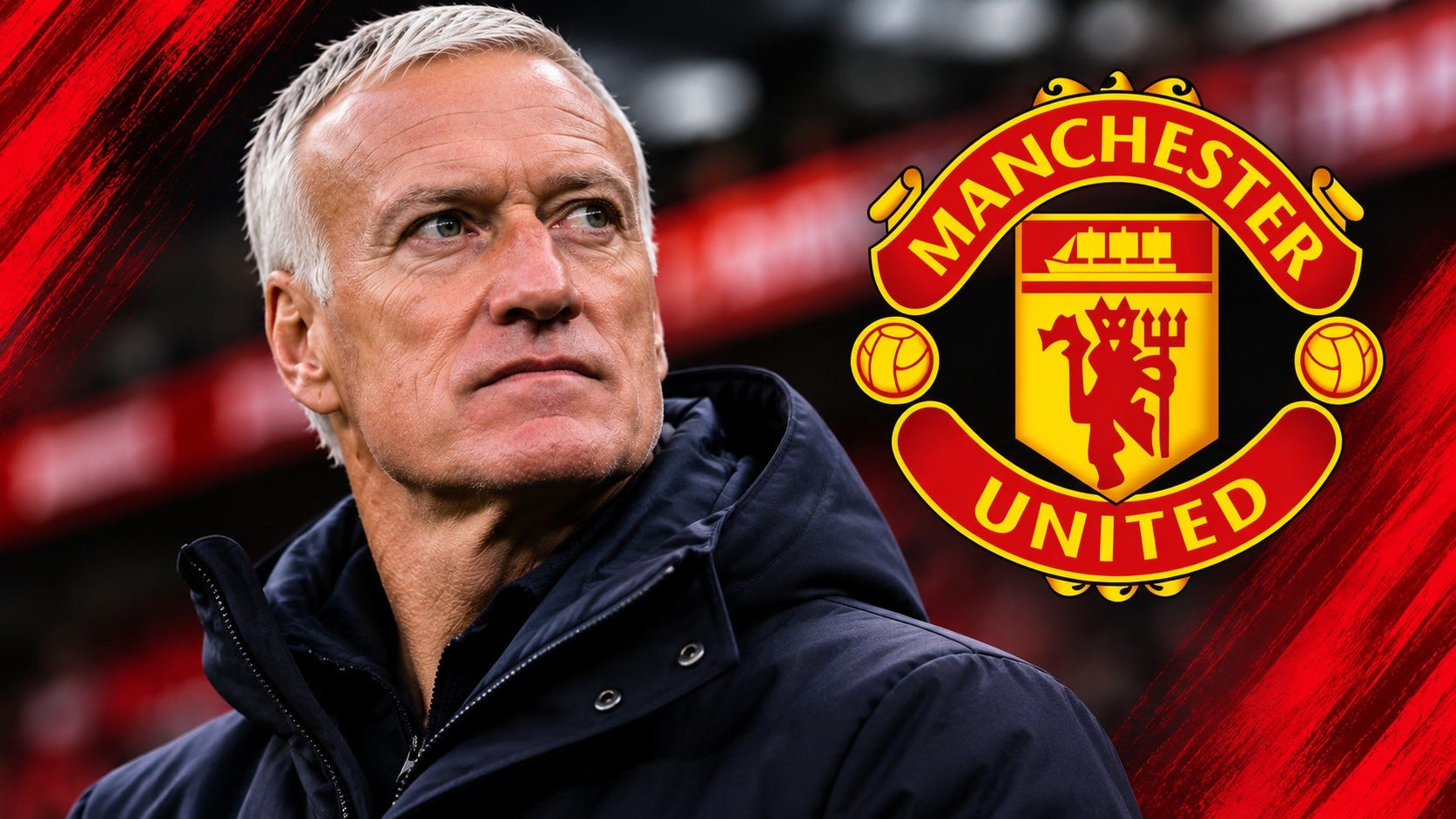
Didier Deschamps, the man who led France to World Cup glory in 2018, has rebuffed an approach from Manchester United over becoming their next head coach, according to the Daily Mirror's Friday paper talk column. The report claims Deschamps told United directly that he has no interest in taking the job, just days after word first emerged that the former France manager had been sounded out as a possible replacement for Michael Carrick.
It is worth treating the certainty of that rejection carefully. A separate report from French outlet Foot Mercato, via journalist Santi Aouna, paints a slightly softer picture. It says Deschamps "isn't entirely keen" on the move rather than having slammed the door shut, and that he is listening to offers without any urgency to commit. He is reportedly prepared to wait until next summer for the right project rather than jump into a crisis midway through a season. Whichever version proves closer to the truth, the headline fact stands: United made contact, and the man they approached is, at best, lukewarm.
Why Deschamps, and why now
The appeal is obvious enough. Deschamps, 58, spent fourteen years in charge of the French national team, the longest reign of any manager in the country's history, winning the World Cup in 2018 and reaching another final along the way. He left the role this summer after France finished fourth at the 2026 World Cup, with Zinedine Zidane taking over as his successor at the end of July. He has since made clear he has no plans to retire and remains open to club or international work.
He is not short of suitors. The same reporting that links him with United also has Juventus keeping an eye on him as a possible replacement for Luciano Spalletti, and he was reportedly on Real Madrid's shortlist before the Spanish club turned instead to Jose Mourinho. For a manager with his pedigree and no club job to rush back into, there is little reason to leap at the first offer that lands, particularly one that comes with the baggage currently surrounding Old Trafford.
That baggage is considerable. United sit seventeenth in the Premier League after nine games, with a single win, four draws and four defeats, and a goal difference of minus five. Before Tuesday's dramatic 3-2 Champions League win over Roma, in which United came back from two goals down inside the first seventeen minutes, they had gone nine matches without a win in all competitions, their longest barren run at the club in 38 years. Reports in recent days suggest fans have also grown frustrated with how the club's hierarchy has handled transfer business, which Foot Mercato's reporting links directly to Deschamps' reluctance.
A widening and still speculative list
Deschamps is far from the only name being floated. The same reporting that detailed his stance also mentions Unai Emery, Fabian Hurzeler, Antonio Conte, Eddie Howe and Julian Nagelsmann as men United's recruitment staff are said to be monitoring, though not all of those links carry the same weight or sourcing. Emery, for one, is reported to be likely to commit his long term future to Aston Villa rather than consider a move, which carries its own irony given Villa are United's next opponents. Howe and Nagelsmann were already being linked earlier in the week, in reporting that stressed any decision was more likely to come around the international break than in the immediate aftermath of a single result.
None of this amounts to confirmation that United are actively building a shortlist to replace Carrick imminently. It reads, for now, as the kind of background due diligence most clubs under pressure are assumed to be doing, mixed with the usual churn of names that follows any manager into a difficult run. The gap between being "sounded out" and being seriously considered for the job is wide, and nothing in the reporting so far closes it.
Carrick's audition continues
Carrick's own position remains, in the words of The Athletic's David Ornstein, backed by a "vote of confidence" from the club, albeit one Ornstein was careful to qualify by noting that results, and what happens in the transfer market, will play a significant part in how long that backing lasts. The Roma win offered some relief and a reminder of what his side can produce under pressure, with United fighting back from a two goal deficit before Matheus Cunha's late double turned the tie on its head. Carrick himself was measured afterwards, saying he felt no particular relief and was not getting carried away, pointing instead to this weekend's home game against Aston Villa as the next real examination.
That fixture carries obvious weight. United have managed only one Premier League win all season, and another home defeat, against a Villa side themselves sitting in the bottom half of the table, would reopen every question that Tuesday's comeback briefly quietened. A win, conversely, would give Carrick two positive results in a week and some breathing space heading into the international break, during which any decision about his long term future is more likely to be made calmly rather than in the heat of a matchday afternoon.
For now, the Deschamps story tells us less about where United's next manager will come from and more about where they stand in English football's pecking order at this particular moment. A club of United's history and resources being politely declined by a World Cup winning manager with no job to go to says something about how far there is still to travel, whoever ends up in the dugout come the end of the season.
If stories like this one are your kind of football reading, It Was Always... Football is worth following for the days when there is plenty happening off the pitch as well as on it. Subscribing means every new piece lands straight in your inbox.