

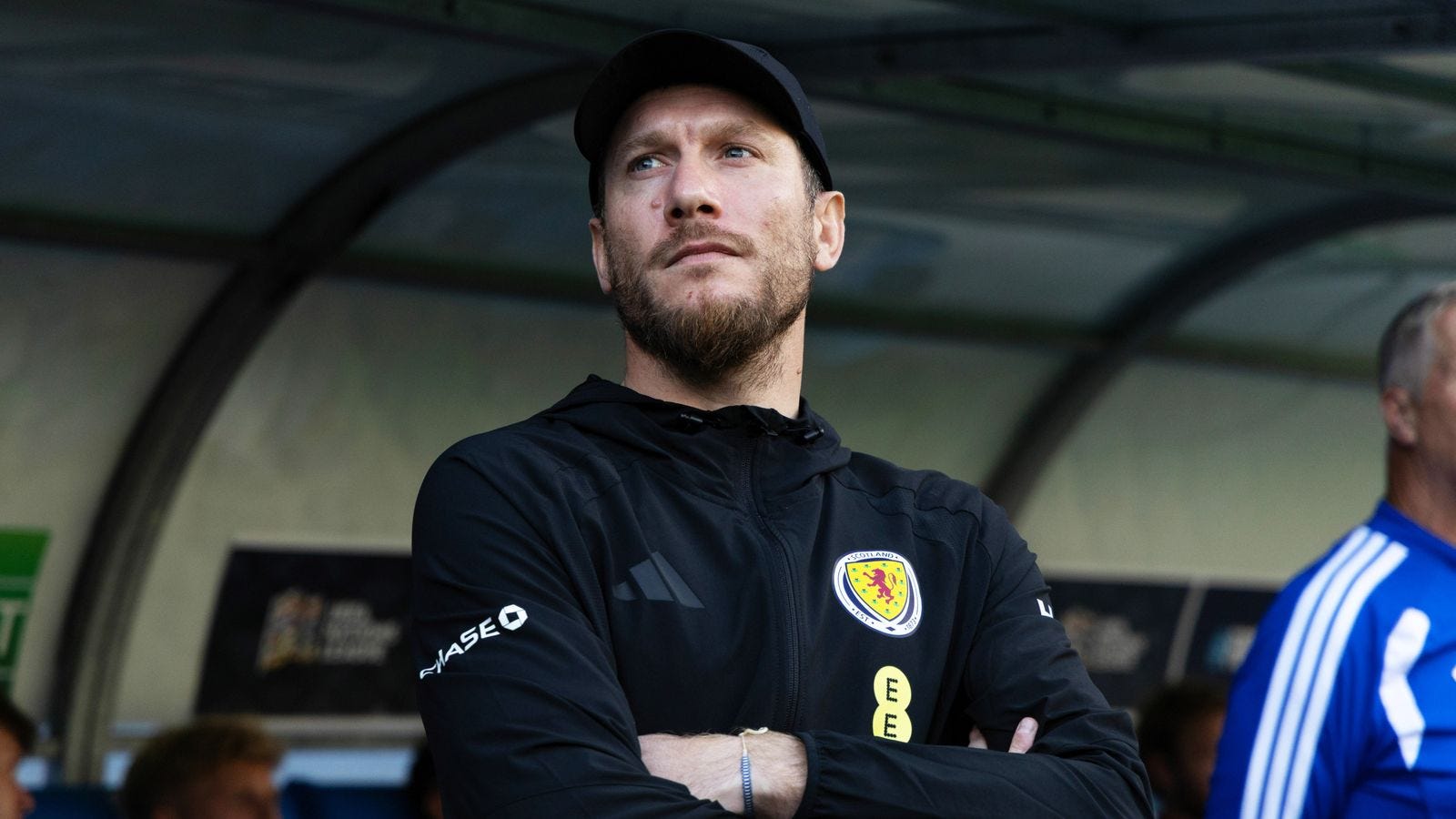
Two debutants, a returning striker with five years of caps to catch up on, and a string of missed chances that will linger longer than the scoreline suggests. Sebastien Pocognoli’s first game in charge of Scotland ended goalless in Ljubljana, and for all the promise in the performance, it was a result that left the new manager searching for the shooting boots his forwards had apparently left at home.
Scotland drew 0-0 with Slovenia at the Stadion Stožice on Saturday night in their opening UEFA Nations League fixture of the campaign, a game that offered plenty of encouragement about the direction Pocognoli wants to take this team, even if the finishing let them down at the crucial moments. It was the Belgian’s first competitive match since replacing Steve Clarke in August, and while a point on the road is no disaster, Scotland will feel they should have taken all three.
A New Manager Learns Something About His Team
The opening half told a different story to the one Pocognoli wanted. Slovenia set up in a way that caught his players cold, and Scotland spent long spells unable to get out of their own half.
“We faced what we expected, a really aggressive Slovenia team, but we were a little bit surprised about the shape,” Pocognoli said afterwards. “It looked like a back five, but it was actually a back four when they were on the ball. Because of that we really struggled to find a way to press, so we were quite deep and low on the pitch. That meant we suffered.”
That word, suffer, ran through his post match comments more than once, and rather than dodge it, Pocognoli leaned into it. “What we learned from the first half was that we had to defend the box well, to be resilient and to just suffer together,” he explained. “I think it’s nice to have a moment like this also, when a new gaffer starts.”
It is an honest assessment from a coach still finding his feet with a new group of players, barely six weeks into the job. Pocognoli, appointed in mid August on a two year deal after Scotland’s group stage exit at the World Cup in North America, arrived with a strong reputation built at Union Saint Gilloise, where he won the Belgian title in his first season in charge, before a brief and difficult spell at Monaco that ended in the summer. This was the moment his Scotland project actually began, and it began the hard way, on the back foot in a stadium that was firmly behind the home side.
To his credit, and his team’s, the response after the break was significant.
Debuts, a Comeback, and Chances That Would Not Go In
Scotland were transformed after half time. They pushed higher, pinned Slovenia back for long spells, and created enough opportunities to have won the game comfortably. That they did not will be the source of some frustration in the Scotland camp this week.
Oli McBurnie, recalled after more than five years away from the national side, was at the heart of the best of it. Played through one on one with Jan Oblak, the veteran striker chose to try to round the Slovenia goalkeeper rather than shoot early, and the chance went begging. Moments later he met a corner with a point blank header that Oblak somehow kept out. It was that sort of night for the Sheffield United forward, all endeavour and no reward.
He was not alone. Robbie Ure, handed his first cap and thrown into the game as one of two Scotland debutants alongside defender Stephen Welsh, saw a shot come back off the post in the first half and went close again as the game wore on. Billy Gilmour forced a smart save from Oblak with a dangerous strike from range. Kieron Bowie, introduced from the bench, was sent clean through but pulled his effort wide when a goal looked the likelier outcome. At the other end, Slovenia’s best moment came when Andraz Sporar thought he had won it, only for the goal to be chalked off for offside.
Oblak, inevitably, was the difference. Few goalkeepers in Europe are better equipped to have the kind of night he had, and Scotland will have left Ljubljana knowing that a different goalkeeper might well have been beaten two or three times over.
McBurnie summed up the mood in the dressing room afterwards with typical bluntness. “I’m not going to be able to sleep tonight with those chances,” he admitted. “The only thing missing was a goal or two.” Yet he was also quick to point to the bigger picture. “I thought it was a very good performance. We had them pinned in for a lot of the game, waves of pressure, which is what the gaffer wants.”
Suffering Together, and a Sterner Test at Hampden
Pocognoli was careful not to dwell too heavily on the missed opportunities, preferring instead to focus on the pressing and intensity his side showed once they found their rhythm. “I don’t want to make a big topic about the missing of chances, that can happen,” he said. “But what the offensive players delivered also in terms of pressing was maybe more than they have done before.”
It is a measured response from a manager who knows this campaign was always going to be a process rather than an instant transformation. Clarke’s departure followed a World Cup where Scotland won only once in three group games, and Pocognoli’s brief is as much about building a longer term identity as it is about results in the next fortnight. A youthful matchday squad, two full debutants, and a recalled forward finding his way back into international football all point to a manager willing to make changes rather than simply patch over what went before.
The scale of what comes next will make this a genuinely revealing week. Scotland host Switzerland at Hampden Park on Tuesday, and Group B1’s strongest side will arrive as the form team and, on paper, the biggest hurdle in the section. A point away from home against Slovenia will not look like much of a foundation if Pocognoli’s side fall well short against the Swiss, but if Saturday’s second half performance travels back to Glasgow with them, there is enough there to suggest the new era is heading in the right direction, even if it took a while to find its feet.
If you enjoyed this, stick around. It Was Always… Football brings you the stories that matter across the English, Scottish and European game, and following or subscribing means you never miss the next one.