

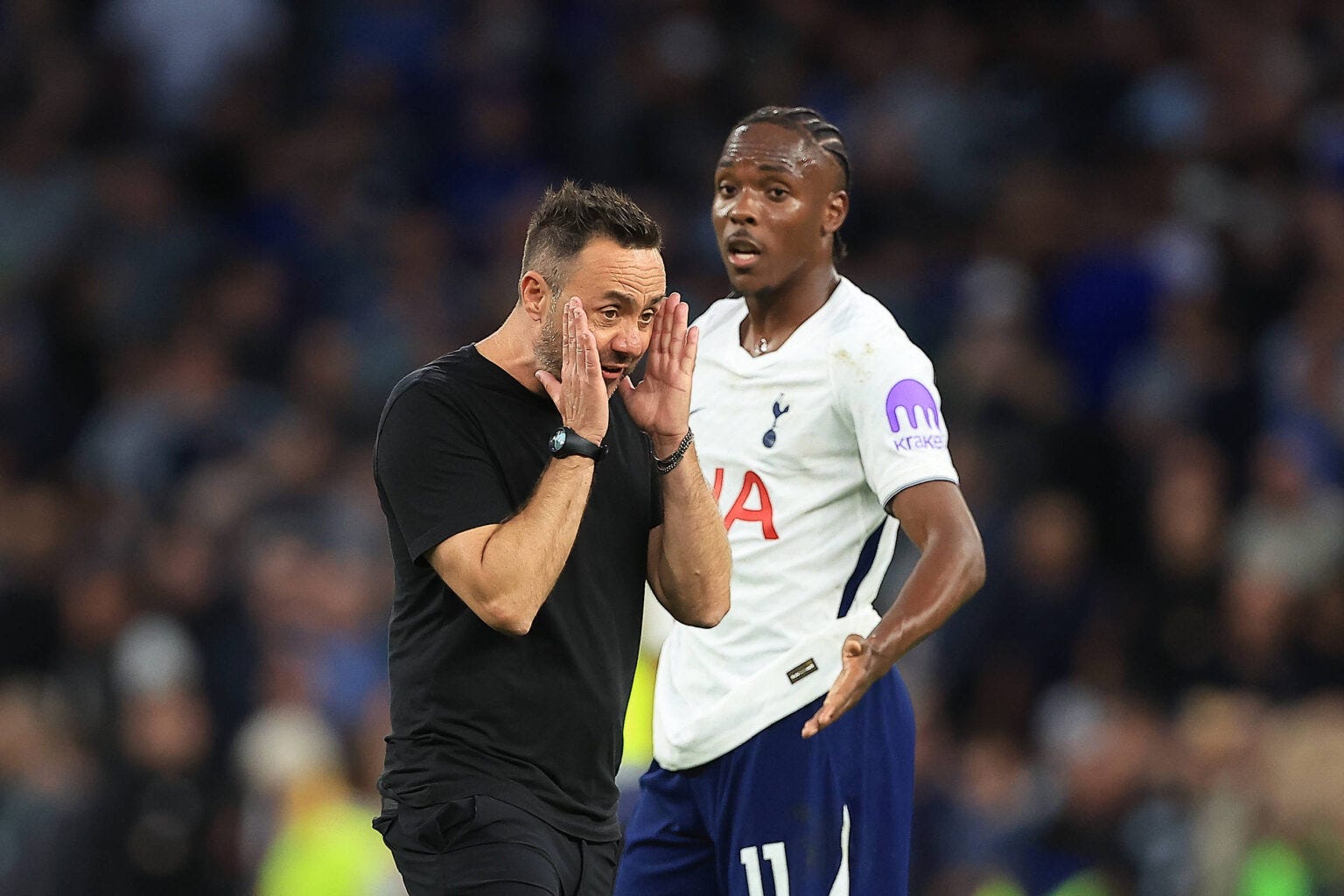
Tottenham Hotspur have gone four Premier League games this season without a win or a goal, after a goalless draw with Everton at Tottenham Hotspur Stadium on Saturday left Roberto De Zerbi’s side languishing in 17th place. It is the sort of start that would alarm any club, but for Spurs it carries an extra edge, because it comes barely four months after De Zerbi’s side beat these same opponents to preserve their Premier League status on the final day of last season.
That victory, sealed by a Joao Palhinha goal in May, capped a remarkable rescue act. De Zerbi had arrived in late March as Tottenham’s third manager of the 2025 to 2026 campaign, replacing Thomas Frank after a run of results so bad that Frank was sacked following a home defeat to Newcastle that stretched a club record losing streak to six games. Spurs were five points above the relegation zone at that point and sliding fast. Under De Zerbi they briefly got worse before they got better, extending a winless league run to fifteen matches at one stage, before a run of results including a pivotal win at Aston Villa dragged them clear. They finished the season in 17th, only two points above West Ham, having come closer to their first relegation in 49 years than anyone at the club would care to remember.
Given all that, the summer was supposed to be about building forward rather than looking over a shoulder. Spurs backed De Zerbi with genuine investment. Savinho arrived from Manchester City for a fee reported at around £85 million, a deal that would represent City’s record sale. Omar Marmoush followed from the same club on a season long loan with a £60 million obligation to buy. Sandro Tonali and Matheus Fernandes joined for a combined fee in the region of £185 million, with Jan Paul van Hecke arriving from Brighton for £52 million. Marcos Senesi, Andy Robertson and Martin Dubravka came in on free transfers to add further competition and experience. It amounted to one of the more eye catching rebuilding jobs anywhere in the Premier League this summer.
A goalless start with few modern precedents
None of that spending has translated into results yet. Four games into the new season, Tottenham have drawn two and lost two, scoring no goals and conceding five, a record that leaves them without a Premier League win and, remarkably, without a Premier League goal. It is understood to be the club’s worst attacking start to a top flight season in half a century. Everton, by contrast, arrived at Tottenham Hotspur Stadium unbeaten in the league, and left having stretched that run to four games with a point that lifted them into the top half of the table.
The Everton performance told its own story. Tottenham dominated the ball, held around 62% possession, and repeatedly worked the pitch into promising areas without finding a way through. Speaking afterwards, De Zerbi pointed to the volume of good positions his side reached without the end product to match. “We were 75 times in the area and not shoot enough to explain the quality of the play we did,” he said, arguing that the underlying performance was better than the result suggested. Pressed on the wider picture, he refused to dress it up or panic about it in equal measure. “Four games, no wins, any goals scored. It is tough also for the players,” he said, before adding that his own outlook was “realistic, not positive, not negative.”
Injuries, new faces and a squad still bedding in
There is context behind the numbers, even if it will only buy De Zerbi so much patience. Tottenham went into the Everton game missing Fernandes, Micky van de Ven and Dominic Solanke through injury, three players who would ordinarily be expected to start. De Zerbi also pointed out that Savinho and Marmoush, two of the summer’s headline arrivals, had only joined the squad around ten days before kick off, limiting the time available to integrate them into his system. World Cup involvement for several first team players over the summer had already cut into pre season preparation before a series of knocks picked up on a tour of Australia complicated things further. De Zerbi has consistently rejected the idea that any of this amounts to excuse making, noting that his side had scored five goals in a comfortable Carabao Cup win over Charlton Athletic in midweek, evidence, in his eyes, that the attacking quality within the squad is there when confidence and fitness allow it to show itself.
Supporters inside Tottenham Hotspur Stadium were less forgiving in the moment, with frustration audible as chances went begging against Everton, and De Zerbi used his post match media duties to apologise directly to the crowd for the manner of the performance. It is the sort of gesture that buys goodwill without answering the underlying question, which is how quickly a squad assembled at considerable expense can start delivering results that match the outlay.
What comes next for De Zerbi
Tottenham have one more Premier League fixture to find their first win and first goal of the season before the game shuts down for an extended run of international football later this month, with several major leagues across Europe pausing for an expanded window of Nations League and qualifying fixtures. That gap will either offer De Zerbi a period to reset an early season stutter into perspective, or it will hang over the club as an unwanted stretch of time to dwell on a winless, goalless start with no midweek match to put it right straight away.
What is not in doubt is the scale of what De Zerbi achieved last season, dragging a team out of the bottom three when relegation genuinely looked likely. That history buys him more credit than most managers would have four games into a difficult run. Whether it buys him enough time to turn this summer’s outlay into results on the pitch is the question now hanging over Tottenham Hotspur Stadium.
If you enjoyed this, consider subscribing to It Was Always… Football for more coverage of the stories shaping the game.