

Friday the 13th. I’m not particularly superstitious, but after the last 24 hours, I’m beginning to wonder whether I should be.
If you’re a regular reader of this columb, you’ll probably have noticed that this week’s offering has arrived a little later than usual. You can thank Microsoft for that. A global outage affecting Outlook, Teams and various other services has caused chaos for businesses around the world, and my working day hasn’t escaped the disruption.
Apparently, hundreds of millions of people rely on Microsoft’s services. It’s quite remarkable how quickly everything grinds to a halt when somebody, somewhere, has a problem with a server.
Still, my technological frustrations are relatively minor compared with what happened last night.
I was driving home when a deer suddenly appeared in front of my car. It stopped in the headlights, and unfortunately there was simply no opportunity to avoid a collision.
The car has suffered some damage, the insurance company is involved, and there’s now the unwelcome prospect of paying an excess I could certainly have done without, particularly at this time of year.
But the part that’s bothered me most is the deer itself. I couldn’t establish whether it had survived, and there’s something deeply unpleasant about driving away knowing an animal might be suffering. I reported everything to the police, but it’s still been playing on my mind.
I returned to the scene this morning and managed to recover my number plate, which had apparently decided to make its own escape during the collision.
So, a damaged car, an insurance claim and Microsoft throwing a tantrum. Not exactly the Friday I’d planned.
Thankfully, football has provided plenty to talk about, even during an international break.
Manchester United have appointed yet another manager, Manchester City’s long-running financial saga has taken another significant turn, and Liverpool have some important contract decisions looming.
Plenty to get stuck into, then. And hopefully the rest of Friday the 13th will be a little less eventful.
Manchester United Change Managers Again, But Nothing Really Changes
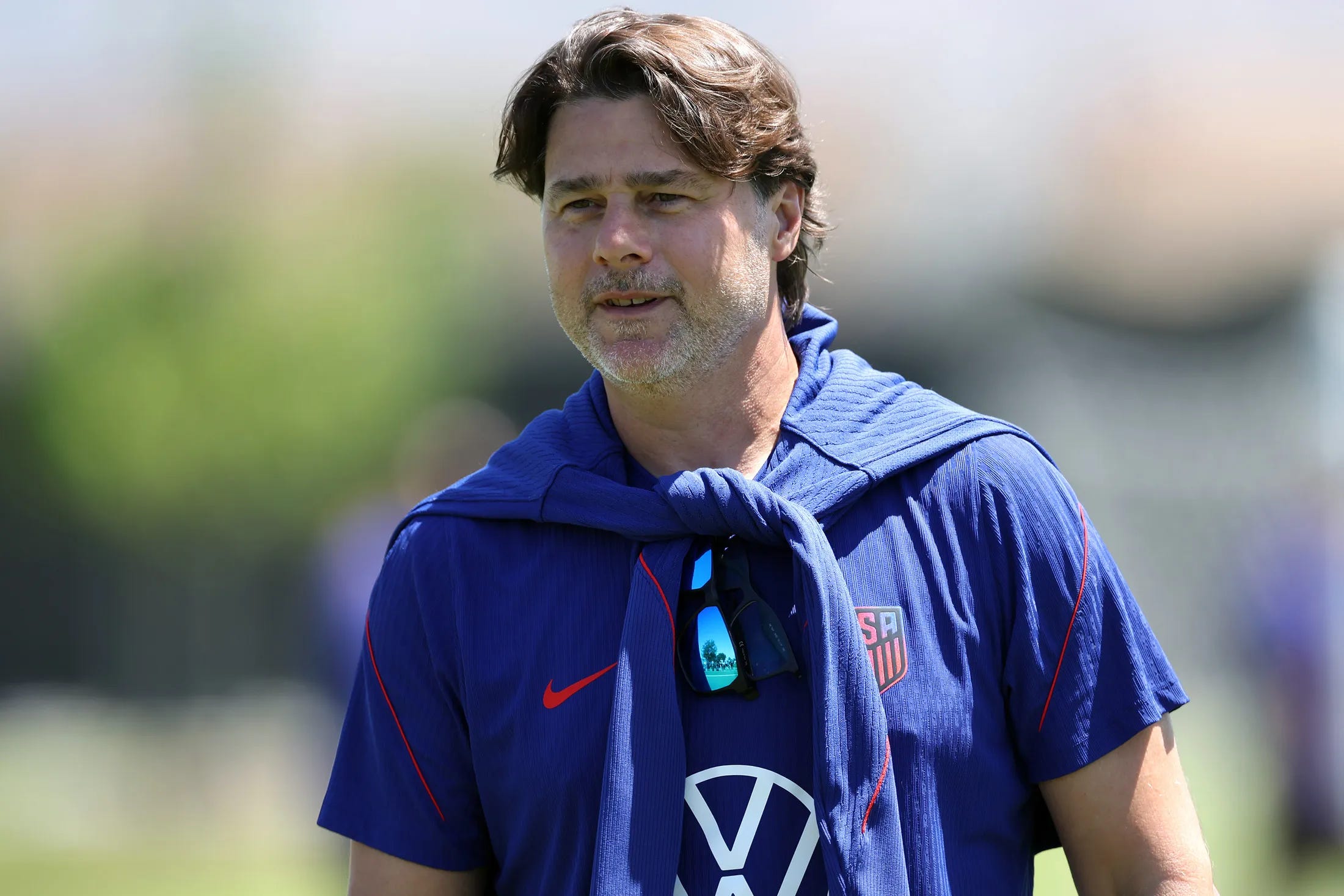
Another week, another managerial casualty at Manchester United. Michael Carrick is gone, Mauricio Pochettino is in, and the Old Trafford merry-go-round continues spinning at a remarkable pace.
I’ll admit, as a Liverpool supporter, there’s a certain entertainment value in watching United repeatedly stumble from one crisis into another. But strip away the rivalry and what we’re witnessing is a football club that appears incapable of learning from its own mistakes.
Carrick’s appointment was always questionable. He did an excellent job as interim manager last season, securing Champions League qualification and giving supporters something to celebrate. But there was precious little in his managerial CV to suggest he was ready to rebuild one of the biggest clubs in world football.
His previous spell at Middlesbrough had been decidedly mixed, and United’s impressive results last spring often disguised performances that weren’t particularly convincing.
That should have prompted some serious consideration before handing him the permanent job.
Instead, United did what United so often do. They got carried away.
Now they’re sitting 18th in the Premier League, Carrick has been dismissed after just 32 matches, and the same people responsible for appointing him are preparing to unveil another supposed solution.
The manner of his departure was particularly shabby. Carrick reportedly continued taking training while United were actively pursuing Pochettino, with senior executives attending an INEOS meeting in Monaco before finally delivering the news.
Whatever your opinion of Carrick’s managerial abilities, he deserved better treatment than that.
And here’s where I think the real problem lies.
United have spent hundreds of millions assembling a squad shaped by the preferences of several different managers. Erik ten Hag, Ruben Amorim and Carrick all approached football differently, yet the club has repeatedly attempted to combine players recruited for contrasting systems.
There’s no obvious identity, no coherent recruitment strategy and precious little evidence that the people making these decisions understand how to build a successful football team.
Last week, I wrote about United’s staggering £779 million debt and the financial legacy of the Glazer family. That remains an enormous problem, but INEOS haven’t exactly covered themselves in glory since taking control of football operations either.
Changing managers has become a convenient way of directing attention away from those making the decisions.
Which brings us to Pochettino.
I actually quite like him. His Tottenham side played some excellent football, he developed talented young players and took Spurs to a Champions League final. Those achievements deserve recognition.
But he left Tottenham seven years ago.
Since then, his spells at Paris Saint-Germain and Chelsea have hardly established him as one of Europe’s elite coaches, while his time with the United States ended with a disappointing World Cup exit against Belgium.
United have reportedly paid £7.4 million to secure his services, which is another substantial expense for a club supposedly desperate to control its spending.
Could he improve them? Absolutely. He’s a capable coach, and there are talented footballers in that squad.
But will he transform Manchester United into genuine title contenders? I wouldn’t bet on it.
We’ve seen this film too many times. A new manager arrives, United win a few matches, Gary Neville declares that something feels different, and suddenly we’re being told that the sleeping giant has finally awakened.
Then comes a difficult run, the familiar questions, and another round of speculation about the manager’s future.
Until the people running Manchester United accept responsibility for the mess they’ve created, I suspect we’ll keep watching the same story unfold.
And there’s one final detail I rather enjoyed.
Pochettino’s first match in charge will be against Liverpool at Anfield on 22 November.
Welcome back to the Premier League, Mauricio. Hopefully, we’ll make it a memorable afternoon for all the wrong reasons.
Manchester City, £900 Million and a Reckoning That Cannot Come Soon Enough
While Manchester United continue their search for a functioning football club, their neighbours across the city have rather more serious matters to worry about.
The Manchester City financial saga has taken another significant step forward, with the Financial Times reporting that the club’s appeal against its guilty verdict is scheduled for mid-December.
If that appeal fails, sanctions are expected to follow in 2027.
And frankly, it’s about time we started getting some answers.
According to the report, the independent commission found City guilty of all but one of the 115 charges brought against them by the Premier League in 2023. The findings included allegations of disguised owner funding, inflated sponsorship arrangements and breaches of spending regulations.
The figure that really jumps off the page is £900 million.
That’s the amount by which City’s financial position was found to have been artificially inflated over a nine-year period.
Nine years. Nearly a billion pounds.
Just consider what that means in the context of a competition where clubs are supposedly operating under the same financial regulations.
City are appealing those findings, as they’re entitled to do, and the outcome remains uncertain. But if the independent appeal board upholds the ruling, the Premier League faces a decision that could define its credibility for years to come.
What punishment is appropriate for breaches of this magnitude?
A fine? A points deduction? Expulsion from the competition?
All are reportedly available to the independent commission, although nobody yet knows what sanctions might actually be imposed.
For me, the principle is straightforward. If the findings survive appeal, the punishment must reflect the seriousness and scale of the wrongdoing.
A financial penalty that a club of City’s resources could comfortably absorb would be utterly meaningless.
And while a points deduction might have an immediate sporting impact, there would inevitably be questions about whether it adequately addresses alleged financial advantages accumulated over such an extended period.
As a Liverpool supporter, I can’t pretend this is a subject I approach without emotion.
I’ve watched Liverpool compete against Manchester City during an era in which the margins between winning the Premier League and finishing second were sometimes painfully small.
In 2018/19, Liverpool collected 97 points and still finished runners-up. Three years later, 92 points weren’t enough either. City finished one point ahead on both occasions.
I’m not suggesting we can simply rewrite those seasons or declare alternative champions. Football doesn’t work like that, and the appeals process must be respected.
But supporters are perfectly entitled to ask whether the competition they invested so much emotion, time and money in was conducted on a genuinely level playing field.
And this goes well beyond Liverpool.
Every club that has missed European qualification, suffered relegation or lost out on prize money during the period under scrutiny has an interest in seeing the rules properly enforced.
What frustrates me almost as much as the allegations themselves is how long the process has taken.
The charges were announced in February 2023. We’re now approaching the end of 2026, and there is still no certainty about when the matter will finally be resolved.
Even if City’s appeal fails, further challenges to any sanctions could reportedly extend proceedings beyond this season, potentially for years.
How can that possibly be healthy for English football?
The Premier League markets itself as the world’s greatest domestic football competition. Its enormous commercial success depends, at least in part, on supporters believing that what happens on the pitch is fair.
That confidence cannot be taken for granted.
City have every right to defend themselves through the appropriate legal channels. Equally, the Premier League has a responsibility to demonstrate that its financial regulations carry genuine consequences.
If the findings are overturned, that outcome must be respected.
But if they’re upheld, there can be no special treatment, no convenient compromise and certainly no punishment designed merely to make an uncomfortable problem disappear.
Because if nearly £900 million in financial irregularities can ultimately be dealt with by little more than a slap on the wrist, what exactly is the point of having financial rules in the first place?
Liverpool Face Three Contract Decisions That Could Shape Their Future
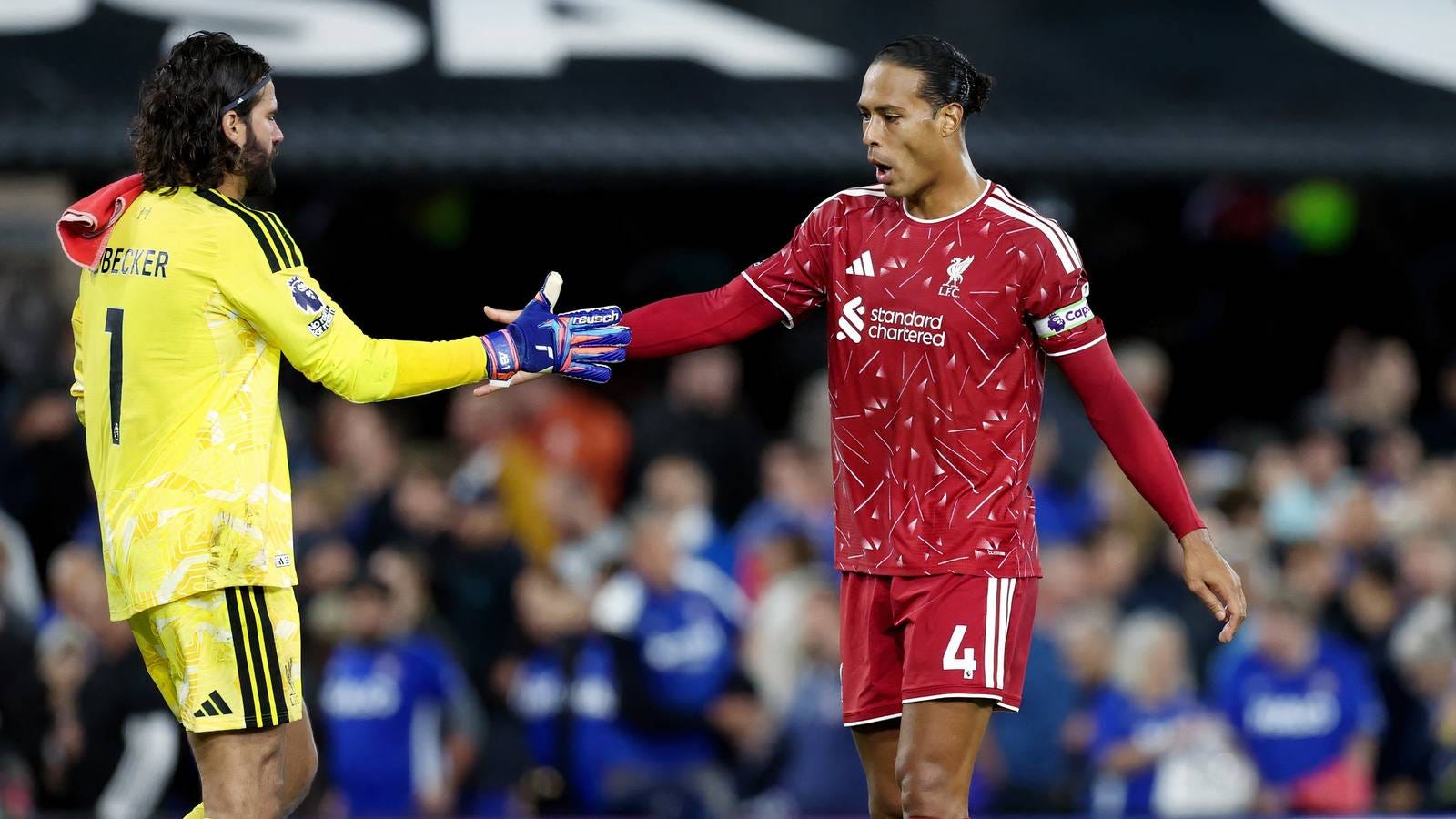
Away from the chaos in Manchester, Liverpool have some important decisions of their own to make, with the futures of Virgil van Dijk, Alexis Mac Allister and Alisson Becker increasingly becoming subjects of discussion.
Three outstanding footballers, three very different situations, and three decisions that could have a significant influence on the club’s direction over the next few years.
I’ll start with Van Dijk, because for me, this is the simplest of the lot.
Give the captain another contract.
Yes, he’s getting older. Yes, Liverpool need to plan for life without him. And yes, there will eventually come a point when his extraordinary influence begins to diminish.
But we’re not there yet.
Van Dijk remains one of the finest central defenders in football, and his leadership, organisational ability and sheer presence are qualities Liverpool cannot easily replace.
I’d happily offer him another two years, although I’d expect the club to manage his playing time more carefully.
He doesn’t need to start every domestic cup tie or play every minute of every league match. Liverpool should be using the next couple of seasons to develop his eventual successor while still benefiting from everything their captain brings to the team.
That’s sensible succession planning, rather than waiting until a legend departs and suddenly discovering there’s an enormous hole to fill.
Mac Allister’s situation is slightly more complicated, although I’m increasingly convinced Liverpool should be doing everything reasonable to secure his future.
I’ll admit I had concerns about him last season. He looked physically below his best, struggled to influence matches consistently and appeared a long way from the midfielder who had previously been so important to Liverpool.
This season, however, he’s looked much more like himself.
His intelligence, technical ability and understanding of the game have never been in question, but what I particularly value is something Liverpool sometimes seem to lack.
A bit of bite.
Mac Allister isn’t afraid of a confrontation, doesn’t disappear when matches become difficult and has the personality to take responsibility when those around him are struggling.
And that brings me to another important consideration.
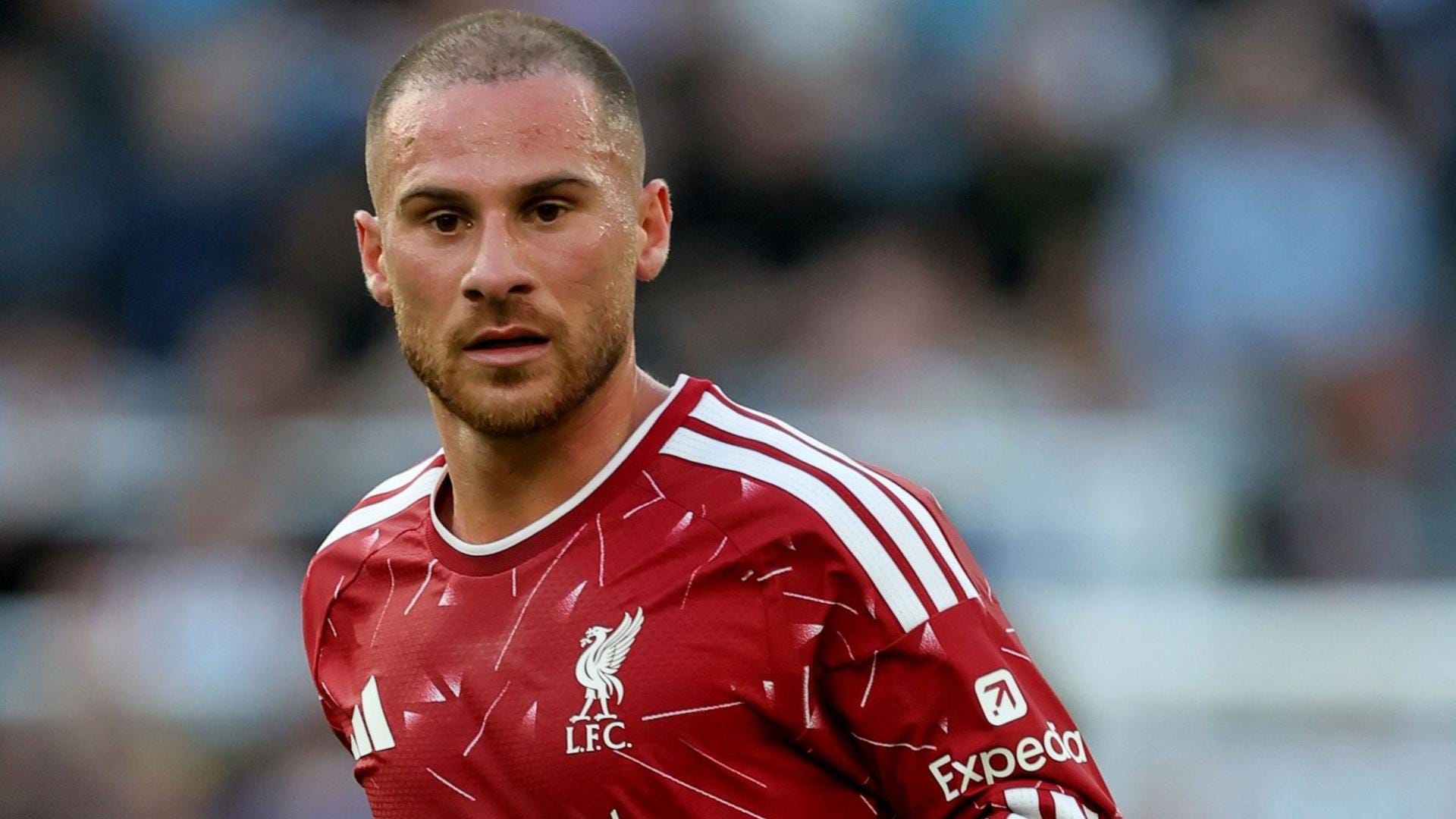
Who captains Liverpool when Van Dijk eventually leaves?
For me, Mac Allister should be very close to the top of that conversation.
There are other talented players in the squad, but leadership involves considerably more than wearing an armband or delivering an occasional passionate interview.
It’s about setting standards, demanding more from teammates and having the character to stand up when things aren’t going well.
Mac Allister possesses those qualities, and at 27, there’s every reason to believe he has several excellent seasons ahead of him.
A three-year extension would make plenty of sense.
Then there’s Alisson, and this is where things become genuinely difficult.
On ability alone, I’d love to keep him. He’s been one of Liverpool’s greatest goalkeepers, and few players have contributed more to the club’s success during the modern era.
But football clubs cannot make these decisions purely on sentiment.
Liverpool invested heavily in Giorgi Mamardashvili with the expectation that he could eventually become their first-choice goalkeeper. If Alisson signs another lengthy contract and remains the undisputed number one, what happens to the Georgian?
At some point, Mamardashvili needs regular football, and Liverpool need to establish whether he’s genuinely capable of succeeding Alisson.
There are also legitimate questions about Alisson’s injury record and how much longer he can maintain his extraordinary standards.
I’d be open to another year, potentially with a more carefully managed transition, but only if there’s a clear understanding of what happens next.
Otherwise, Liverpool risk creating an unnecessary problem in a position where succession planning should already be well advanced.
Ultimately, this is what separates well-run football clubs from those forever reacting to the latest crisis.
You recognise when experienced players still have something valuable to offer, but you also make difficult decisions before circumstances force your hand.
Van Dijk should stay. Mac Allister should stay. Alisson’s future requires a more delicate conversation.
Get those three decisions right, and Liverpool will have taken another important step towards building a squad capable of competing for major honours long after the current generation has moved on.
No Premier League, But Plenty to Keep Me Entertained
With the international break upon us, there are no Premier League predictions this week. I’m sure you’ll all survive without my questionable forecasting abilities for another seven days.
Instead, I’m looking forward to the Grand Slam of Darts, which gets underway tomorrow and runs through to next Sunday. There’s something wonderfully entertaining about watching the world’s best players throw darts under enormous pressure while I sit at home convincing myself I could have hit that double.
On the television front, I’ve finally caught up with the latest series of Slow Horses. I thoroughly enjoyed it, although I don’t think it quite reached the heights of the earlier seasons. Gary Oldman remains an absolute joy to watch, but I felt this latest outing lacked a little of the magic that made the programme so compelling in the first place.
That does leave me looking for something new to get stuck into, so recommendations are very welcome.
I’m also hoping to get along to the cinema to see I Play Rocky. I’ve watched the trailer, and it looks right up my street. The original Rocky remains one of those films I can happily revisit time and again, so the story behind its creation certainly appeals.
Of course, all of that assumes my car situation doesn’t throw another spanner in the works. After last night’s encounter with the local wildlife, I’m rather hoping for a quieter few days.
For now, I’ll settle for some good darts, a decent film and a weekend without any further unexpected expenses.
Thanks, as always, for reading my Friday column. If you’ve enjoyed this week’s column, please consider sharing it and subscribing to It Was Always Football. It’s completely free, and every subscription helps.
Have a great weekend, everyone. And if you’re heading out on the roads after dark, keep an eye out for the deer.
I’ll certainly be doing exactly that.