

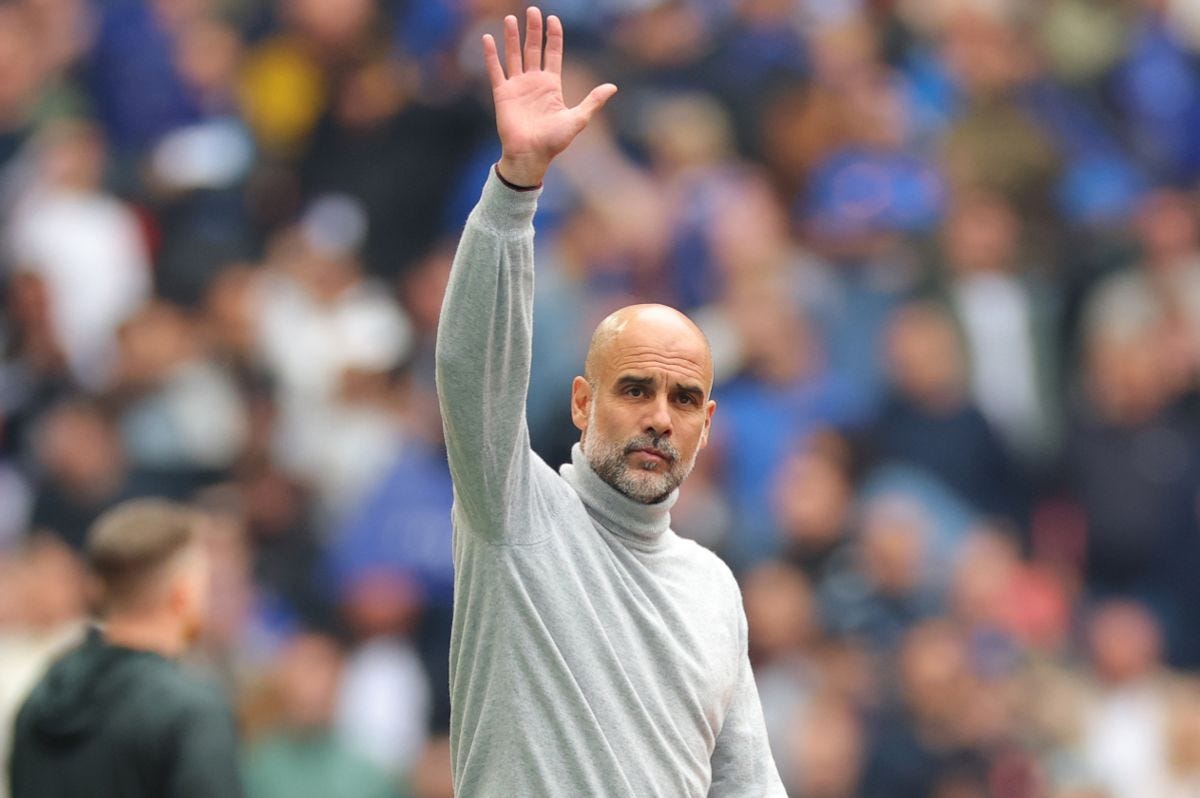
Pep Guardiola will leave Manchester City as one of the most influential coaches football has ever seen. That much is beyond dispute.
He reshaped the rhythm of English football. He changed how goalkeepers behaved, how defenders received possession, how midfielders occupied space and how entire academies coached young players. Across parks, training grounds and Premier League dugouts, the fingerprints are obvious. His ideas spread through football like floodwater.
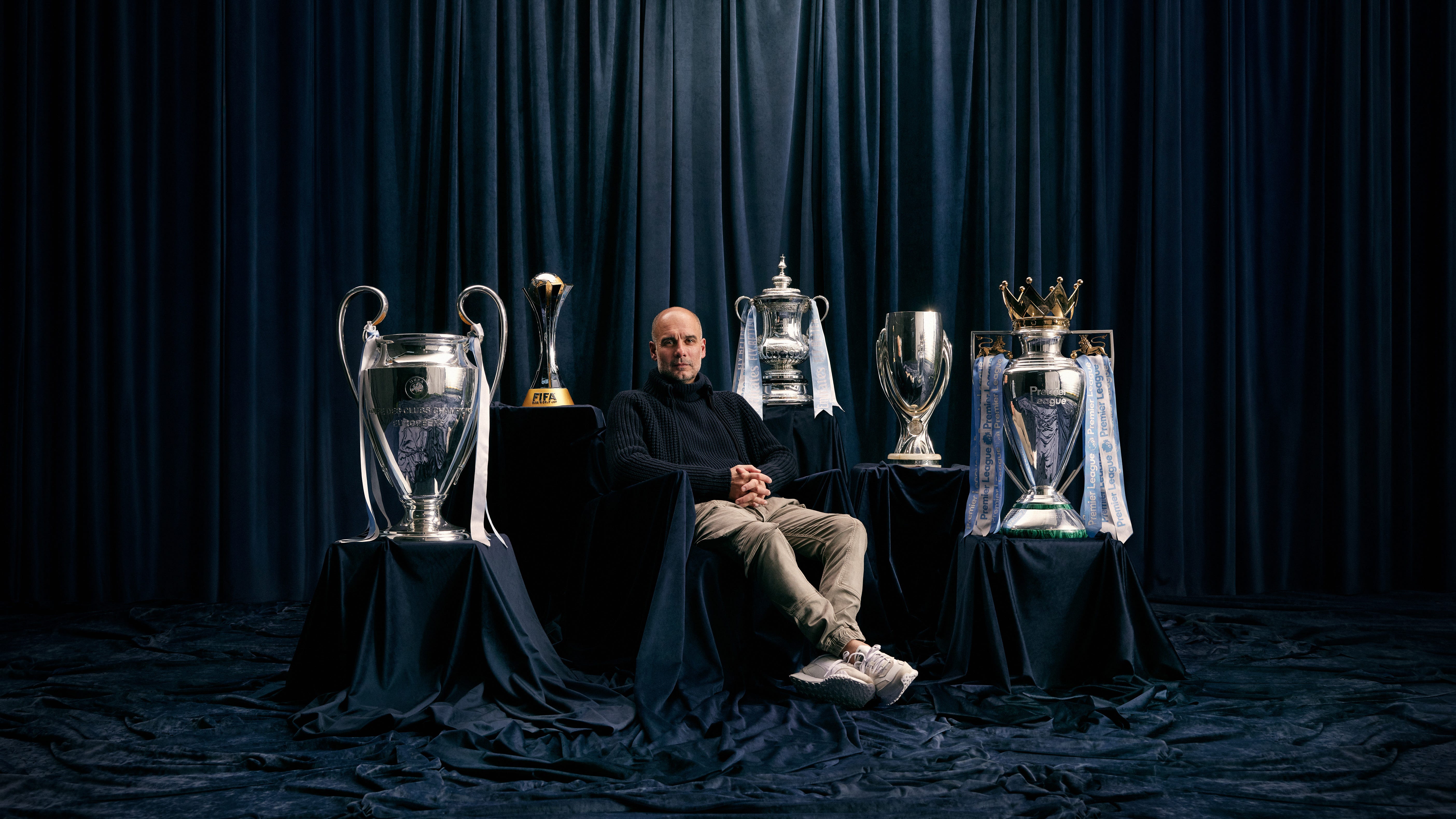
The trophy count is staggering. League titles, domestic cups, records smashed to pieces, a Champions League triumph finally delivered to Abu Dhabi’s project. Ten years of relentless accumulation. Ten years of control.
And yet.
Football is preparing the farewell parade already. The tributes are lining up. Warm documentaries, nostalgic montages and solemn declarations about genius are inevitable. Guardiola deserves enormous praise for what he achieved as a coach. He belongs among the elite minds the sport has produced.
But football has a dangerous habit when greatness enters the room. It lowers its voice. It softens its questions. It starts editing history.
That cannot happen here.
Legacy Under Suspicion
The problem for Guardiola is not tactical. It is moral.
His Manchester City reign sits under the shadow of more than 100 alleged breaches of Premier League financial regulations, charges the club strongly deny. The process remains unresolved. Nobody can yet claim legal certainty over the outcome. But nobody can honestly pretend the issue is irrelevant either.
For years City have outspent rivals, outmuscled rivals and assembled extraordinary depth. Guardiola turned those resources into footballing excellence, but the scale of those resources remains central to the debate around his legacy.
Supporters defending Guardiola often retreat to the same argument. Plenty of rich clubs spend heavily and still fail. That is true. Money alone does not create brilliance. Manchester United have spent fortunes since Sir Alex Ferguson retired and largely lurched from embarrassment to embarrassment. Chelsea has burned through wealth with little coherence. Paris Saint-Germain spent years collecting stars without building a serious football team.
Guardiola still had to coach them. He still had to evolve the game. He still had to sustain hunger after serial success. Those achievements are real.
But context matters.
If football concludes that City’s rise was fuelled by financial manipulation, then Guardiola’s era cannot be examined in isolation from it. The trophies would remain physically in the cabinet, the football would still exist in memory, but the conditions surrounding that dominance would demand scrutiny.
Nobody discusses Lance Armstrong without discussing doping. Nobody discusses Juventus in the mid 2000s without Calciopoli entering the conversation. Sport does not allow selective memory forever.
That is why the coming flood of hagiography feels so hollow.
Too many want the clean version of Guardiola. The visionary in knitwear, staring thoughtfully at a tactics board, reinventing football through pure intellect. It is easier to sell than the more complicated truth.
Because Guardiola’s story has never been entirely clean.
Doping History Still Matters
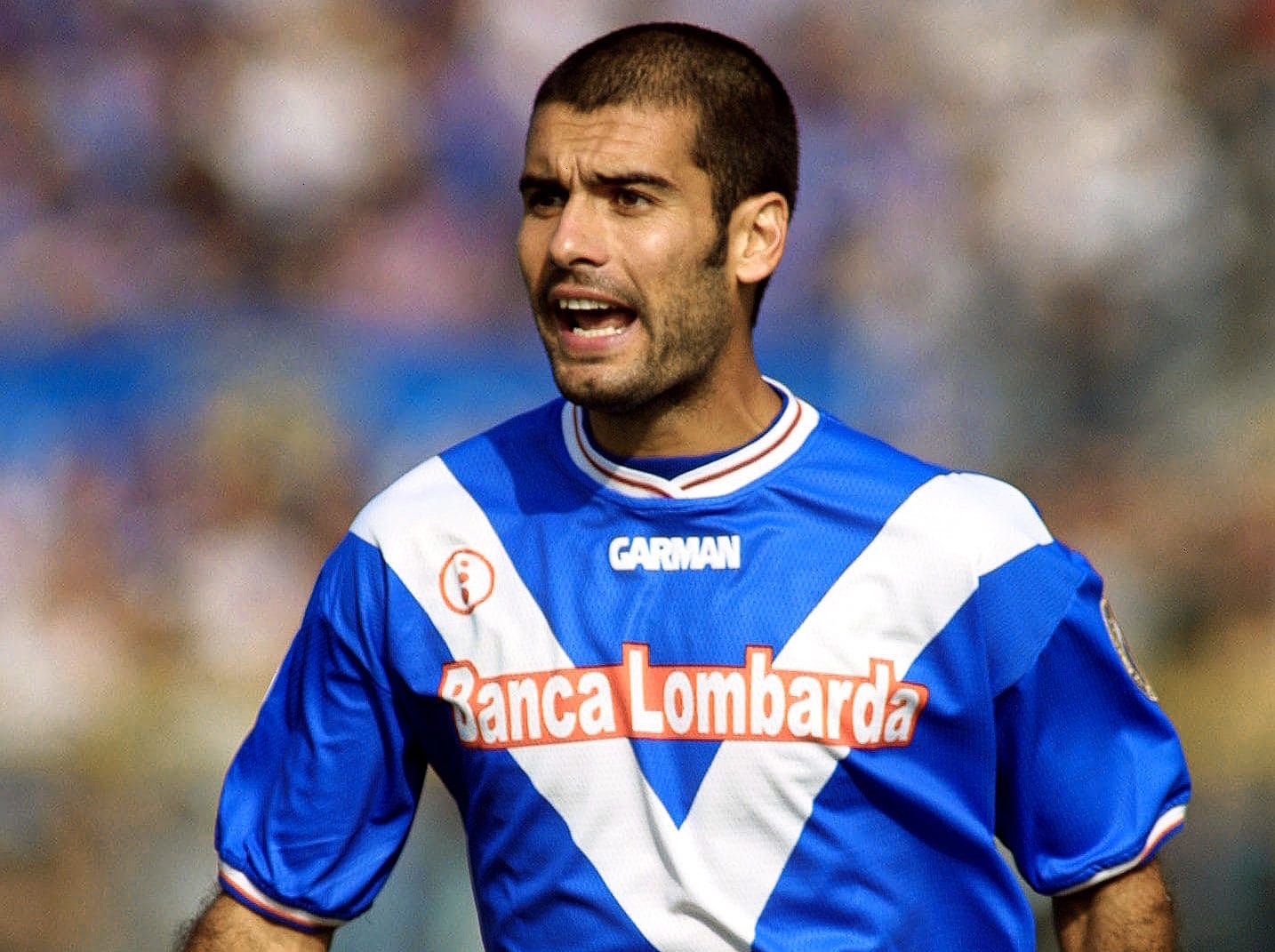
Long before Manchester City, before Barcelona’s brilliance and Bayern Munich’s precision, Guardiola failed drug tests as a player in Italy.
That fact alone makes many within football deeply uncomfortable. Not because failed tests automatically define a person forever, but because the sport prefers to pretend the episode barely happened.
Guardiola tested positive twice for nandrolone while playing for Brescia in 2001. Suspensions followed. Appeals followed. Years later, he was ultimately cleared through evolving anti-doping technicalities surrounding sample stability and testing procedures.
Legally, he walked away innocent.
Publicly, the issue vanished.
Football rarely revisits it. Broadcasters rarely mention it. Major retrospectives glide neatly around the subject as though it belongs to another universe entirely. Yet if Guardiola’s career deserves serious historical examination, that chapter cannot simply be scrubbed away because people admire his football.
This is where nuance matters.
Mentioning Guardiola’s failed tests does not mean branding him a cheat for life. Mentioning Manchester City’s financial charges does not mean declaring legal guilt before the process concludes. Adults should be capable of handling complexity without collapsing into tribal screaming.
Guardiola can be a football genius and still carry uncomfortable baggage.
Both things can exist together.
That is precisely what makes his legacy fascinating.
Football Changed In His Image
What nobody can deny is Guardiola’s influence.
English football once sneered at possession play. Pundits dismissed patient build up as foreign indulgence. Full backs tucked inside and goalkeepers splitting centre halves looked faintly ridiculous at first.
Now everybody does it.
From elite academies to Sunday league touchlines, Guardiola’s ideas seeped into the bloodstream of the sport. Coaches copied his pressing structures, his positional rotations and his obsession with control. He made risk fashionable. Defenders stopped clearing long and started playing through pressure. Goalkeepers became playmakers.
Some supporters hate what followed. They see sterile domination, robotic positioning and football drained of spontaneity. Others see tactical art.
Either way, the impact is undeniable.
This is where comparisons with Ferguson become difficult. Ferguson built dynasties and devoured opponents through force of personality, adaptation and competitive fury. Guardiola altered football’s language itself. The game looks different because of him.
That deserves recognition.
But recognition should not become worship.
Too much modern football coverage operates like public relations. Managers become brands. Clubs become content factories. Difficult conversations are treated as awkward interruptions to the entertainment product.
That is why so many supporters reacted with cynicism the moment Guardiola’s departure emerged. Across fanbases there was immediate suspicion that the timing was convenient, that the looming financial case hanging over City had become impossible to ignore.
Fair or unfair, that scepticism now forms part of the story. Guardiola cannot escape it.
Exit Leaves Questions Behind
Perhaps the clearest indication of Guardiola’s impact lies in the fear surrounding his successor.
Manchester City are not merely losing a manager. They are losing the face of an era. For a decade Guardiola became the public voice, the shield and the symbol of the entire project. When criticism arrived, he fronted up. When success arrived, he embodied it.
Replacing coaches is possible. Replacing figures who shape institutional identity is far harder.
That challenge now belongs to the next man through the door.
Yet Guardiola’s own departure also feels revealing. There is a sense of immaculate timing about it. One more domestic double, one final salute, then away before the final verdict on City’s financial conduct arrives.
Again, nobody can state this as fact. But football supporters are not fools. They understand optics. They understand how reputations are protected.
And Guardiola has always protected his carefully.
There is a reason he rarely manages in difficult environments. Barcelona with Messi, Bayern with overwhelming superiority, Manchester City with unmatched financial muscle. Great managers often seek elite conditions, but Guardiola’s career has unfolded almost entirely with structural advantages already in place.
Some argue that diminishes him. Others say only fools would reject the best opportunities.
The truth probably sits somewhere in between.
What remains undeniable is that Guardiola never attempted the impossible rebuild, never dragged a provincial club to the summit, never walked willingly into chaos. His genius emerged inside highly controlled ecosystems designed for domination.
That does not erase brilliance. But it shapes how history judges it.
Final Whistle On Greatness
Pep Guardiola leaves English football as a transformative figure. He coached some of the finest football this country has ever witnessed. He raised tactical standards. He produced teams of astonishing technical quality and consistency.
He also leaves behind unresolved questions.
That is the reality many within football seem desperate to avoid. They want clean endings. Heroes applauded into the sunset. Greatness wrapped neatly in gold ribbon.
Sport rarely works like that.
Guardiola’s legacy deserves praise, but not sanitisation. His achievements deserve admiration, but not blind reverence. If football wants credibility, it cannot selectively ignore the awkward parts of the story because the football itself was beautiful.
History should remember Guardiola as a revolutionary coach.
History should also remember the cloud that followed him.
Both belong in the conversation.