

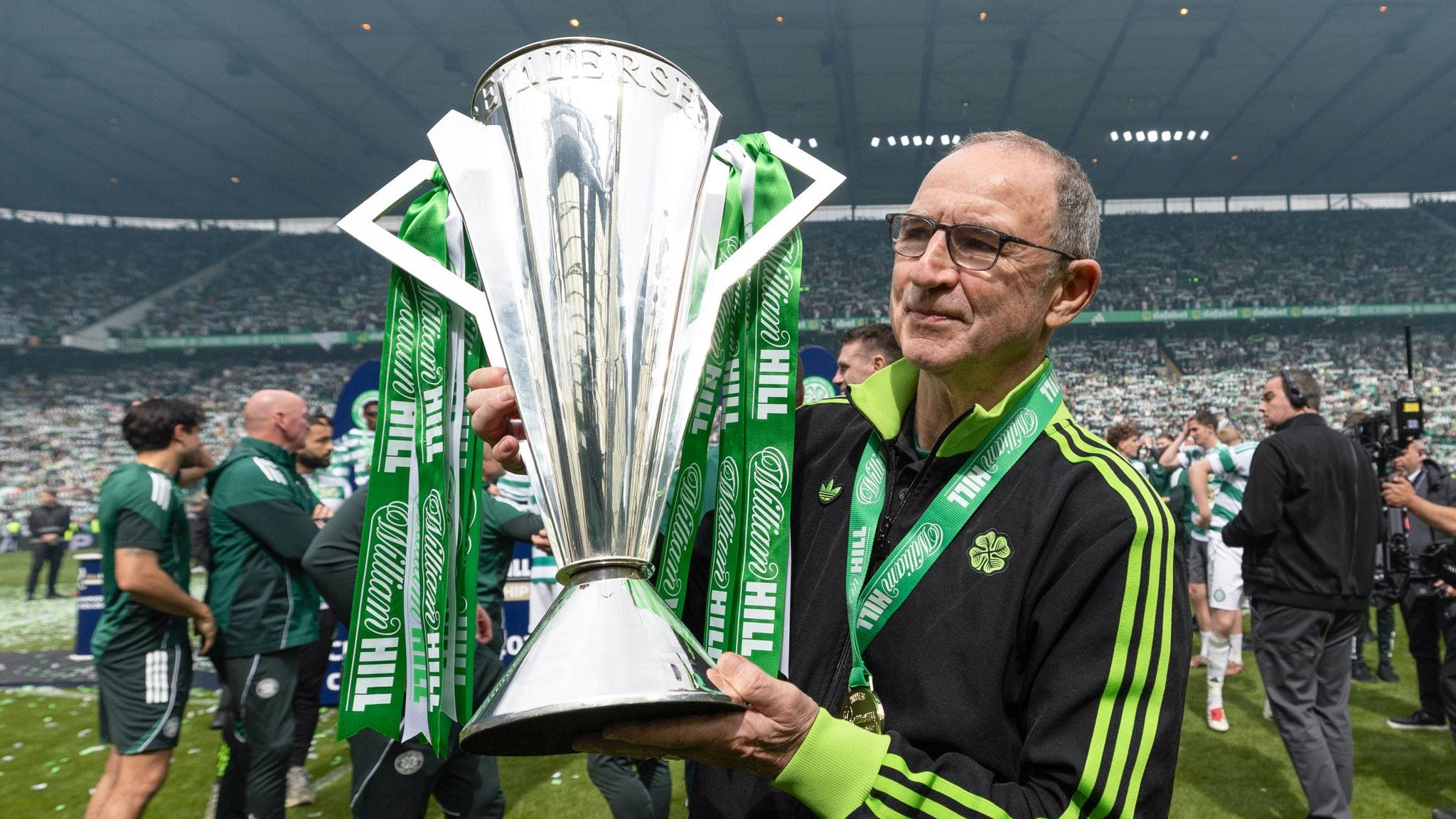
Martin O’Neill did not sound like a man ready to walk away from Celtic on Sunday evening, but he did not sound entirely settled on staying either. Asked directly about his position after Rangers won 1-0 at Celtic Park, he offered an answer that will have unsettled supporters far more than a straightforward show of defiance would have done. “I genuinely will reflect and see,” he said. “It’s a matter of whether I can help the team.” He added, with the dry humour that has always been part of his public persona: “I’ll be 110 in two years’ time so it might be time to wrap it up.”
It was the kind of line that gets repeated regardless of how it was intended, and by Monday morning it had done exactly that across Scottish football. But strip away the joke and there was something more serious underneath it. O’Neill, in his third spell in charge of the club he served so successfully in the early 2000s, has now lost three matches in the space of seven days, and the manner of Sunday’s defeat, at home, to Rangers, with the title race suddenly a two point contest rather than a five point procession, has changed the mood around Celtic Park almost overnight.
A week that got away from Celtic
The sequence is worth setting out in full, because no single result explains the alarm inside Celtic’s support. It began at Ibrox on 14 September, when Rangers thrashed Celtic 3-0 in the League Cup quarter-final, Dan Neil scoring twice either side of a Kevin Kelsy strike on his full debut. Three days later, Celtic were beaten 1-3 at home by Ferencvaros in their Europa League opener, a chastening result against opposition few inside the ground would have expected to leave Glasgow with all three points. Then came Sunday’s league meeting with Rangers, the fixture that mattered most of all given Celtic’s position at the top of the table.
Ryan Naderi’s 33rd minute finish, arriving after Auston Trusty had a goal ruled out for offside moments earlier, proved enough to settle it. Celtic pushed for an equaliser without ever truly threatening one, Colby Donovan denied by a fine save from Ivor Pandur in the second half, and a Rangers goal by Olwethu Makhanya was chalked off for handball at the other end. None of it changed the outcome. Sky Sports pundit Kris Boyd, never short of an opinion where this fixture is concerned, put it bluntly afterwards: “It was men against boys, it was the exact same as last week.”
That is not a comfortable thing to hear for a Celtic side that arrived at the weekend unbeaten domestically and sitting comfortably at the top of the Premiership. Rangers’ win cut that advantage to two points, a significant shift from the cushion Celtic enjoyed only a fortnight ago, and it means Derek McInnes’s side head into the international break with real momentum for the first time since he took charge at Ibrox.
McInnes writes himself into Old Firm history
For the Rangers manager, Sunday was another significant marker in what has been a rapid rise since he replaced Danny Rohl. McInnes became the first manager since 1991 to win each of his first two Old Firm fixtures, a run that began with that League Cup demolition and continued with Sunday’s tighter but no less meaningful league victory. Rangers have now won five matches in a row across all competitions, and the pressing, physical approach that overwhelmed Celtic at Ibrox worked again on Sunday, even if the scoreline this time reflected a far tighter contest.
A patient board and a manager who says he is not immune to criticism
Celtic’s hierarchy, according to those close to the club, are not planning any immediate change, preferring to give O’Neill time to address the problems rather than react to a difficult week with a rushed decision. That patience has not been universally shared by supporters, plenty of whom made their frustration heard after the final whistle on Sunday. O’Neill, for his part, did not shy away from the criticism when asked about it. “I think they’re absolutely entitled,” he said. “I’m not immune from criticism. Far from it.”
He was equally candid about the scale of the problem without describing it as a crisis. “It has been a tough week,” he said. “It’s concerning. Is it a disaster? I don’t think so. We have to rethink and reset.” That reset will now take place during the international break, with O’Neill indicating he intends to use the pause to speak with the Celtic board and take stock before Scottish football resumes. Nobody at Celtic Park is saying yet whether that conversation will end in reassurance or something more significant, and O’Neill himself was careful not to rule out either outcome, noting simply that “they may well want to speak to me” too.
What happens next
Celtic remain top of the Premiership, and a two point lead with the season still young is hardly a crisis position in isolation. But the manner of three defeats in a week, two of them to a Rangers side suddenly playing with real conviction under McInnes, has changed the conversation around O’Neill’s third spell in charge far more quickly than anyone at Celtic Park would have expected a month ago. The international break offers a natural pause for reflection on both sides of Glasgow, but only one of these two clubs returns to domestic action with the winning habit currently sitting in their favour.
If you enjoy honest, considered coverage of moments like this across the whole of the game, consider following It Was Always… Football for more.