

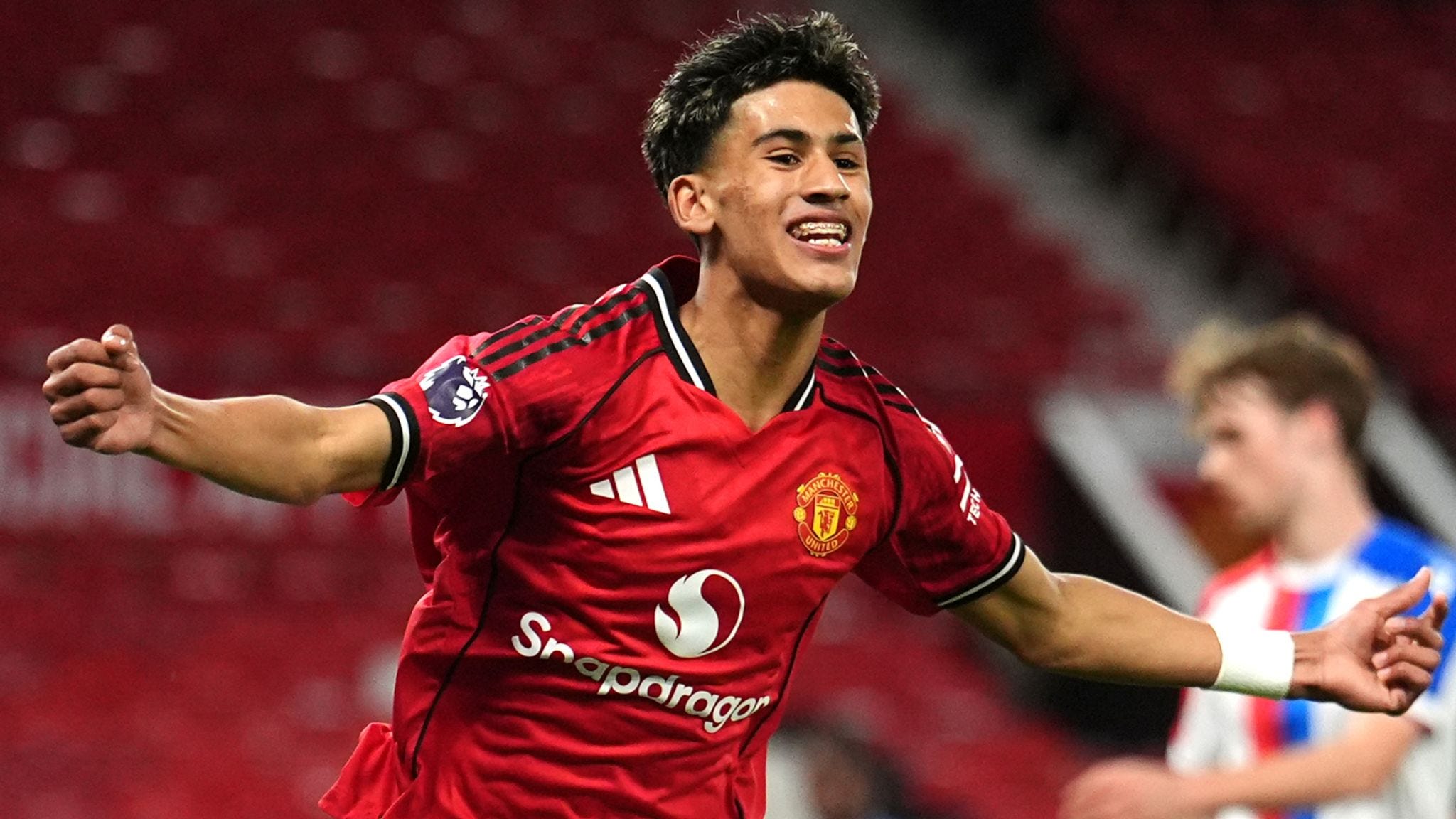
Manchester United’s academy crisis over JJ Gabriel has reached its most significant moment yet. The forward turned 16 this week, the age at which European clubs are permitted to sign him to a professional contract, and still nobody outside his immediate camp knows which way he is leaning.
Gabriel has been one of the most talked about teenagers in English football for more than a year. He became the youngest player to appear for United’s Under-18s when he made his debut at 14, scoring twice, and went on to be named Under-18 Premier League Player of the Season last May. He trained regularly with Michael Carrick’s first team squad over the summer and came off the bench for a few minutes against Atletico Madrid in a pre-season friendly. None of that was enough to stop the relationship between his family and the club breaking down.
In mid-September, Gabriel’s representatives submitted a formal request for his registration with United to be cancelled. The dispute, by most accounts, centres on playing time. His family wanted firm assurances about first team minutes before they would discuss a new contract, while United’s position has consistently been that a 15 or 16 year old, however gifted, should be developed through a structured pathway rather than rushed into senior football to satisfy outside pressure. United have pointed to the individual development plan built around Gabriel, his inclusion in first team training and the squad photograph taken on 8 September as evidence they were already backing him. His camp clearly wanted more, and faster.
Real Madrid, Barcelona and the Race for Europe’s Most Talked About Teenager
What makes this such a serious situation for United is the calibre of the clubs now circling. Real Madrid have been described as the financial frontrunner, with a significantly higher offer on the table than anything Barcelona have proposed, and their interest has only sharpened since missing out on Rodri in the summer. Barcelona, though financially behind in the race, are understood to be leaning heavily on their football project and development model to win Gabriel over, with sporting director Deco personally involved in talks with his representatives. Paris Saint Germain and Bayern Munich are also keeping a close watch on how things develop, even if they are currently viewed as less advanced than the two Spanish giants.
None of this is happening quietly. Gabriel and his family reportedly visited Barcelona last month, and reports throughout September pointed to genuine affection for the club and admiration for how it develops young attacking talent. Real Madrid’s financial muscle, though, is not something any 16 year old’s camp can simply ignore, and nobody connected to the story expects a straightforward choice.
For Manchester United, the uncomfortable truth is that keeping Gabriel registered does not guarantee keeping him at all. He remains on United’s books for now, but has not trained with the club since his camp’s departure request went in, and there is a growing sense among those following the situation that a move abroad is more likely than not.
Why Manchester United Are Prepared to Fight This in Court
The reason this story carries more weight than a routine academy departure is the method by which Gabriel could leave. Having turned 16, he is also eligible to apply for a European passport through his parents, which under FIFA’s international transfer rules could allow him to move to a club on the continent well before he would otherwise be permitted to sign for an overseas club as an English minor. United sources have made clear they would consider legal or regulatory action against any club, agent or intermediary judged to have engineered a departure in a way that exploits that loophole.
It is a message aimed squarely at Real Madrid and Barcelona as much as it is at Gabriel’s camp. English academies have spent a decade trying to shore up protections against bigger European clubs picking off their best teenage talent, and United clearly see this case as one worth making an example of if it comes to it. How that stance holds up against what Gabriel and his family actually want is another matter entirely. Wayne Rooney, discussing the saga before this week’s birthday, captured the mood among many in English football: “Everyone has seen it coming,” he said, before adding a pointed reminder, “but he’s 15, he’s still a kid.”
That tension, between a teenager’s obvious talent and the very adult business being conducted around him, is exactly why this story has refused to go away. United’s academy system produced one of the most exciting attacking prospects seen at Carrington in years, only to find themselves locked in a standoff over his future before he has kicked a ball in senior competitive football. A decision from Gabriel’s camp is expected within days rather than weeks, and whichever way it goes, it will say something about where the balance of power in developing young English talent now sits.
For a club already under scrutiny over results and direction this season, losing a player built up as the future of their forward line to Spain would sting far beyond the modest training compensation United would likely receive in return. For Gabriel, still a few months into being old enough to make these decisions himself, the choice he makes now could shape the rest of his career.
If you want the big transfer sagas and the stories behind the headlines explained properly, subscribe to It Was Always… Football and never miss the next instalment.