


When Jamie Carragher speaks about Liverpool, people listen, even when they bristle. He talks with authority, memory and emotional proximity. That can sharpen analysis, but it can also blur the line between explanation and frustration. His recent assessment of Liverpool FC lands plenty of punches. It identifies real problems. Where it falters is in how those problems are weighed against each other, and in how confidently solutions are offered without fully confronting the constraints that created them.
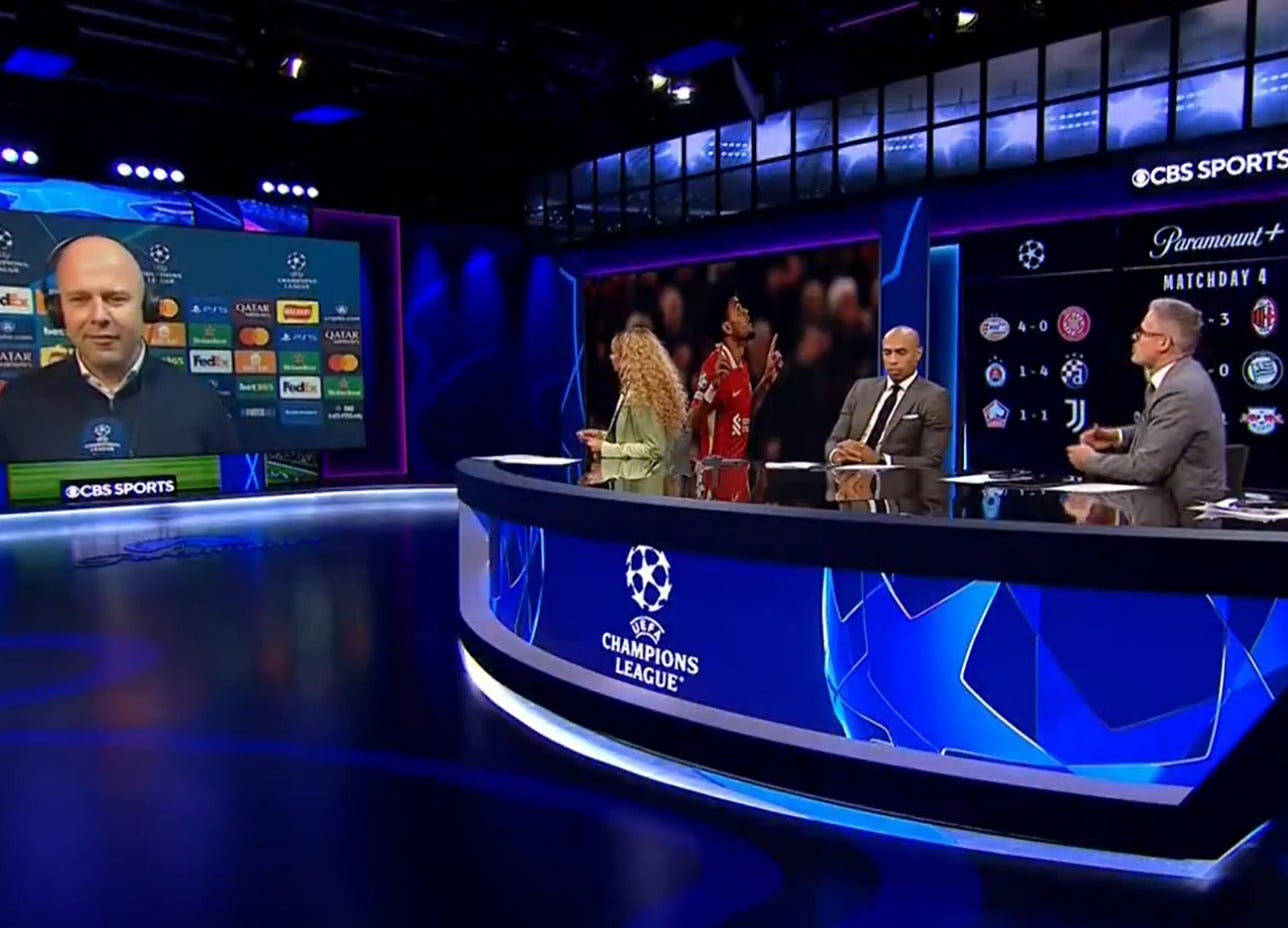
On the CBS Champions League coverage, Carragher painted a picture of a side that has lost intensity, misjudged recruitment, and drifted too far from the identity that powered last season’s title. Much of that stands up. Yet taken together, his critique becomes a little too neat, as though Liverpool simply forgot who they were, rather than being reshaped by deliberate decisions made at multiple levels of the club.
Intensity and pressing, Carragher’s strongest point
Carragher’s most convincing argument concerns intensity off the ball. He returns again and again to the idea that Liverpool no longer hunt teams, that they press with a spare man, and that opponents now play through them too easily. He notes that modern pressing is almost man-to-man and that keeping an extra defender free often leaves Liverpool two players short once the goalkeeper becomes part of the buildup.
This is hard to argue with. Liverpool’s press has softened. It has become cautious rather than confrontational. Carragher’s line that intensity without the ball is what whips the crowd up cuts to the emotional core of Anfield, but it also reflects tactical reality. When Liverpool counter pressed at their peak, they created chances without needing to break down a settled defence. They made mistakes inevitable.
Where Carragher is less precise is in attributing this mainly to tactical choice. He hints at training methods, at fitness levels, and at a desire to reduce injuries compared to the previous regime. All valid points. But intensity does not exist in isolation. It is tied directly to squad profile. Liverpool have replaced runners with technicians. That choice shifts what pressing looks like. You cannot ask the same physical output from players signed for control and craft, then be surprised when the press loses its edge.
Carragher recognises this tension, but he treats it as a reversible switch rather than a structural consequence.

Recruitment criticism, fair, but simplified
Carragher’s most controversial claim is that every major decision in the summer transfer window “blew up in their face”. That is rhetorically strong and analytically blunt.
He questions the logic of signing two expensive strikers alongside a high class number ten. On this point, he is largely right. The geometry of the pitch matters. Central roles collide. You either distort the system or bench a marquee player. Liverpool now look like a team assembled by department rather than by blueprint.
His confusion over how those attackers were ever meant to fit together echoes what many supporters felt at the time. It is also where hindsight risks being overstated. Squad building often works on probabilities. Injuries, form drops and adaptation curves cannot be perfectly predicted. Carragher acknowledges hindsight, but then barrels past it.
Where his argument is strongest is on balance. Liverpool failed to replace a direct wide runner. That absence has narrowed the attack and made breaking deep blocks harder. He also points to the lack of a physically dominant central midfielder. Again, difficult to dispute. Liverpool often field two or three midfielders who are neat, intelligent and technically secure, but not imposing. Against aggressive Premier League midfields, that matters.
Yet Carragher’s framing suggests recruitment errors alone explain the slide. That ignores the fact that this squad was good enough to win the league twelve months ago. Recruitment has altered it, but coaching choices and game management have shaped how those alterations play out.
Europe versus the league, Carragher’s telling contrast
Carragher draws a sharp distinction between Liverpool’s European and domestic performances. He argues that European opponents come out to play, creating space that suits Liverpool, whereas Premier League sides sit deep, scrap, and turn matches into physical contests.
This is one of his most insightful observations. Liverpool look more comfortable when games are open. Their Champions League wins have carried a familiar rhythm, faster transitions, clearer attacking patterns. In the league, they often appear bogged down.
What Carragher perhaps underplays is what that contrast says about adaptability. Elite teams solve different problems. They find ways to impose themselves when space disappears. Manchester City have done it through positional control. Arsenal through physical dominance and set pieces. Liverpool have not yet found their version under Arne Slot.
Saying the team is better suited to Europe risks excusing a domestic shortcoming that needs fixing, not explaining away.
Manager pressure and responsibility, a careful hedge
Carragher walks a careful line on the head coach. He praises him, notes last season’s title, and expresses discomfort at even discussing job security. At the same time, he warns that missing out on Champions League qualification would be a major failure.
This is fair territory. Finishing sixth after winning the league is a significant drop. Carragher is right that elite clubs cannot drift without consequence. Where his argument softens is in how responsibility is allocated. He gestures towards a collective failure, players underperforming, recruitment misfiring, hierarchy above the manager needing scrutiny.
That is sensible. Yet it slightly contradicts his earlier tone of urgency. If the issues are structural and collective, then patience becomes part of the answer. If they are primarily tactical and motivational, then change becomes more pressing. Carragher seems to want both conclusions at once.
The missing fix, diagnosis without a blueprint
Perhaps the most common criticism of Carragher’s CBS analysis is that it explains what is wrong without clearly stating how to fix it. He calls for more intensity, faster football, and better recruitment. All are true. None are specific.
Liverpool cannot simply decide to be last season’s team again. Personnel has changed. Contracts have been renewed. Money has been spent. The path back requires prioritisation.
The clearest fix lies in midfield. Liverpool need a player who can dominate space, win duels, and move the ball forward with authority. Carragher references this idea indirectly by lamenting past missed opportunities, but nostalgia does not build a future.
They also need clarity up front. One striker, one plan, supported by width and runners. If that means difficult conversations and expensive benches, so be it. Elite squads demand ruthless decisions.
Finally, Liverpool need to decide what version of control they want. Control through possession alone has dulled them. Control through pressure, territory and tempo once made them feared.
Carragher’s analysis captures the unease around the club. It reflects what many supporters feel in their bones when watching Liverpool this season. Where it falls short is in treating those feelings as self-explanatory. They are not. They are the product of choices, trade-offs and transitions.
Liverpool do not need reminding of who they were. They need a clear idea of who they are becoming, and whether that version can still win in the Premier League.