

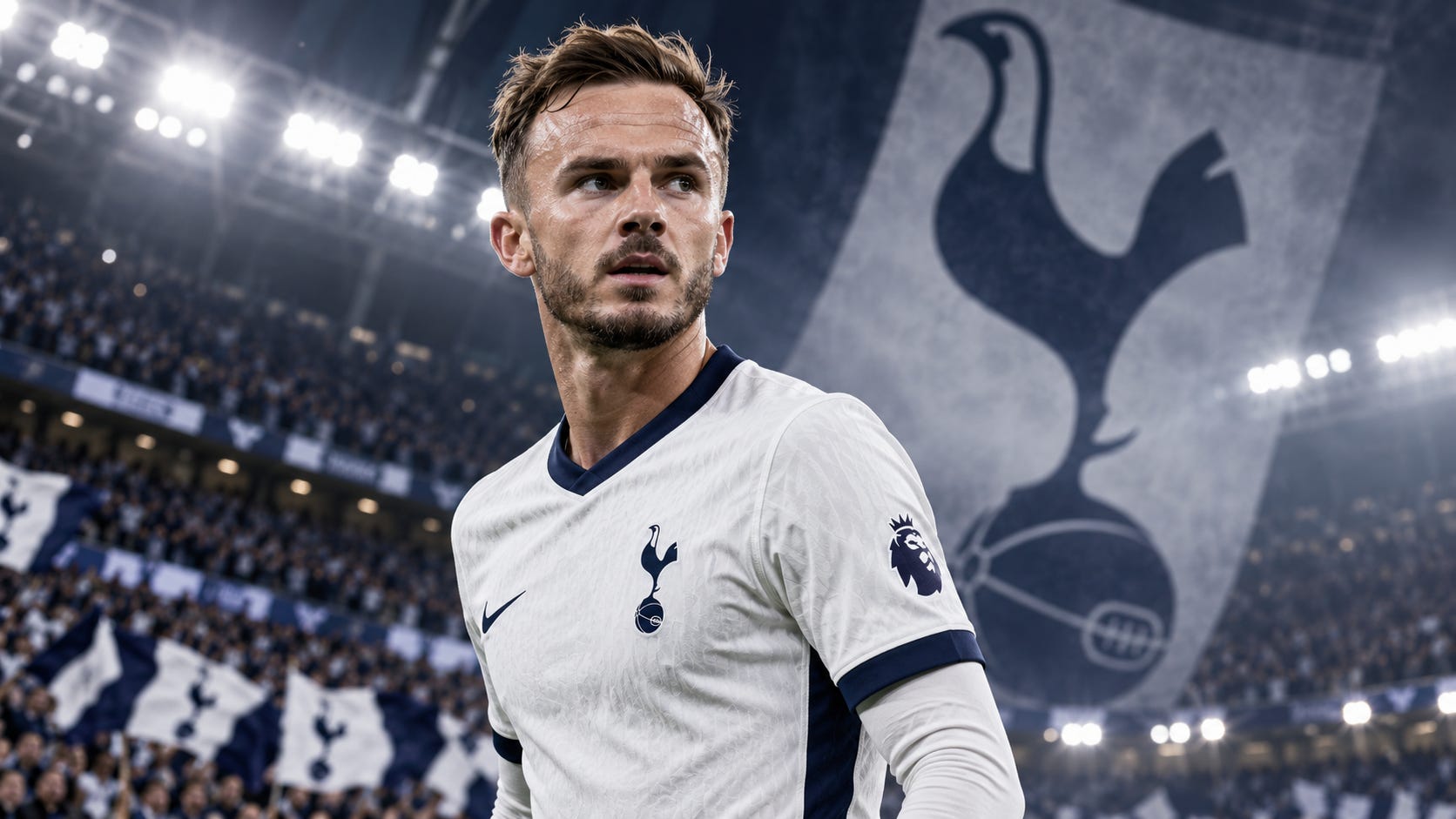
James Maddison had not started a Premier League match in five hundred and thirty-six days. When the chance finally came, on a wet Monday night against Coventry City, he needed just fourteen minutes to remind everyone at Tottenham what they had been missing.
His opener was a first-time finish that dipped over goalkeeper Carl Rushworth from the edge of the box, the kind of goal that settles nerves rather than simply the scoreline. It helped Tottenham to a 3-1 win, their first league victory of the season, and it was the sort of moment a footballer pictures during the long, grinding months of rehabilitation. Maddison admitted as much afterwards. “They are the ones you dream of,” he told Sky Sports, describing his recovery from a serious knee ligament injury as “the light at the end of the tunnel.”
Now comes a far sterner examination of where that comeback really stands. Tottenham travel to Stamford Bridge on Saturday evening to face a Chelsea side that has won its last two matches and sits fourth in the Premier League. Roberto De Zerbi must decide exactly how much he can ask of a player who, before that Coventry appearance, had barely managed two full matches of senior football in almost a year and a half.
A comeback nobody wants to rush
Maddison’s injury story has been a cruel one. His last competitive start before Coventry came back in May 2025, under a different manager, and a serious knee ligament problem kept him out for the best part of two seasons, with setbacks along the way that delayed what should have been a straightforward return. By the time he finally got his chance from the start again, De Zerbi had already made clear he was in no rush to force the issue.
That caution has not disappeared just because the comeback produced a goal. Speaking before the Chelsea game, De Zerbi was blunt about his reluctance to throw Maddison straight back into a run of matches. “I don’t want to take risks,” he said, a reminder that one good night against Coventry does not erase eighteen months of muscle memory and match sharpness that still needs to be rebuilt carefully. Maddison himself has said the timing of his return felt right because he and his manager had spoken about it during the week, and that De Zerbi had wanted to watch him from the side rather than push him into a decision before he was ready.
Tottenham’s team news around the Chelsea match reflects that same caution across the squad. Pedro Porro has been pictured back in training and is hopeful of involvement after missing games either side of the international break. Destiny Udogie, rested against Coventry, has had a couple of weeks to recover from a knee issue and is expected to be in contention, though De Zerbi remains wary of overworking him so soon.
A reminder that he was not alone
Maddison’s comeback shared the spotlight that night with another one. Dejan Kulusevski came off the bench to a standing ovation, making his first appearance in around seventeen months after his own long battle back from injury. Maddison said he understood exactly how that felt, and that seeing his teammate get his moment back made the whole evening “worth it.”
Omar Marmoush added Tottenham’s second with a second-half finish, one small return on a vast summer outlay that has defined De Zerbi’s first months in charge. Spurs are reported to have spent in the region of £237million rebuilding the squad around him, with Marmoush joined by Sandro Tonali and Savio among the new faces brought in to transform a team that had been fighting relegation only months earlier. For long spells of this season, the results have not matched the outlay, which is exactly why a night like the Coventry win, built on two emotional returns from injury rather than a big name arrival, mattered so much.
The table still tells its own story
For all the emotion, Tottenham remain only sixteenth in the Premier League, level on six points with Coventry and separated only by goal difference. The size of the rebuild under De Zerbi makes that position hard to ignore, and a trip to an in form Chelsea side will say a great deal about how much of the Coventry performance can be built upon.
There is also a familiar absence to navigate. Rodrigo Bentancur will serve the second match of a three game suspension at Stamford Bridge, having been sent off at Old Trafford earlier this month for a headbutt on Luke Shaw after the United full back had shoved him to the ground. Tottenham chose not to appeal, wary of the ban being extended further, and Bentancur will also miss the following match against Crystal Palace. Mykhailo Mudryk, out on loan at Tottenham from Chelsea, is ineligible to face his parent club under the terms of his loan.
Chelsea, by contrast, arrive with real momentum. Xabi Alonso’s side have won their last two matches, beating Bournemouth at home before ending Everton’s seven match unbeaten run with a 2-0 win at Goodison Park. It follows an uneven opening stretch that included defeats to Arsenal and Brentford sandwiched around a draw with Hull City, but Alonso has consistently framed the project as a longer term one. “The Chelsea we are now, and the Chelsea we will be in May, will be different,” he said recently. “And I’m sure it will be better.”
What Saturday can still prove
A result at Stamford Bridge would mean more to Tottenham than three points alone. It would suggest that the emotional lift of the Coventry win, and the careful handling of a player who has fought his way back from such a long absence, can translate into something more durable against one of the division’s in form sides. For Maddison, it would be another step in a recovery that has already asked a great deal of his patience. For De Zerbi, it would be early evidence that a squad rebuilt at enormous cost is finally beginning to find its feet.
Either way, few fixtures this weekend carry quite the same mixture of relief, risk and renewed hope. It is exactly the kind of storyline worth following closely over the coming weeks.
If stories like this are the reason you follow football, subscribe to It Was Always… Football and get every piece as soon as it lands.