

It has been a strange week in football.
For a summer that usually delivers constant rumours, negotiations and dramatic transfer twists, the market has felt unusually quiet. I expected far more movement by this stage, with clubs beginning to show their hand and big deals starting to fall into place.
Instead, we have had a quieter period.
Perhaps that is not the worst thing.
After months of constant noise, endless speculation and every possible rumour being analysed from every angle, football occasionally benefits from a moment where the volume drops.
This week, I found myself stepping away from the usual rhythm. I have not watched any live sport, which is almost unheard of given the amount of time I spend immersed in football. The previous few weeks have delivered an overload of sporting action, from the World Cup and pre season friendlies to darts, cricket, tennis, golf and athletics.
Sometimes you need that reset.
Sometimes you need to step back from the results, the transfers and the arguments to remember what actually makes sport special.
The stories.
The characters.
The moments that stay with us.
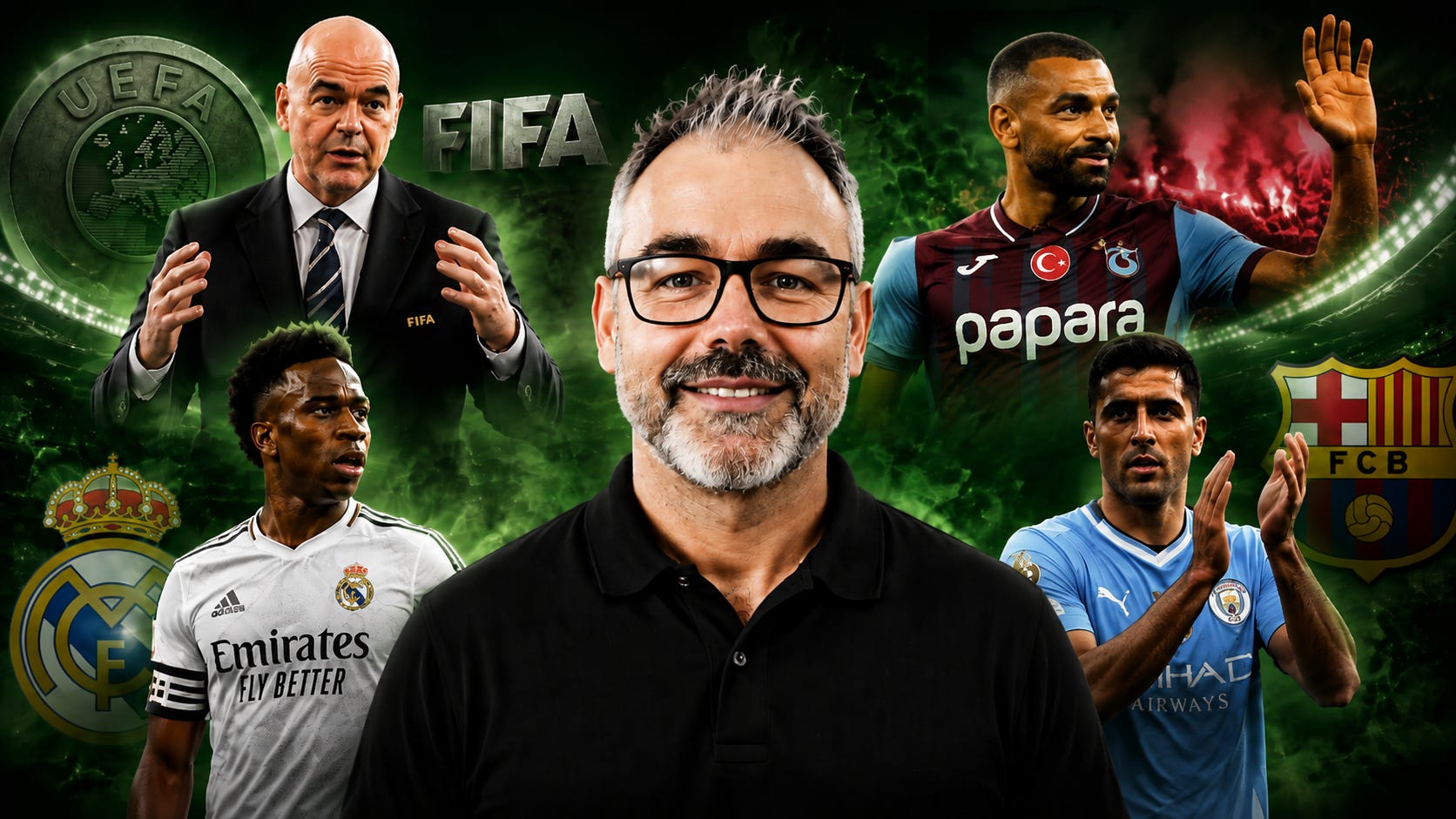
That is probably why this week’s Gibbs’ Game has taken a slightly different route. Rather than focusing on transfer speculation, the biggest stories have been about the people shaping football and the decisions that could define the next era of the sport.
The battle between UEFA and FIFA is not just about one proposal. It’s about trust, power and who should be responsible for protecting the game.
Mohamed Salah’s move to Trabzonspor is not simply about a player changing clubs. It’s about legacy, happiness and how we judge the final chapters of greatness.
Vinicius Junior’s new Real Madrid contract tells a story about the power of elite clubs and how even the biggest challengers can sometimes become part of somebody else’s negotiation strategy.
And Rodri’s potential departure from Manchester City offers the chance to appreciate one of the greatest midfielders of his generation before the curtain closes on another remarkable chapter.
Four very different stories.
One common theme.
Football is shaped by people.
The players who create memories. The managers who build teams. The executives who make decisions. The leaders who determine where the game goes next.
That is what I wanted to explore in this week’s column.
Because sometimes the quiet weeks reveal the most important stories.
FIFA Has Lost The Trust Of Football
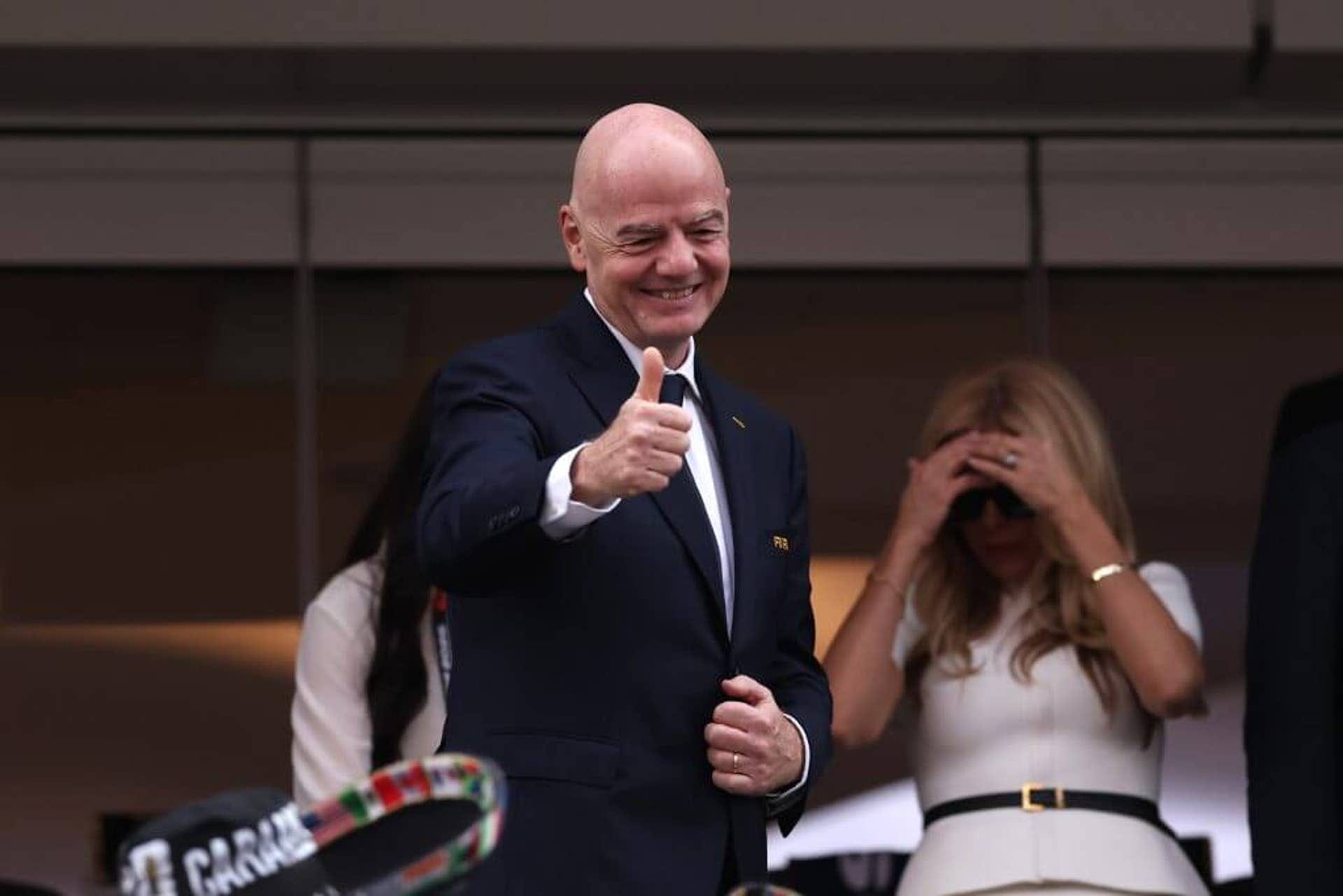
Last week, I wrote that football needed to find a way to protect itself from Gianni Infantino.
This week, it feels like the rest of the football world has started asking the same question.
The difference is that supporters have been frustrated for years. Now, football’s most powerful institutions are no longer simply expressing concerns behind closed doors. They are publicly challenging the direction of the game and the leadership of the man responsible for guiding it.
UEFA has refused to withdraw its threat of a World Cup boycott. It has gone further, making clear that confidence in Infantino’s presidency has been lost and pushing towards a vote of no confidence or a credible challenger for the FIFA presidency.
This is not a disagreement over a minor administrative decision.
This is a crisis of trust.
I have made my feelings about Infantino clear. I believe football needs new leadership before more damage is done to a sport that belongs to supporters, players and communities far beyond the boardrooms where these decisions are made.
The latest controversy began with FIFA’s attempt to create a commercial subsidiary that would allow private investment into its competitions. That proposal has now collapsed under the weight of opposition, but the fallout has become something much bigger.
The problem was never simply the idea itself.
The problem was the way it was handled.
UEFA’s position is revealing because it is not merely asking FIFA to abandon this one proposal. It wants guarantees that similar attempts to open major competitions or governance structures to private ownership will never happen again.
That tells us everything.
The issue is not one decision. It is the fear of where the next decision leads.
For too long, football has been told that every expansion, every commercial opportunity and every new revenue stream represents progress. Yet somewhere along the way, the people running the game have forgotten a simple truth.
Football’s value comes from what it means, not just what it generates.
The World Cup is not powerful because it creates enormous income. It is powerful because of what it represents. It is memories, identity, pride and belonging. It is generations of supporters watching their countries compete on the biggest stage.
It should never become another investment opportunity waiting to be packaged and sold.
The wider concerns around FIFA only strengthen the argument that this is about much more than one proposal.
Reports of host cities chasing promised legacy payments after helping stage FIFA events have raised further questions about priorities and transparency. Cities and taxpayers carry significant responsibilities when hosting major tournaments, while FIFA remains the organisation controlling the majority of the commercial rewards.
That imbalance is difficult to ignore.
FIFA has always argued that its mission is to develop football around the world. That is an important responsibility, and the funding it provides to smaller associations has undoubtedly helped grow the game in many countries.
However, financial support cannot become a substitute for accountability.
A governing body cannot expect everyone to accept every decision simply because money is being distributed.
Leadership requires trust.
And trust has been damaged.
Infantino’s response has been to insist he retains the full support of FIFA’s leadership team following crisis meetings in Morocco. FIFA has acknowledged mistakes were made around the failed proposal and promised a review of the process.
But apologies after the fact do not automatically repair confidence.
When major stakeholders feel excluded from decisions affecting football’s future, the damage is already done.
That is why UEFA’s position matters.
This is not simply a battle between European football and FIFA. It is a warning sign that the foundations of football governance are becoming increasingly unstable.
Football needs leaders who understand they are custodians, not owners.
They are temporary guardians of something much bigger than themselves.
Gianni Infantino may still have support from some within FIFA, but the most important question is not whether he can survive another political battle.
It is whether football can afford another chapter under the same leadership.
Right now, too many people who care about the game are asking the same question.
And that should concern everybody.
Mohamed Salah Chose Happiness, And Football Should Celebrate That
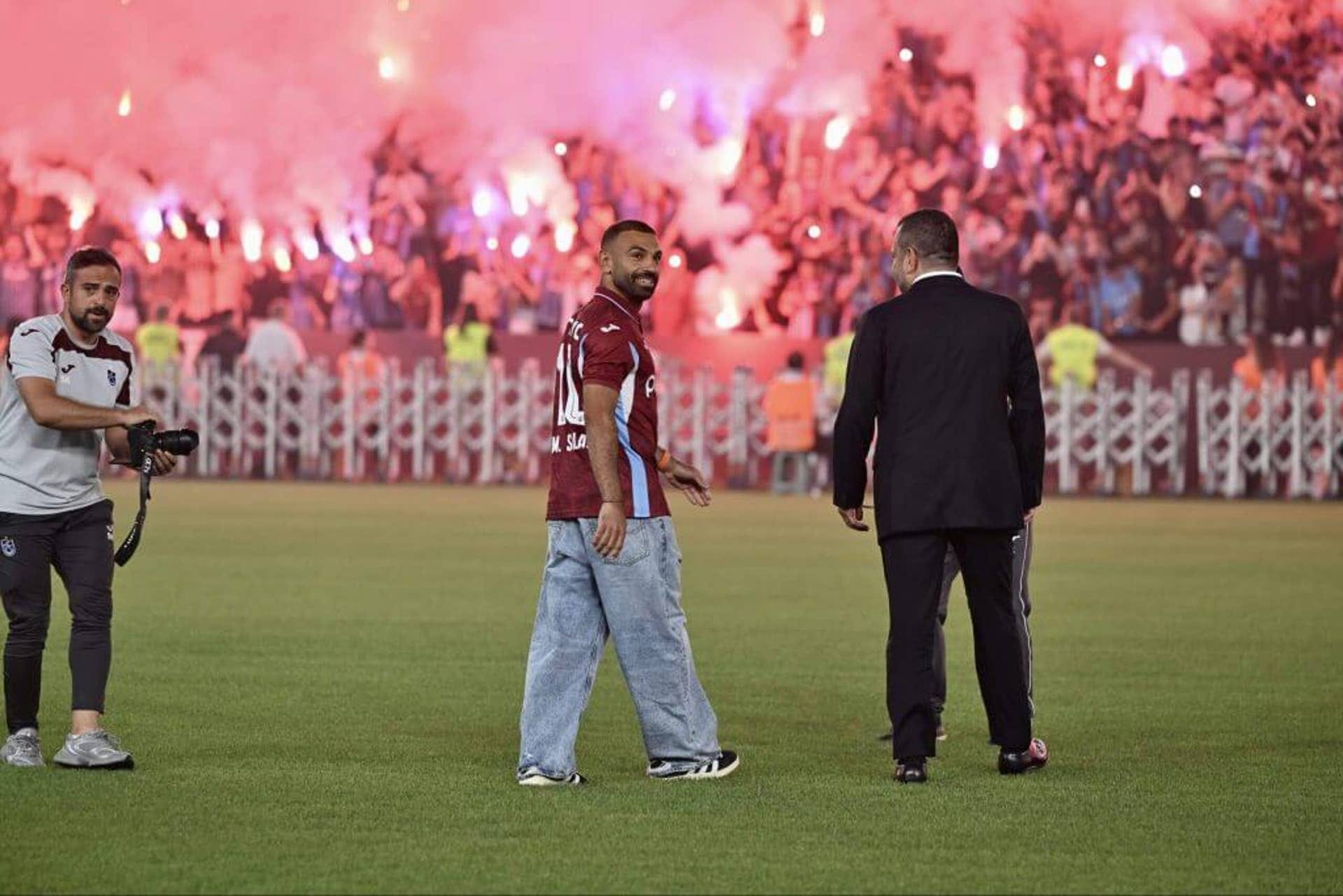
There was something strangely beautiful about watching Mohamed Salah walk into a Turkish stadium this week.
Not because of the destination.
Not because Trabzonspor represents the highest level of competition he could have chosen.
Because of the reaction.
A player who had just closed one of the greatest chapters in Liverpool’s modern history walked into a new stadium and was greeted like a king. Thousands of supporters filled the ground, songs were sung, flares lit up the night and Salah looked genuinely moved by the welcome he received.
That matters.
Football has become so obsessed with status, leagues and trophies that we sometimes forget the simplest part of the sport.
Players want to feel loved.
For Mohamed Salah, perhaps that is the most important part of this decision.
As a Liverpool supporter, I wanted Salah to stay forever. Of course I did. How could anyone who watched his years at Anfield want anything different? He arrived with something to prove after his difficult spell at Chelsea and left as one of the greatest players ever to wear the shirt.
That is the reality.
Whatever happens next, nothing can change what he achieved.
Two Premier League titles.
A Champions League triumph.
257 goals in 442 Liverpool appearances.
A place alongside the very best players in the club’s history.
His final year was difficult. That cannot be ignored. Liverpool changed. The team around him changed. His numbers dropped and questions emerged about whether we were seeing the beginning of the decline that eventually affects every great player.
That is football.
Nobody stays at their peak forever.
The mistake is allowing one difficult season to rewrite everything that came before it.
Salah’s Liverpool legacy was already secure.
The fascinating part about this move is that it challenges the way we think about great players approaching the end of their careers.
When Lionel Messi went to Inter Miami, there was a wider narrative about growing football in America. When Cristiano Ronaldo moved to Saudi Arabia, it became linked with a much bigger sporting and political project. Salah’s move feels different because it feels personal.
He has chosen a place where he has immediately become the centre of attention.
A place where supporters are desperate to celebrate him.
A place where every goal, every performance and every moment will be appreciated.
There is nothing wrong with that.
In fact, I think it is wonderful.
Football supporters often talk about players chasing money, but we rarely consider the other side. The pressure, expectation and relentless scrutiny at the very highest level can be exhausting. Perhaps Salah looked around and decided that his final years should be about enjoyment, happiness and feeling valued.
If that is the case, who are we to criticise?
The reaction in Turkey says everything. Salah spoke about the welcome being an experience he had never had before and thanked supporters for the love they had shown him.
That is the greatest compliment any footballer can receive.
Not every chapter of a legendary career has to end at the very top of the mountain.
Sometimes the most fitting ending is simply finding somewhere that appreciates everything you have already achieved.
Mohamed Salah gave Liverpool supporters unforgettable memories.
Now another group of supporters get the privilege of watching him.
And if he scores goals, wins trophies and walks away from football feeling appreciated, then that is a decision worth celebrating.
Liverpool fans should wish him nothing but success.
Because some players leave behind statistics.
Others leave behind feelings.
Mohamed Salah belongs firmly in the second category.
Arsenal Were Used As Leverage In The Vinicius Jr Saga
There was a brief moment this week where some Arsenal supporters allowed themselves to dream.
And who could blame them?
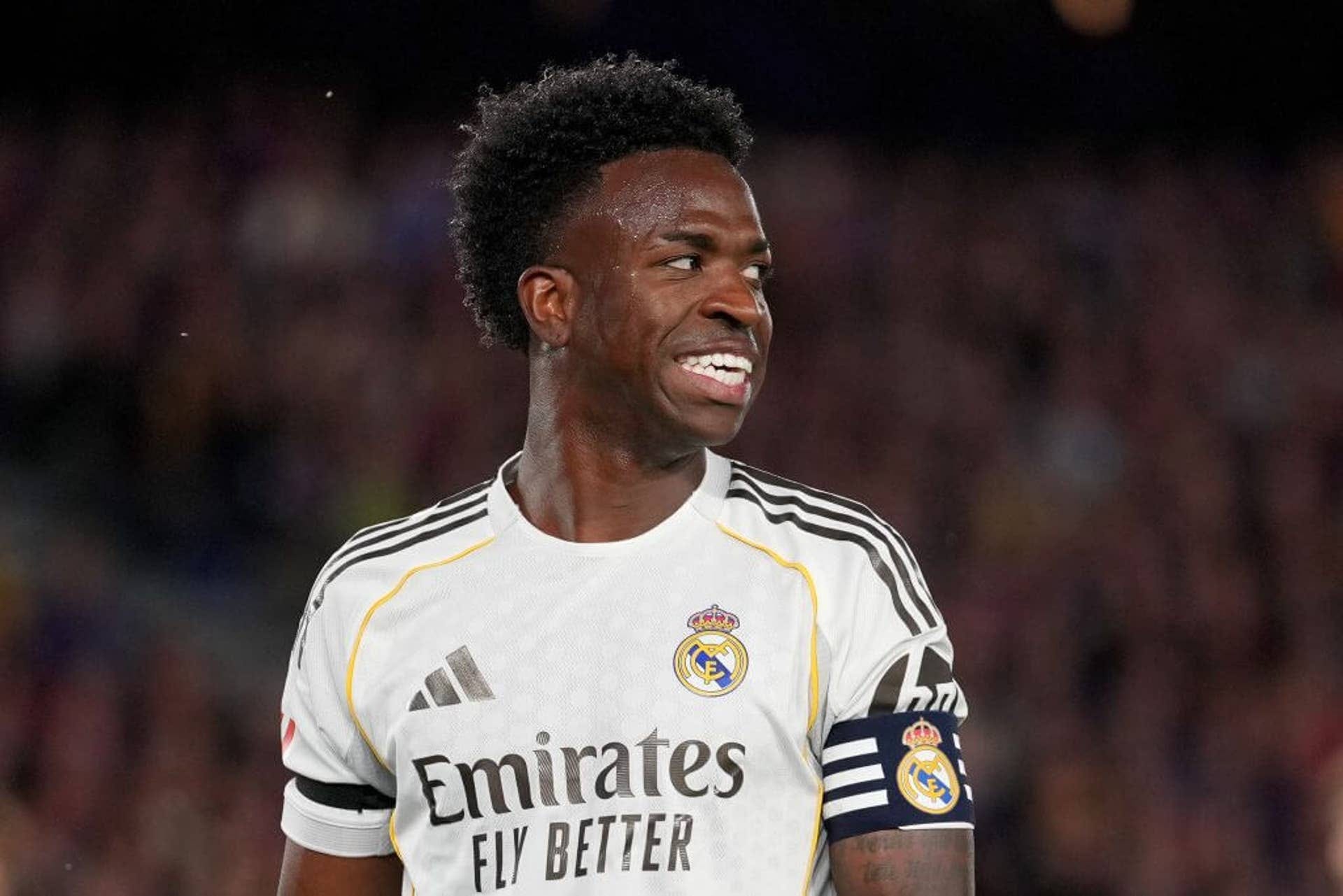
Vinicius Junior is not just another transfer target. He is one of the most recognisable forwards in world football, a player who has delivered on the biggest stages and helped Real Madrid win the biggest prizes.
The idea that he could leave the Bernabeu and arrive at the Emirates was the kind of transfer fantasy that gets supporters believing anything is possible.
Then reality arrived.
Vinicius Junior signed a new contract with Real Madrid until 2032.
The dream disappeared.
The interesting part is not that Arsenal wanted him. In fact, they deserve credit for aiming at this level. The interesting part is that some supporters convinced themselves they were genuinely close to pulling off one of the biggest transfers in Premier League history.
They were not.
They were being used.
That might sound harsh, but this is how elite football operates.
When one of the world’s best players is approaching a contract decision at Real Madrid, every possible source of leverage is explored. Interest from Arsenal, a Premier League champion with serious financial power, was the perfect tool to force Madrid into action.
And it worked.
Real Madrid have now secured one of their most important players for another six years. Vinicius has committed his future to the club where he has scored 128 goals and provided 100 assists in 375 appearances, winning three La Liga titles and two Champions Leagues.
This was always the most likely outcome.
Players leave Real Madrid when Real Madrid decide they are finished with them.
They rarely leave in their prime because another club offers them an attractive opportunity.
Arsenal’s interest was real. Their ownership were prepared to push for the Brazilian if he became available, and Vinicius was open to considering the move if he chose not to renew.
But that is a very different thing from Vinicius actively wanting to leave Madrid.
That distinction matters.
Arsenal supporters should be honest about what happened here.
This was not a player choosing between two equally attractive projects.
This was Real Madrid versus Arsenal.
For all the progress Mikel Arteta has delivered, for all the trophies and all the impressive recruitment, Real Madrid remain the ultimate destination in club football. Walking away from the Bernabeu at 26 years old, when you are one of their biggest stars, requires a very different motivation.
Perhaps the biggest compliment Arsenal can take is that they were even considered a realistic alternative.
That tells you how far they have travelled.
A decade ago, Arsenal were searching for players who could eventually become world class.
Now they are trying to sign players who already are.
That is progress.
However, there was also a touch of delusion surrounding the confidence that this deal was happening.
Vinicius Junior was never some unhappy superstar desperate to escape Madrid. He was a player negotiating from a position of enormous strength. Real Madrid knew his value, Vinicius knew his value and Arsenal’s involvement helped create the pressure required to get the agreement over the line.
Everyone got what they wanted.
Madrid kept their superstar.
Vinicius secured an improved contract.
Arsenal reminded the world they can compete financially at the very highest level.
The only people left disappointed were those who genuinely believed this was ever more than a possibility.
And that is football.
Sometimes a club is not rejected because it is not big enough.
Sometimes it is simply being used as the negotiating table where somebody else signs the deal.
Arsenal have arrived at the top table.
They just discovered that Real Madrid still own the best seat in the room.
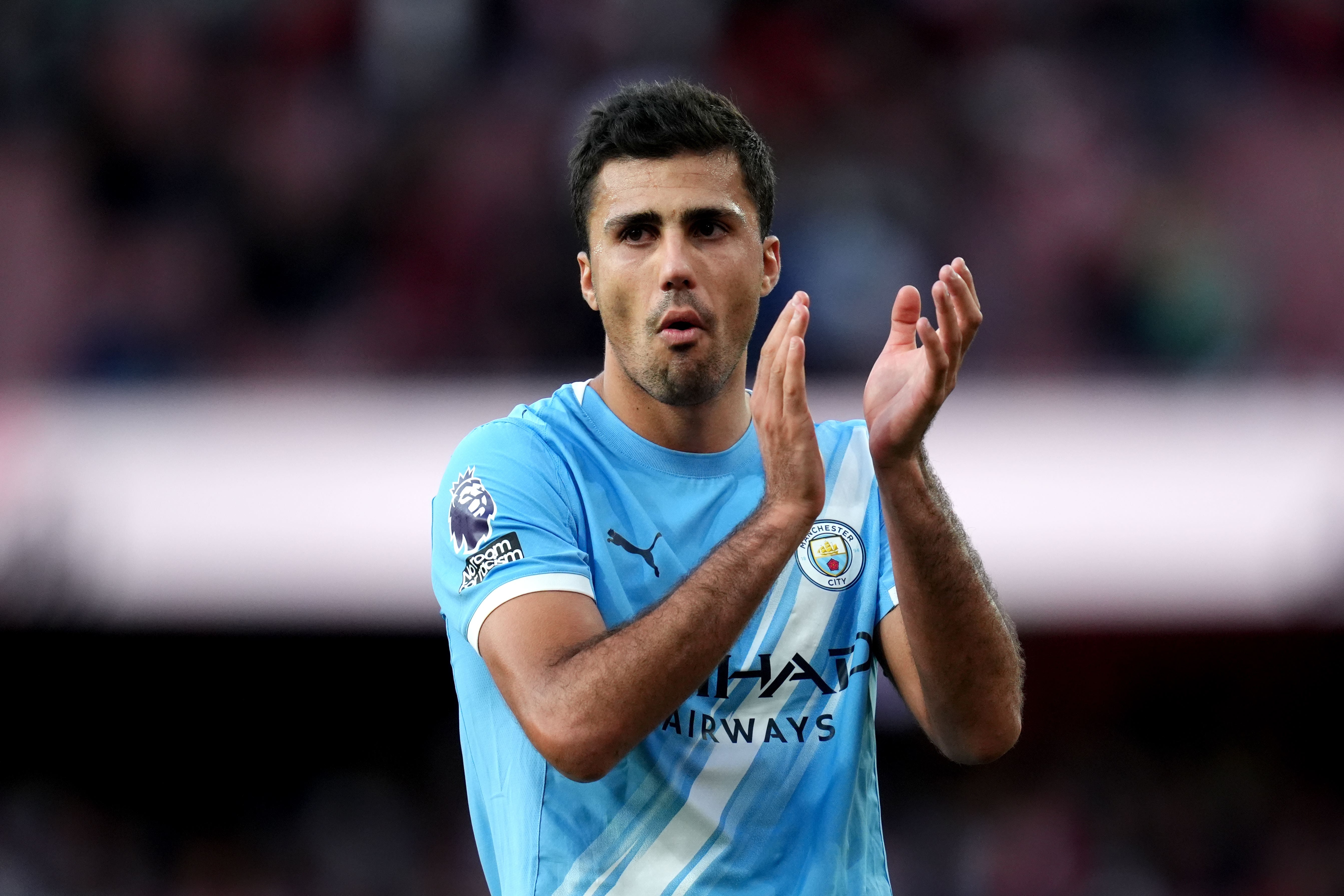
Rodri Deserves To Be Remembered As A Manchester City Great
There is something slightly uncomfortable about the possibility of Rodri leaving Manchester City.
Not because the transfer itself feels surprising.
At 30 years old, with a desire to return to Spain during his career, the idea of Rodri eventually moving back home always felt inevitable.
What feels strange is that a player who has been so central to one of the greatest teams in Premier League history could potentially walk away without the kind of celebration his contribution deserves.
Rodri has never been the type of footballer who demanded attention.
He was not the player with the flashy highlights every week.
He was the player who made everyone else better.
That is often the fate of midfielders who control football rather than simply dominate headlines.
Manchester City have produced some extraordinary individual talents during their era of success. Kevin De Bruyne created moments of brilliance. Erling Haaland has rewritten goalscoring records. Phil Foden has emerged as one of England’s brightest attacking players.
Rodri was the foundation.
He was the reason the whole structure worked.
His seven years at Manchester City have delivered four Premier League titles, five domestic cup victories and a Champions League triumph in 2023, where he scored the winning goal in the final.
Those achievements alone would define most careers.
For Rodri, they almost feel like the minimum expectation.
The reason is that his influence went beyond medals.
He controlled the rhythm of matches. He decided when City accelerated and when they slowed games down. He could drop between defenders, break up attacks, dictate possession and produce passes that changed the entire shape of a match.
His ability on the ball has made him one of the finest passers of his generation, while his defensive positioning and tackling allowed City to dominate games while remaining protected against counter-attacks.
That combination is incredibly rare.
The modern game has become obsessed with attacking numbers, but players like Rodri remind us that football is often decided by the person who controls everything happening before the final pass or the final shot.
The next chapter appears likely to take him back to Spain.
Barcelona are exploring a deal, with Rodri reportedly attracted by their football style and the opportunity to reunite with several members of Spain’s World Cup winning squad.
From a football perspective, Barcelona actually makes enormous sense.
Hansi Flick’s side share many similarities with Guardiola’s Manchester City, built around possession, territorial control and midfield dominance.
Rodri would not be moving somewhere requiring him to reinvent himself.
He would be moving somewhere that understands exactly what he does best.
That is why this feels less like an ending and more like a natural progression.
Manchester City supporters should appreciate what they have witnessed.
Football careers move quickly. The best players are often appreciated properly only after they have gone.
Rodri’s importance to City should never be reduced to the goals he scored or the trophies he lifted. His greatest contribution was giving one of the best teams in football history the balance required to become almost impossible to play against.
Every great team has a player who represents its identity.
For Manchester City, that player has been Rodri.
If he does leave this summer, there should be no bitterness.
There should be gratitude.
Because some players arrive and help a club win.
Others arrive and change what winning looks like.
Rodri belongs in that second category.
Final Whistle
Football has always been about stories.
The arguments, the emotions, the unforgettable moments and the characters who make the game feel bigger than the 90 minutes.
This week has been a reminder that the biggest stories are not always found in transfer announcements or record fees.
Sometimes they are found in the battles over the future of the game.
Sometimes they are found in watching a legend begin a new chapter.
Sometimes they are found in appreciating greatness before it disappears.
That is what Gibbs’ Game is all about.
A weekly look beyond the headlines, exploring the decisions, personalities and moments shaping football.
As always, I would love to hear your thoughts.
Thanks for reading, and I’ll see you next Friday.