

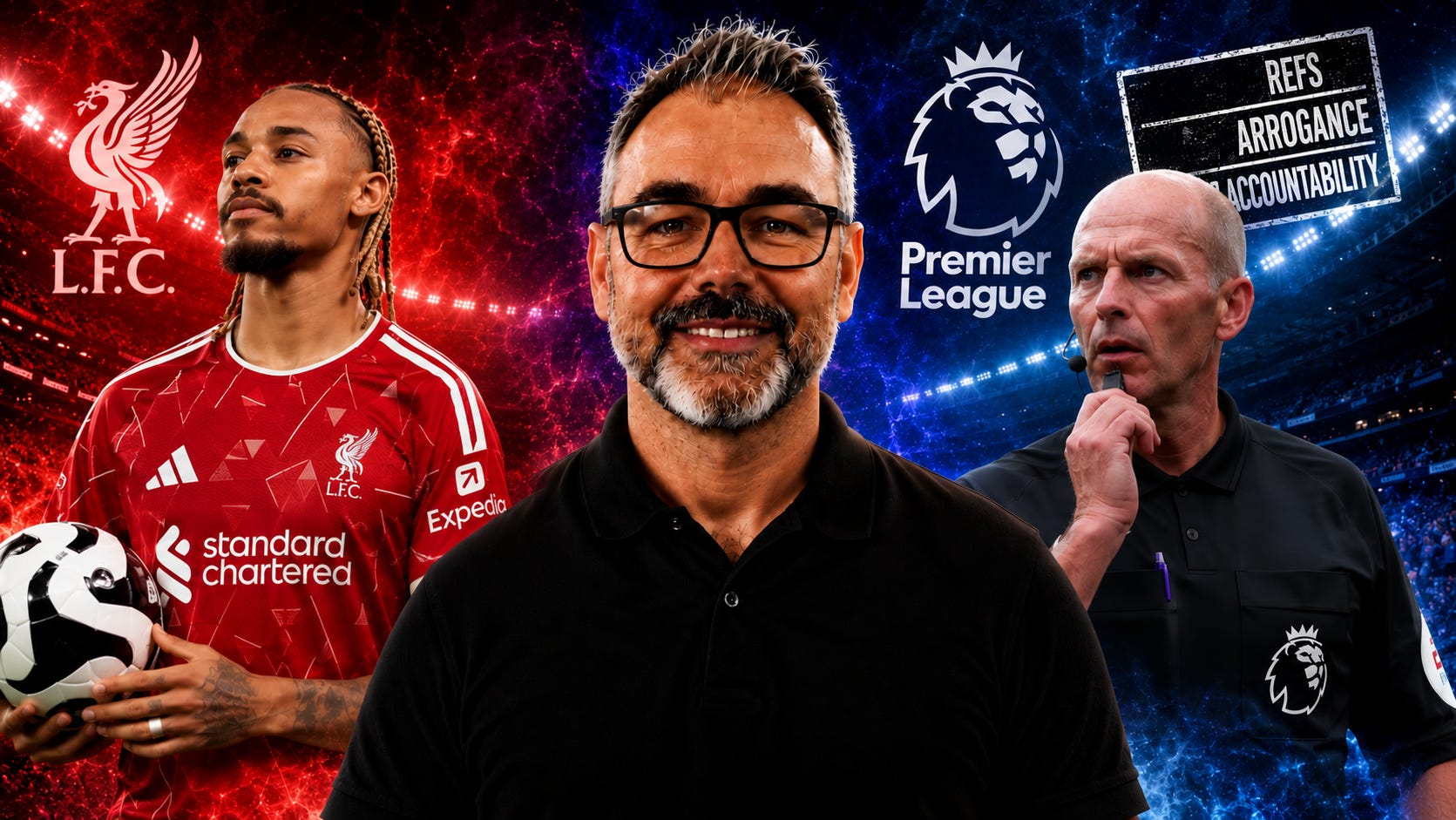
I should probably begin this week by admitting something that might sound strange coming from somebody who makes his living in football media.
Thank God the transfer window is over.
For those of us working in fan media, the summer window is intense in a way that is difficult to explain unless you’ve lived through one. The working day starts when you open your eyes and, increasingly, finishes when you realise you should probably have gone to bed several hours earlier.
Every rumour matters. Every report needs checking. Every bid generates another show, article, video, thumbnail or social post. A player can apparently be nowhere near joining your club at lunchtime, in advanced negotiations by dinner and booked for a medical before you’ve had a chance to wash the plate.
I’ve had days this week beginning around 6am and finishing at 11pm. I’ve also developed some involuntary muscle spasms, which I suspect might be my body’s rather unsubtle way of pointing out that the ratio of coffee to water has become completely ridiculous.
At my age, perhaps that qualifies as performance analysis.
So there is genuine relief this morning.
It should mean I can resume some of the thoroughly ordinary things that disappear during a transfer window. Taking my son to his activities without constantly checking my phone. Going somewhere for lunch. Perhaps even having dinner away from my desk without wondering whether somebody in Paris has suddenly decided to accept an offer.
Those things suddenly sound rather luxurious.
There is another side to all this, though.
Transfer windows are enormously important financially to fan media. Interest explodes, audiences grow and revenues follow them. Now the window has closed, those revenues will nosedive. We know that. We plan for it every year. It is part of the business model.
And yet it saddens me.
Because very few of us got into this business because we dreamed of spending our lives discussing transfer valuations, net spend, release clauses and whether somebody has reached a verbal agreement with somebody else.
We got into it because we love football.
The actual game.
Yet the click based economics of football media increasingly tells us that the possibility of a player signing generates more interest than watching that player once he actually arrives.
Something feels backwards about that.
Perhaps that is why I find myself looking at the wreckage of another transfer window with mixed emotions. My bank manager might miss it more than I will, but I would quite happily go several months without hearing the phrase “advanced talks” again.
There is football to discuss now, and plenty of it.
Liverpool have spent another fortune, yet somehow I think Richard Hughes has left them further away from a Premier League challenge than Arsenal, Manchester City and Chelsea.
And Mike Dean has provided a timely reminder of something else that irritates me enormously about the modern game, the extraordinary arrogance that can surround its referees.
So, two subjects this week rather than four.
Frankly, after the hours I’ve been working, two is plenty.
![Anfield Sector on X: "[🚨] INFO: Sources close to Richard Hughes and senior Liverpool sources have all emphatically dismissed suggestions that he was dividing his time between Liverpool and his upcoming new](https://substackcdn.com/image/fetch/$s_!8AVm!,f_auto,q_auto:good,fl_progressive:steep/https%3A%2F%2Fsubstack-post-media.s3.amazonaws.com%2Fpublic%2Fimages%2Fe8262619-5c5d-400a-b9d5-ef3f1864d811_1200x600.webp "Anfield Sector on X: \"[🚨] INFO: Sources close to Richard Hughes and senior Liverpool sources have all emphatically dismissed suggestions that he was dividing his time between Liverpool and his upcoming new")
Liverpool Spent Big, Their Rivals Built Better
The transfer window is finally closed and, after months of rumours, bids, rejected bids, verbal agreements, medicals and deadline day theatre, we can finally judge clubs on something more tangible than who they might sign.
For Liverpool, I find the final picture difficult to defend.
They have spent an extraordinary amount of money. Their total outlay this summer reached £246 million including add ons, taking spending since the beginning of last summer to around £670 million. Those are figures which should produce a squad capable of competing for the Premier League title.
I don’t think Liverpool have one.
Bradley Barcola is an outstanding signing and potentially a transformative attacking player. Victor Munoz gives Andoni Iraola another exciting option. Ronald Araujo provides defensive experience and Jeremy Jacquet is a player I am extremely excited about.
Taken individually, there are signings I like.
The problem is what Liverpool didn’t do.
They entered the summer needing somebody capable of replacing Mohamed Salah on the right, cover for Alexander Isak, greater strength in midfield and reinforcement at right back. They finished it with Barcola and Munoz, two players who have predominantly operated from the left, while Araujo is expected to provide cover across centre back and right back.
Then they sold Curtis Jones to Inter and didn’t replace him. Perhaps Trey Nyoni takes another enormous step forward, and I desperately hope he does, but hoping a 19 year old academy player fills the hole is not the same thing as strengthening the midfield.
Meanwhile Mohamed Salah, Ibrahima Konate and Andy Robertson all departed for nothing.
That is why the size of Liverpool’s spending doesn’t particularly impress me.
Football isn’t won by net spend tables.
City Have Rebuilt Their Engine
Look at Manchester City.
They lost Rodri and Bernardo Silva, two players who have defined their midfield, and responded by signing Enzo Fernandez, Elliot Anderson and Ayyoub Bouaddi. They have rebuilt the most important area of their team rather than crossing their fingers and hoping existing options can absorb the losses.
City spent an enormous amount, around £451 million in initial transfer fees, but also generated £279 million in sales.
You can question individual deals. You can question the turnover. What I struggle to question is the ambition.

Arsenal Strengthened From a Position of Strength
Arsenal didn’t have a perfect window either.
They wanted another elite attacker and didn’t get one. Morgan Rogers, Barcola, Vinicius Junior, Malick Fofana and Julian Alvarez were among the players they failed to land.
Yet they were already champions.
They have subsequently added Bruno Guimaraes and Ezri Konsa, while Christos Tzolis gives them another attacking option. Arsenal spent £198.5 million while generating £122.5 million in sales.
That matters because Arsenal weren’t trying to repair a broken squad. They were adding to the team everyone else was already trying to catch.
I still think they enter this season as the team to beat.
Chelsea Might Be Ready
Then there is Chelsea.
I’ve spent enough years wondering what on earth Chelsea’s transfer strategy is supposed to be, but I think they have had a very good summer.
Morgan Rogers is the headline arrival, and pairing him with Cole Palmer and Joao Pedro gives Chelsea an attack capable of frightening anyone. Maxence Lacroix strengthens the defence, Emiliano Martinez improves them in goal and they have deliberately added experience through Jordan Henderson and Danny Welbeck.
Even more remarkably, they have continued generating huge sums from departures. Chelsea say they invested approximately £328 million while receiving around £519 million through sales and loan fees, although those club figures have not been independently verified.
For all the mockery Chelsea’s model has attracted, they now look dangerous.
Which brings me back to Liverpool.
I currently see Arsenal, Manchester City and Chelsea as the Premier League’s top three.
Liverpool, for me, sit below them.
That might sound ridiculous after spending £246 million this summer, but that is precisely the point. Richard Hughes has spent enormous amounts of Liverpool’s money without constructing a squad that I believe is equipped to challenge the best three teams in the country.
The right back problem remains. The midfield wasn’t strengthened. Jones left without replacement. Salah and Konate walked away for nothing. Liverpool have invested another fortune in attacking players while other obvious weaknesses remain.
Perhaps Barcola explodes immediately. Perhaps Munoz adapts brilliantly. Perhaps Nyoni makes the leap. Perhaps Bradley returns and stays fit. Perhaps Araujo solves two defensive problems at once.
There are too many perhapses.
Premier League titles tend to expose them.
My fear is that Liverpool will eventually discover that during the long grind of a season, and by then the transfer window will be long closed.
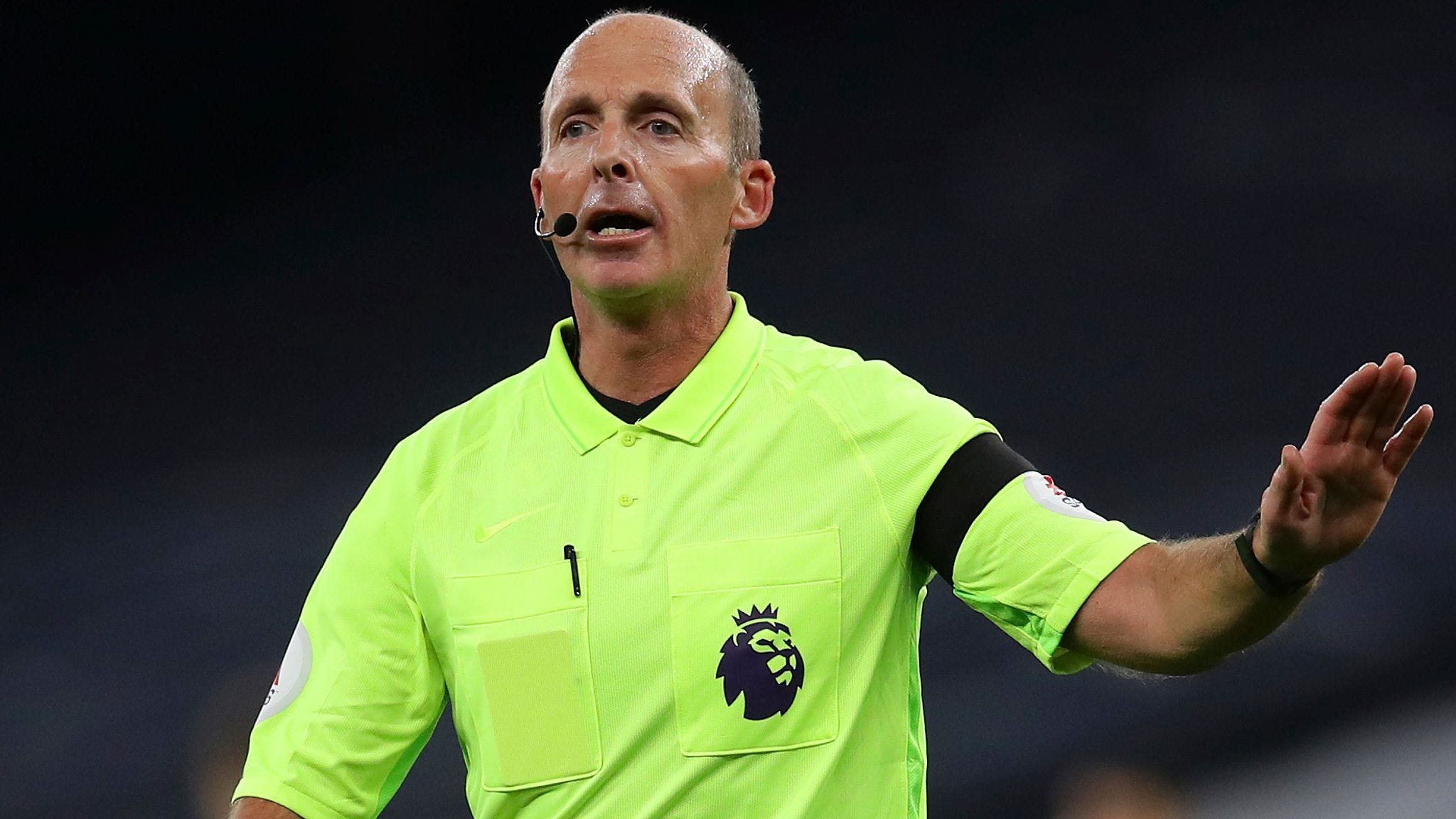
Mike Dean and the Arrogance That Stains Refereeing
There are stories about referees that make you question a decision, stories that make you question VAR, and occasionally one comes along that makes you question the attitude of the people entrusted with controlling football matches.
Mike Dean has managed the latter.
Dean has claimed that during his Premier League refereeing career he would sometimes play what he described as little games with himself. One involved seeing how long he could go without blowing his whistle. Another involved attempting to remain inside the centre circle for as long as possible.
His explanation?
It was “as a laugh”.
I’m struggling to find the funny bit.
Football supporters spend enormous amounts of money following their clubs. Managers lose their jobs because of results. Players have careers and livelihoods determined by performances. Promotion, relegation, European qualification and championships can turn on individual matches.
Meanwhile, according to Dean’s own account, the man responsible for applying the laws of the game occasionally fancied seeing whether he could go 20 or 25 minutes without blowing his whistle.
Think about the arrogance required for that.
Dean also claims he once managed around 15 minutes without leaving the centre circle because, apparently, that was another entertaining little challenge he had set himself.
This wasn’t Sunday league. These were Premier League matches.
Referees Aren’t Supposed to Be the Entertainment
There is an important qualification here. The organisation formerly known as PGMOL has reviewed Dean’s claims and insiders reportedly say there is no evidence these practices actually happened. Previous refereeing leadership is also said to have been baffled by what Dean has said.
That leaves us with two possibilities, and neither reflects particularly well on Dean.
Either he really did referee Premier League matches while setting himself private challenges unrelated to correctly officiating the game, or he is embellishing stories about his refereeing career because he thinks they make entertaining podcast material.
Take your pick.
Former referee Peter Walton says he never encountered these supposed competitions, although he remembers a conversation at a referees’ training camp about who could go longest without blowing the whistle. Walton regarded that as light hearted conversation rather than something anybody would actually do.
That distinction matters.
Referees can joke among themselves. Of course they can. What they cannot do is treat the 90 minutes they are officiating as their personal playground.
And this gets to something that has irritated me about refereeing for years.
Too many elite referees seem to forget what their job actually is.
Nobody bought a ticket to watch Mike Dean.
Nobody turned on Sky Sports because Anthony Taylor was refereeing.
Nobody travelled hundreds of miles hoping Michael Oliver might produce a memorable performance.
The best referee should almost disappear into the match.
Football Doesn’t Belong to the Officials
Dean was always one of the most theatrical Premier League referees. There were extravagant gestures, facial expressions and moments when the official seemed remarkably conscious that television cameras were pointed towards him.
Some people found that entertaining.
I found it irritating then, and I find these comments worse.
There is an arrogance surrounding refereeing which football has tolerated for far too long. Decisions are explained selectively, mistakes disappear behind institutional language, former officials are wheeled out to defend current ones, and supporters are frequently left with the impression that the refereeing establishment regards scrutiny as an inconvenience rather than an essential part of accountability.
Dean’s comments encapsulate that culture perfectly.
The referee possesses extraordinary power during a football match. Players have to accept his decisions. Managers can be punished for questioning them. Clubs can be fined. Supporters can scream themselves hoarse and none of it changes the authority granted to the person holding the whistle.
With that power should come humility.
Instead, we get somebody reminiscing about seeing how long he could avoid using the whistle he was being paid to use.
That isn’t a charming anecdote from football’s recent past.
It’s an insight into an attitude.
Football has spent years trying to understand why relations between referees, players, managers and supporters have become so poisonous. Respect has to travel in both directions. You cannot continually demand that everybody respects officials while allowing officials to behave as though the game is partly there for their amusement.
Referees are necessary to football.
They are not the reason football exists.
And whenever an official forgets the difference, it leaves another stain on a profession already desperately short of public trust.
Sometimes You Need to Stop Watching
I had hoped the end of the transfer window might provide the opportunity to disappear for a couple of days.
Then somebody scheduled Ipswich Town against Liverpool for a Friday night.
So while many of you will be settling down with a drink tonight, I’ll be beginning the final shift of another fairly ridiculous week. By the time the podcasts are recorded, shows finished, articles published, social media dealt with and everything else put to bed, I’ll probably finish around 1am.
I shouldn’t complain.
There are countless people who would love to make their living from football, and I remain enormously fortunate that something which began because I loved the game became my job.
But making your passion your profession occasionally produces a strange consequence.
Sometimes you don’t want to watch it anymore.
At least for a little while.
Once Ipswich against Liverpool is finished tonight, I genuinely can’t see myself watching another match this weekend. There are Premier League games everywhere, including Arsenal against Chelsea on Sunday, and normally I’d consume most of them in one form or another.
This weekend, I need to get out of the house.
Autumn is approaching. The days will soon become darker, the Scottish weather will become even less accommodating and there will be plenty of weekends ahead when sitting inside watching football feels like the only sensible option.
So perhaps this is the weekend to go somewhere. Have my parents over for dinner. Do something that doesn’t involve staring at a screen waiting for a footballer to kick something.
My brother is visiting too.
He’s an Arsenal supporter.
That provides another compelling argument for avoiding football altogether.
Given that I think Arsenal will finish above Liverpool this season, and I’ve just spent a sizeable portion of this column explaining why, the less opportunity we have to discuss football over the weekend, the healthier our relationship is likely to remain.
The transfer window has consumed the summer. Tonight, Liverpool will consume my Friday night.
After that, football can manage without me for 48 hours.
The strange thing is that this is precisely why I’m glad the window has closed.
When I come back to work next week, there will be no imaginary transfers to chase, no deadline clock ticking and no sporting directors pretending everything went exactly according to plan.
There will simply be football.
Wins, defeats, players, managers, terrible refereeing decisions and all the arguments that come with them.
That’s what I got into this business for.
The game should matter most.
Always.
On one hand, I get it. You love football, people like to turn things they love into a job, and a job has to pay. You dont determine the algo's that drive the systems, you play along with them to maximise earnings.
On the other hand, 'fan media' are a cog in that machine. The bigger the fan media channel is, the more influential a cog you become.
Channels choose how they operate.
Every rumour does not matter. Reporting tweets from click-baiters like Indy Kaila is not a valid reason to interrupt family life. Constant updates on deals that haven't progressed since the last update dont help fans, they help the channel and the platform.
Frequently, fan media are wasting their own time and also wasting the fans time.
When you run the business, ypu choose what its values are and how it behaves. 'Don't hate the player, hate the game' is not valid when you are helping to create and sustain that game.