

International breaks are good for us.
There, I’ve said it.
After flitting between Germany against the Netherlands and Portugal against Wales on Thursday night, I feel I’ve paid my dues to the international football calendar. Jürgen Klopp’s return made one game considerably more watchable, Cristiano Ronaldo gave me something to write about in the other, and I can now retreat with a clear conscience.
I’m almost finished series three of Vigil, the final season of The Bear is next on the list, and the World Grand Prix darts starts on Monday to fill the sporting void.
I may even tidy the garage and attic this weekend before the cold Scottish weather really sets in.
This is what international football does for us. It makes us productive members of society again.
So this week, a slightly shorter Gibbs’ Game. Ronaldo and Portugal’s refusal to let go, the debate over allowing alcohol in football stands, and the welcome sight of Klopp back where he belongs.
Perhaps we really should embrace international breaks.
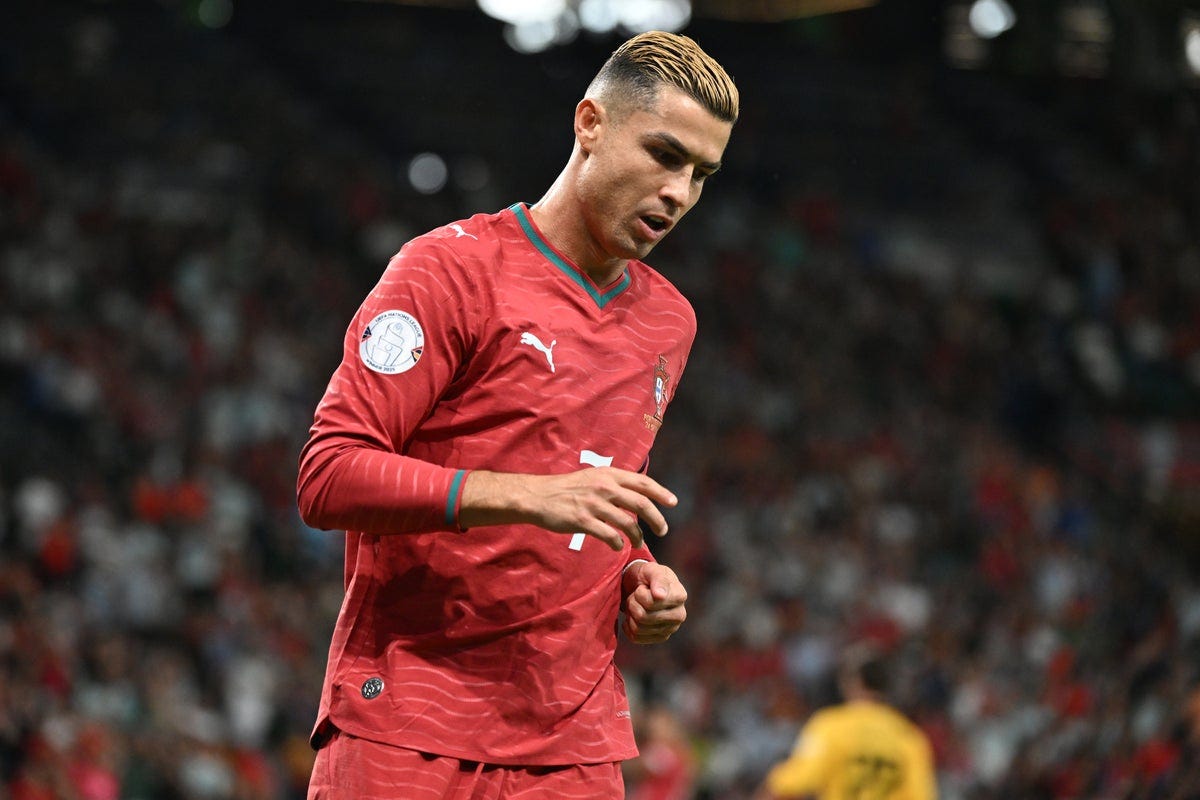
Cristiano Ronaldo Is Embarrassing Himself and Portugal
There comes a point with every great sportsman when reputation becomes a problem.
Cristiano Ronaldo passed that point with Portugal some time ago.
This isn’t an argument about whether Ronaldo is one of the greatest footballers who ever lived. Of course he is. Nor does anything happening at 41 diminish what he achieved at Manchester United, Real Madrid, Juventus or during the extraordinary first two decades of his international career.
But Portugal aren’t selecting his career. They’re selecting the footballer who exists today.
Against Wales on Thursday night, Ronaldo had seven shots, accumulated 1.32 xG and failed to score. Portugal won 1-0 anyway. At one stage he missed from inside six yards. On another occasion he celebrated what he thought was another international goal before VAR correctly ruled him offside.
Watching it, I found myself asking the same question repeatedly.
Why has nobody in Portuguese football got the balls to break through this glass ceiling?
Portugal possess Vitinha, João Neves, Nuno Mendes, Bruno Fernandes and an abundance of attacking talent. Yet the entire thing still seems to orbit around one man’s pursuit of history.
Ronaldo currently has 980 senior career goals. One thousand is obviously the target, and he has admitted he would ideally like to reach it wearing a Portugal shirt.
That’s where I have a problem.
Portugal’s national team does not exist to help Cristiano Ronaldo reach 1,000 goals.
Somebody Has to Make the Decision for Him
Ronaldo says: “When I think I am not adding anything to the team... I will be the first to go.”
But that’s precisely why footballers shouldn’t make these decisions themselves.
Elite sportsmen don’t become elite sportsmen by recognising their own decline. The mentality that made Ronaldo extraordinary is probably the same mentality telling him he can continue indefinitely.
Somebody else has to say enough.
Portugal’s miserable World Cup should have provided the opportunity. In the last 16 defeat by Spain, Ronaldo touched the ball only seven times during the entire second half but remained on the pitch until the end.
Lionel Messi has since announced his international retirement.
Ronaldo continues.
And Thursday actually provided a glimpse of what Portugal’s manager should be doing. Jorge Jesus substituted him because he wanted Gonçalo Ramos’ speed and pressing from the front.
Exactly.
Ronaldo can still have a role. Twenty minutes against a tiring defence, when Portugal need somebody inside the penalty area? Fine. His experience and finishing could still prove useful.
Being the unquestioned focal point is different.
There is almost a form of national paralysis around him. At Sporting’s stadium on Thursday, the atmosphere surrounding Ronaldo was described as closer to worship than ordinary fandom. Even Jesus calls him “a symbol of Portugal.”
He is.
But symbols don’t have to start football matches.
Ronaldo deserves an extraordinary farewell whenever it arrives. He deserves statues, standing ovations and every acknowledgement Portugal can give him.
What he doesn’t deserve is permanent ownership of a position in the national team because nobody has the courage to tell one of football’s greatest players that time finally won.
At the moment, he’s embarrassing himself.
Worse, Portugal are allowing themselves to be embarrassed with him.
Let Football Fans Have a Pint
I suspect I am supposed to have a stronger opinion on this than I actually do.
Should supporters be allowed to drink alcohol in their seats at men’s football matches in England? For me, yes. Give it a trial and see what happens.
That comes from someone who barely drinks these days and therefore has very little personally invested in the argument. If the rules remain exactly as they are, it won’t alter my matchday experience. If they change tomorrow, I’m hardly going to arrive at Anfield demanding six pints and one of those ridiculous plastic beer carriers.
But I’ve also had some of my best days watching sport with a drink in my hand.
Cricket, rugby, golf, horse racing. Alcohol has been part of plenty of those memories. I’ve also drunk while watching football from hospitality without civilisation collapsing around me.
That’s why the inconsistency has always seemed slightly peculiar.
The restriction dates from the Sporting Events (Control of Alcohol etc.) Act 1985 and applies to the top five divisions of men’s football. You can buy alcohol inside the stadium, but cannot drink it within sight of the pitch. Other sports aren’t subject to the same restriction and, following a trial, alcohol is now permitted in the stands at Women’s Super League matches.
Football in 1985 was also a very different environment.
Nobody should rewrite history. Hooliganism was a serious problem and alcohol frequently made an already dangerous situation worse. The legislation didn’t appear because somebody in Westminster arbitrarily decided football supporters shouldn’t be trusted.
Forty-one years later, though, surely we’re capable of asking whether the solution designed for that era remains appropriate.
Punish Idiots, Not Everybody Else
The obvious argument against changing the rules is football supporters themselves.
We’ve all encountered the bloke who has spent four hours in the pub before kick-off and arrives at his seat barely capable of identifying which team he supports. Nobody needs more of him.
There are legitimate practical objections too. People constantly getting up for drinks and toilets would irritate me. Getting somebody else’s pint launched over me when my team score would irritate me considerably more. There are also more serious concerns about antisocial behaviour and harassment.
But I’m not convinced allowing somebody to take a pint to their seat automatically means everybody suddenly drinks more.
In fact, the opposite argument makes some sense.
The present system encourages people who want alcohol to drink quickly. Get a few down before kick-off, then race downstairs at half-time and attempt to consume another one or two before the second half begins. Allowing somebody to nurse the same pint while watching the football might actually reduce that frantic consumption rather than increase it.
Ultimately, I’d rather we treated adults like adults and dealt severely with those who prove incapable of behaving like them.
Throw your beer over somebody? Out.
Become abusive or violent? Out.
Repeatedly cause trouble? Lose your season ticket and potentially receive a banning order.
Don’t punish tens of thousands of people because a minority might behave like idiots.
I’m certainly not campaigning for alcohol in football grounds. As I said, I rarely drink now. I could take it or leave it.
But having spent plenty of enjoyable sporting days with a beer in my hand, I struggle with the idea that football supporters are somehow uniquely incapable of being given the same choice.
Trial it. Control it. Review it.
If it creates significantly more trouble, reverse it.
If it doesn’t, perhaps we’ve finally proved that football supporters in 2026 don’t need to be governed permanently by legislation introduced for football supporters in 1985.
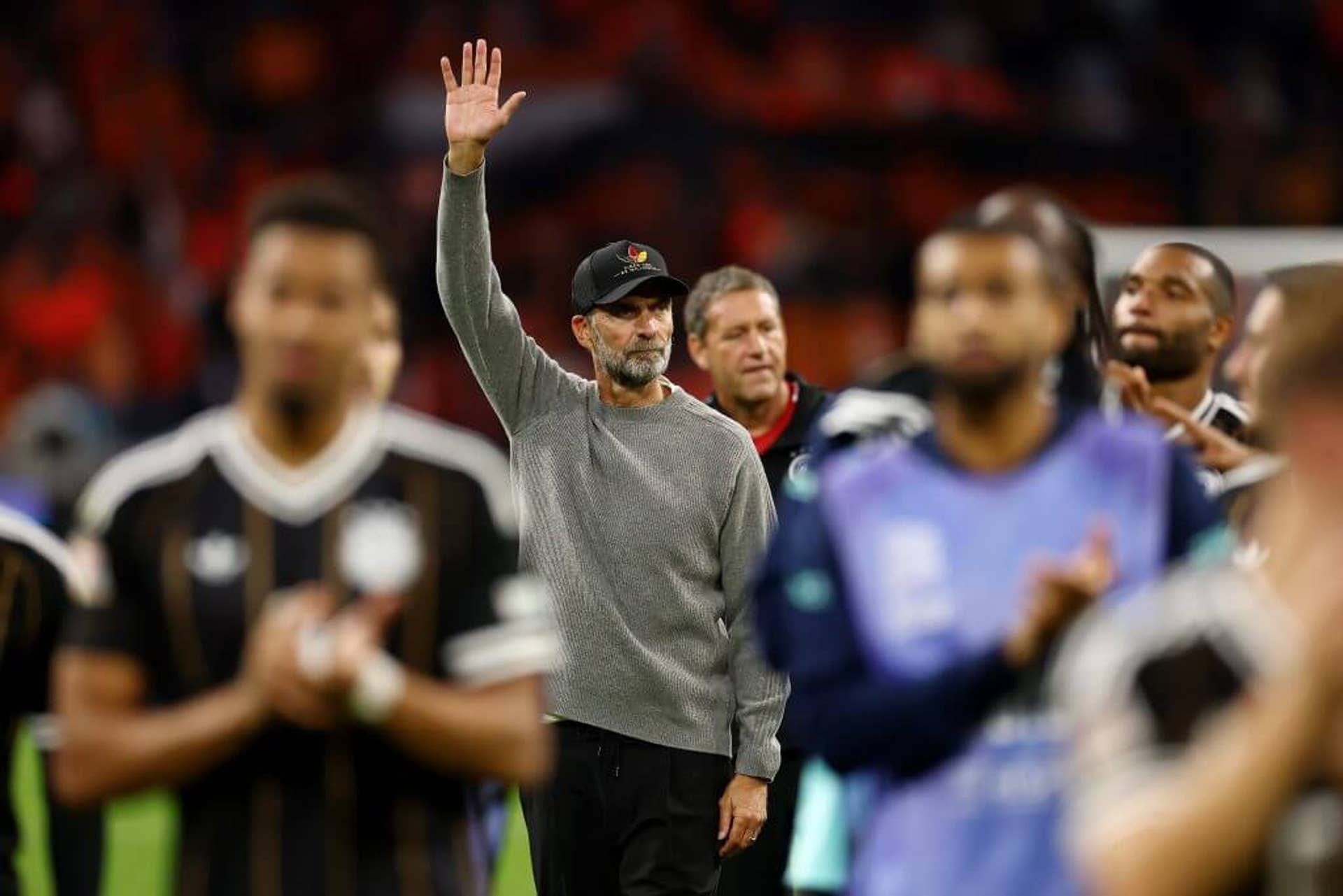
Jürgen Klopp Is Back Where He Belongs
I gave international football a fair chance on Thursday night.
I flitted between Netherlands against Germany and Portugal against Wales, which, having already written about Cristiano Ronaldo, feels like sufficient penance for one international break. I’ve done my duty. The television can now be returned to dramas and the darts without guilt.
There was, however, one very good reason to watch Germany.
Jürgen Klopp is back.
Watching him on the touchline again reminded me how much football has missed him. More importantly, he looked like he had missed it too.
There were the bulging eyes, the arms flying everywhere, the celebrations of tackles, the frustration, the instructions and the occasional look of complete disbelief. Barely half an hour into his return, he was leaning against an advertising hoarding as if he already needed a moment to process the madness unfolding around him.
It was wonderful to see.
Klopp looked energised in a way that he simply didn’t towards the end at Liverpool. That isn’t criticism. Nine years managing Liverpool, with everything that job demands emotionally and physically, eventually drained him. By the end, you could see it.
On Thursday, I saw the old Klopp again.
Management Is Where Klopp Belongs
Germany drew 1-1, although the result almost felt secondary.
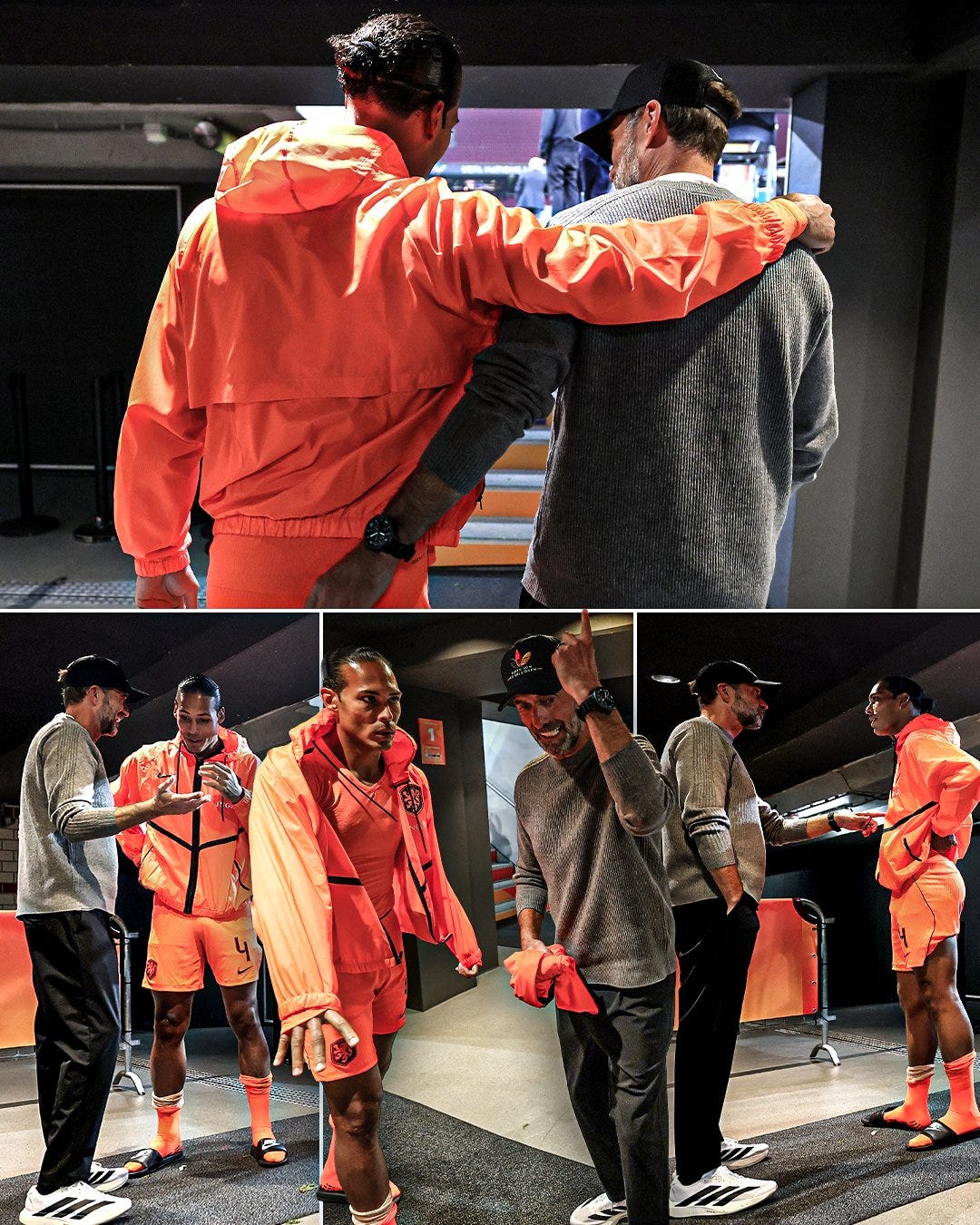
Felix Nmecha gave Germany the lead before Cody Gakpo, of all people, produced a superb stoppage time equaliser. Virgil van Dijk had already seen a goal ruled out, Klopp embraced his former Liverpool captain before the game, and Van Dijk gave him his shirt afterwards.
If somebody had scripted Klopp’s first night back and wanted to cram as many Liverpool connections into it as possible, they’d probably have been accused of overdoing it.
What interested me most was Germany’s intensity.
Klopp had worked with these players for only two days, yet there were already signs of the chasing, pressing and aggression we associate with his teams. When Nathaniel Brown was slow to counterpress, he received the sort of touchline rollicking Liverpool players knew very well.
Klopp was realistic afterwards:
“We only scratched the surface, we have to go deeper.”
Of course they have to. International management is fundamentally different from club management. Klopp cannot spend six days drilling pressing triggers before playing on Saturday. Players arrive from different tactical systems, train briefly, play and disappear again.
Perhaps that’s what makes this job interesting for him.
I’ve never bought the idea that Klopp would be happier permanently removed from management. His spell away made complete sense because he looked exhausted when he left Liverpool. He needed to get off the treadmill.
But this is what he does.
He coaches. He cajoles. He argues. He motivates. He builds emotional connections with players and supporters. He somehow makes a tackle near the halfway line look like somebody has scored in a European Cup final.
At 59, he has far too much still to offer football to spend the rest of his career watching from the outside.
Germany supporters already appear to understand what they’ve got. The belief around his appointment is enormous, and that brings pressure, particularly after their disappointing World Cup.
Whether Klopp can transform Germany remains to be seen.
For now, I’m simply pleased he’s back on a touchline.
I’ve served my international football sentence for this week.
Jürgen made it considerably more enjoyable.
Domestic Bliss
So that’s my international football contribution complete.
I’ve watched Ronaldo chasing history, Klopp rediscovering the madness of the technical area and spent far too long considering whether somebody should be allowed to drink a pint while watching Burnley against Wolves.
That’s enough football for now.
There is an attic requiring attention, a garage I’ve successfully ignored for longer than I’d care to admit, Vigil to finish, The Bear waiting and, from Monday, darts to watch.
Who knew an international break could be so useful?
Give me another couple of weeks and I’ll probably have reorganised the entire house.
Or, more realistically, I’ll have watched a lot of television, plenty of darts and spent the whole time complaining that there isn’t any proper football on.
Enjoy the break.
We should all embrace it.
At least until we’re thoroughly sick of it.