

There is something slightly cruel about the first proper weekend of the Premier League season.
You spend weeks waiting for football to come back, complaining that there is nothing to watch, convincing yourself that this time you are ready for the relentless rhythm of it all.
Then suddenly it arrives and you remember that football does not gently return. It kicks the door in.
Tonight the Premier League starts again, and perhaps I should be excited purely about that. Instead, Liverpool’s transfer window continues to irritate me to the point where I find myself wondering whether Richard Hughes has somehow mistaken inactivity for strategy.
I remain utterly unconvinced by him as Liverpool’s sporting director. The squad still has obvious holes, the clock continues to run down, and there is a growing sense that everyone else can see what Liverpool need except the man whose job it is to fix it. If Saudi Arabia really does come calling eventually, I will happily help him pack.
Still, football has a useful habit of dragging you away from your own club’s problems.
Coventry City are back in the Premier League after 25 years, and that one means something to me personally. My dad supports them, and the 1987 FA Cup final remains one of those childhood football memories that never really fades.
Elsewhere, Newcastle and Aston Villa supporters are increasingly angry about the financial rules they believe restrict their ambition. I understand the frustration, but I think some of the complaints conveniently ignore years of spending choices and football’s unavoidable food chain.
At Liverpool, the Cody Gakpo question is becoming more interesting by the day. There is a deal to be done under the right circumstances, but only if Liverpool actually behave like a serious football operation and line up replacements first.
And then there is Match of the Day.
The Premier League returns tonight, but the way we consume football has changed beyond recognition. I didn’t watch Match of the Day once last season. I barely watched it for years before that.
Football is back.
Some old habits are returning with it.
Others might never come back at all.
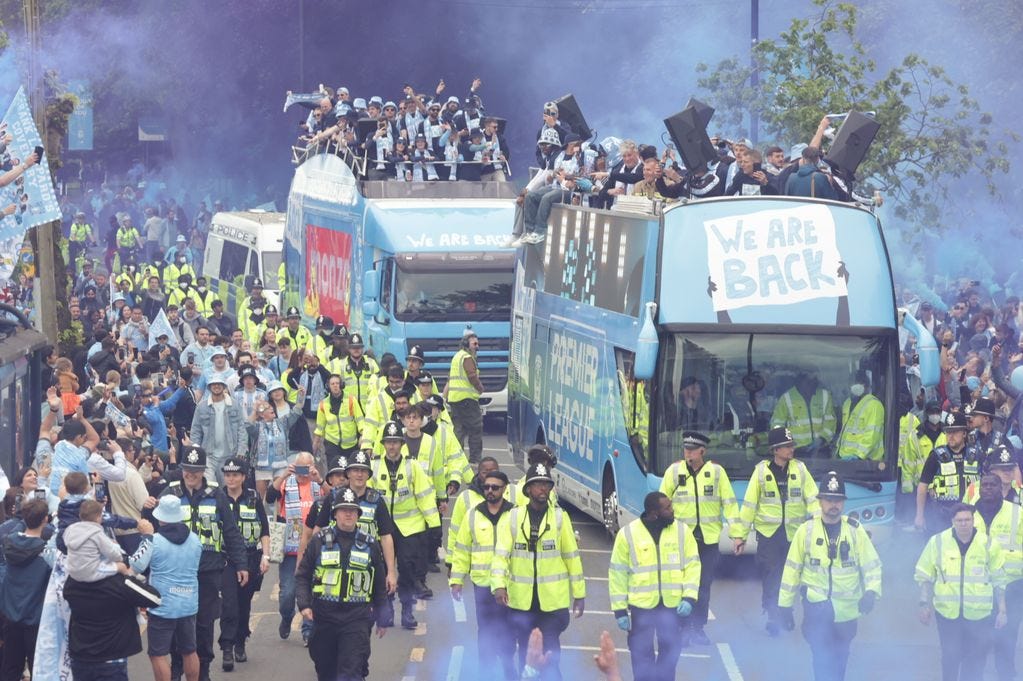
Coventry City, 25 Years Later, They Really Are Back
I have to admit, there is something genuinely lovely about seeing Coventry City back in the Premier League.
There is a personal connection here because my dad supports Coventry, but there is also something generational about it. If you grew up watching football when I did, Coventry were simply part of the furniture of the top flight.
They had been there for 34 consecutive seasons by the time they were finally relegated in 2001. There was the FA Cup win over Tottenham in 1987, which remains one of the great days in the club’s history, and then all those years when they seemed to possess an almost supernatural ability to avoid relegation.
Highfield Road, sky blue shirts, John Sillett, Gordon Strachan, Gary McAllister, Dion Dublin, Darren Huckerby, Mustapha Hadji, Robbie Keane. Coventry belonged in that world.
Then suddenly they didn’t.
When they went down in 2001, supporter John Mullaney famously held up a handwritten sign saying “We’ll be back.”
I doubt anybody imagined it would take 25 years.
What happened in between makes their return far more significant than another promoted club reaching the Premier League. Coventry suffered three relegations, went into administration and twice ended up playing home matches outside their own city.
Think about that.
A football club separated from the community it supposedly represents.
During the SISU years things became so poisonous that Coventry supporters boycotted matches at Northampton’s Sixfields. Some stood on a hill outside the stadium where they could see only part of the pitch because they wanted to support their football club without supporting what was being done to it.
One supporter eventually stopped even doing that. He kept attending away matches but couldn’t bring himself to go to Northampton anymore.
His explanation was devastatingly simple.
“It broke my heart.”
There were periods when supporters genuinely wondered whether Coventry City would survive at all. One fan responding to this week’s retrospective said there were times when he feared there simply wouldn’t be a club left to support.
That puts football complaints into perspective.
And it is why Mark Robins deserves enormous credit for what followed.
Robins returned in 2017 with Coventry heading into League Two. They won the EFL Trophy, then won promotion from League Two at the first attempt. Slowly, painstakingly, a football club that had spent years lurching from one disaster to another began functioning like a football club again.
Recruitment improved. Data became part of the process. The structure became more professional. Coventry climbed.
League Two became League One. League One became the Championship. Eventually Robins took them to within a penalty shootout against Luton Town of completing one of the great journeys through English football.
He didn’t quite get to finish the job.
I wasn’t particularly convinced when Coventry sacked Robins and appointed Frank Lampard, and I suspect plenty of Coventry supporters felt exactly the same.
Fair play to Lampard, though. He deserves enormous credit.
He initially took them into the play-offs before Sunderland stopped them, then last season Coventry simply took off. They played aggressive, entertaining, free-scoring football and secured promotion with three matches remaining.
Now they are back.
And perhaps the most satisfying part is that Coventry City are back in Coventry and finally own their own stadium. The club bought it for £25 million last summer and have since spent more than £100 million strengthening Lampard’s squad for the Premier League.
They might stay up. They might go straight back down. That’s football and we’ll find out soon enough.
But tonight they walk out against Arsenal as a Premier League football club for the first time in 25 years.
For my dad and for thousands of Coventry supporters who followed them through Highfield Road, the Ricoh, Northampton, Birmingham, League Two, administration, protests and everything else, I imagine there will be a moment when the result almost feels secondary.
One supporter made the point better than I could.
“Enjoy the good times, and never take your club for granted.”
Football has changed beyond recognition since Coventry disappeared from the Premier League in 2001.
But they’re back.
Twenty five years after that homemade sign appeared at Villa Park, John Mullaney was right after all.
It just took a little longer than expected.
Newcastle, Villa and the Convenient Villain of Financial Rules
I understand why Newcastle United and Aston Villa supporters are frustrated.
Actually, let me go further than that. I think there is a legitimate problem here.
The Premier League’s new Squad Cost Ratio rules link spending on players and coaches to revenue. Clubs can spend up to 85%t of relevant income domestically, while UEFA operates a stricter version for clubs competing in Europe.
The obvious danger is that football creates a glass ceiling.
Liverpool, Manchester United, Arsenal and the other established commercial giants have spent decades building enormous revenues. Allow everyone to spend a percentage of what they earn and, unsurprisingly, the richest clubs can spend considerably more.
That deserves scrutiny.
What I struggle with is the idea increasingly pushed by some Newcastle and Villa supporters that every player they sell is evidence of some grand conspiracy designed to protect the traditional elite.
Sorry, I’m not buying it.
Newcastle are perhaps the most obvious example.
When Saudi Arabia’s Public Investment Fund arrived in 2021, Newcastle were fighting relegation. Since then, they have spent heavily, reached the Champions League twice and won a domestic trophy.
That is extraordinary progress.
But Newcastle United having extraordinarily wealthy owners does not automatically make Newcastle United an extraordinarily wealthy football club.
There is a difference.
Revenue matters, and Newcastle’s commercial operation needs time to grow. Liverpool, Arsenal and Manchester United didn’t create their global audiences and commercial revenues overnight.
Newcastle CEO David Hopkinson has called SCR “the most unfair salary system I’ve ever heard of”, arguing that linking spending power to revenue makes challenging the established clubs uniquely difficult.
There is merit in that argument.
There’s also an inconvenient fact.
Newcastle voted for SCR.
More importantly, I don’t accept that financial regulation is primarily responsible for the departures of their best players.
Alexander Isak wanted Liverpool. Anthony Gordon wanted to leave. Sandro Tonali wanted Tottenham and Roberto De Zerbi. Bruno Guimarães wanted Arsenal.
That’s football.
Liverpool are a bigger club than Newcastle. Arsenal are a bigger club than Newcastle. Tottenham have greater commercial revenues and the attraction of London.
Newcastle have encountered the football food chain.
Villa supporters are experiencing something similar.
Ezri Konsa moving to Arsenal isn’t evidence that the Premier League has ordered Villa to surrender one of their best defenders. He is a London born Arsenal supporter being offered the opportunity to play for his boyhood club.
Morgan Rogers wanted Chelsea.
Youri Tielemans had a release clause and wanted the contract Manchester United were prepared to give him.
Ollie Watkins potentially taking an enormous final payday in Saudi Arabia would hardly be UEFA’s fault either.
Villa have also spent years making choices.
Some have been excellent. Others haven’t.
They have invested heavily since returning to the Premier League, sometimes spending significant money on players who contributed very little. They have carried an enormous wage burden and repeatedly sold talented academy products while spending elsewhere.
At one stage their wages reached around 96 per cent of revenue.
Eventually choices have consequences.
Ironically, Villa are hardly leading the revolution against SCR anyway. They voted for it, and a senior Villa figure has described the Premier League version as “quite an elegant solution”, while acknowledging that no regulatory system will ever be perfect.
This is where some of the outrage begins to lose me.
When Aston Villa could take Ollie Watkins and Ezri Konsa from Brentford, was everybody demanding that football protect Brentford?
When Newcastle signed Tino Livramento from Southampton, were Newcastle supporters campaigning against the financial inequalities allowing them to do it?
Of course not.
Football supporters tend to discover their opposition to the food chain at precisely the moment their club becomes somebody else’s dinner.
There is another uncomfortable truth here.
Some of these sales might actually be excellent management.
Villa have players approaching 30 who want expensive new contracts. Giving somebody four or five more years because supporters don’t want to lose them can feel ambitious today and look disastrous three years from now.
Sometimes selling is the ruthless decision successful clubs make.
If you buy a player for £12 million and eventually receive £117 million for him, I’m struggling to see the tragedy.
Take the money, reinvest it and try to find the next one.
Newcastle are effectively doing something similar. Their squad and wage structure are being reset, while substantial money has still been spent on replacements. They may temporarily have moved backwards, particularly in midfield, but they should emerge with greater flexibility to attack future transfer windows.
This isn’t me pretending the system is fair.
It isn’t.
The numbers are uncomfortable. Across 33 Premier League seasons to 2024-25, the club with the largest wage bill won the title 18 times. The second highest won nine. Leicester City remain the only champions from outside the top four wage payers.
There is also a legitimate concern that SCR could make matters worse. Even if the traditional Big Six were restricted to spending 70% of revenue while everybody else could spend 85%, their vastly larger revenues would still allow them to outspend most competitors.
Crystal Palace chairman Steve Parish warned before implementation that selling would become increasingly important for ambitious clubs, while historical modelling suggests considerably more clubs would have exceeded SCR’s 85% threshold than actually breached PSR.
So, yes, let’s debate the rules.
Let’s debate whether tying spending to revenue entrenches historic advantage. Let’s debate UEFA’s regulations, the enormous disparity in commercial income and whether football needs something closer to a genuine salary cap.
What I won’t accept is rewriting every Newcastle or Villa transfer as something imposed upon them by a sinister cartel.
Both clubs have climbed enormously over recent years. Both have spent aggressively. Both have made excellent decisions and bad ones. Both are substantially stronger organisations than they were a decade ago.
There is a route towards becoming genuine members of football’s elite.
It simply takes time.
Chelsea and Manchester City accelerated that journey through levels of owner spending that eventually helped convince football it needed stronger financial regulation in the first place.
Newcastle and Villa supporters were hardly celebrating that model when somebody else was doing it.
The argument now cannot effectively become:
We didn’t like them buying success, but we’d quite like permission to do it ourselves.
Keep growing revenues. Keep improving recruitment. Build the infrastructure. Develop young players. Sell brilliantly. Reinvest intelligently.
It isn’t as exciting as somebody writing a blank cheque.
But if Newcastle or Villa eventually break through that glass ceiling doing it properly, nobody will be able to dismiss what they achieved.
And surely that would make it worth considerably more.
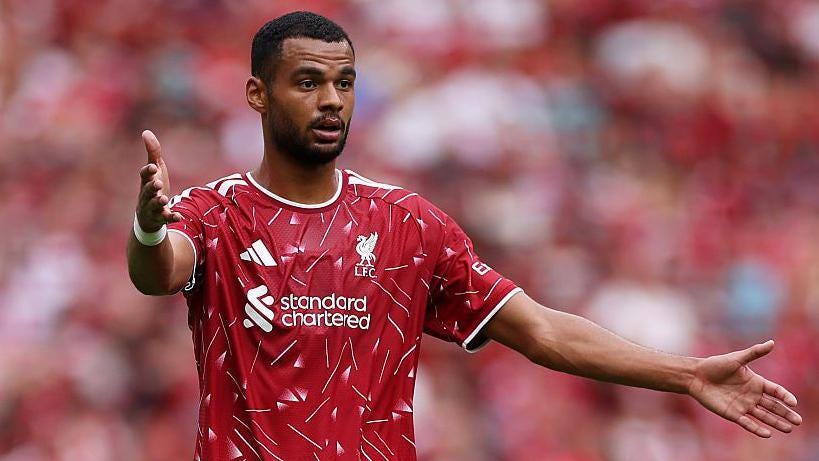
Cody Gakpo, Replace Him Before You Sell Him
I find the Cody Gakpo debate slightly strange.
There seems to be a determination among some Liverpool supporters to place players firmly into one of two categories. They are either brilliant and untouchable or rubbish and should be sold immediately.
Gakpo sits somewhere in between, and there is absolutely nothing wrong with that.
He is a good footballer with proven Premier League output who has already contributed significantly to Liverpool winning major honours. He is also 27, has obvious limitations and could command a substantial transfer fee at a point when Liverpool are rebuilding their attack.
That makes selling him a legitimate conversation.
It doesn’t make selling him now a sensible decision.
Gakpo was excellent during Liverpool’s 2024/25 title winning season, scoring 18 goals and providing six assists across 49 appearances. Last season was considerably poorer, but he was hardly alone in regressing.
Some of the criticism was fair.
He became painfully predictable at times. Receive the ball on the left, move inside, shoot. Defenders knew what was coming and Liverpool’s slow attacking football gave them plenty of time to prepare for it. His partnership with Milos Kerkez never developed properly either.
I’ve certainly had moments where I’ve screamed at the television for him to release the overlapping full back rather than cutting inside for another shot.
That doesn’t erase everything else he has done.
There are already signs that Andoni Iraola might have found a better way of using him. Gakpo has operated more frequently in the inside left channel during pre season, with the full back providing width. He has been able to drive through central areas, become involved in the build up and vary his attacking movements rather than living on the touchline.
He has looked good.
Pre season comes with the usual enormous health warning, but I’d at least like to see whether this version of Gakpo survives contact with the Premier League before deciding he has no place in Iraola’s Liverpool.
More importantly, have we looked at the squad?
Liverpool’s attack is currently nowhere near strong enough to casually sell a proven goalscorer.
Mohamed Salah has gone. Hugo Ekitike is still recovering from his Achilles injury. Federico Chiesa and Harvey Elliott have hardly forced themselves into the conversation during pre season. Victor Muñoz has arrived, but numerically he replaces Salah. Liverpool are still pursuing Bradley Barcola and have explored Ibrahim Mbaye.
And here we are discussing selling another attacker.
No thanks.
If Liverpool sign Barcola and another serious attacking option, the conversation changes completely.
Until then, Gakpo stays.
This is where the order of events matters enormously to me.
Replace him before you sell him.
I don’t want Liverpool accepting a big Tottenham offer and then spending the final days of the window scrambling around Europe trying to replace somebody who has already left.
Get the players through the door.
Then talk.
Gakpo’s versatility matters as well. With Ekitike unavailable, he is arguably Liverpool’s most credible alternative to Alexander Isak at centre forward. He can play from the left, through the middle and potentially around Florian Wirtz in more central positions.
That has value across a long season.
There is another part of this discussion that often gets forgotten.
What does Cody Gakpo want?
If Liverpool sign Barcola, Gakpo is entitled to look at the situation and wonder where he fits. Barcola naturally operates from the left. Muñoz and Rio Ngumoha also prefer that side. Gakpo is 27, theoretically in the prime years of his career, and may have absolutely no interest in spending them as a rotational option.
If that’s his position, I wouldn’t create roadblocks.
Gakpo has never struck me as a problem. He has played different positions, contributed goals, won trophies and generally got on with his job.
If he tells Liverpool he wants to leave because Tottenham are offering him a more prominent role, fair enough.
But Tottenham pay properly.
Liverpool have no contractual need to sell and would be strengthening a Premier League rival. Spurs aren’t getting a discount because Gakpo might fancy the move. A substantial offer should be the starting point for any discussion.
This doesn’t need to become complicated.
If Gakpo wants to stay, I’m perfectly happy keeping a versatile attacker with proven output who appears to suit Iraola’s football better than he suited what we watched last season.
If he wants to leave, and Liverpool have already signed serious replacements, I wouldn’t stand in his way.
There is a deal to be done under those circumstances.
What Liverpool absolutely cannot do is sell another established attacker while the squad remains incomplete and then congratulate themselves on receiving a good fee.
Cody Gakpo isn’t a player Liverpool need to sell.
He isn’t a player they should be frightened to sell either.
Get the replacements through the door first. Then ask Cody what he wants.
If he wants to stay, excellent.
If he wants to go and Tottenham are prepared to pay properly, shake his hand and wish him well.
Just don’t sell him and tell us afterwards that there is still time to explore the market.

Match of the Day Still Matters, Just Not Like It Used To
There are certain sounds from childhood that stay with you.
For generations of football supporters, the Match of the Day theme was one of them.
Saturday night had a rhythm. You went to the match, listened to the scores on the radio, waited for the newspaper reports and eventually sat down to watch Match of the Day. If you hadn’t been at a particular game, there was a decent chance those highlights would provide your first proper look at what happened.
It was an appointment.
For me, it no longer is.
I didn’t watch Match of the Day once last season. That wasn’t some protest following Gary Lineker’s departure because, in truth, I had barely watched it for several years before he left.
I simply don’t need it in the way I once did.
That is the real problem facing Match of the Day. It can change presenters, rotate pundits, cut budgets or freshen the format, but none of those things alters the fundamental transformation in how football supporters consume the game.
By Saturday evening, I already know what happened.
I’ve seen the goals. I’ve seen controversial decisions replayed from twelve different angles. I’ve probably watched somebody analyse the tactical mistake that created a goal. I’ve read supporters arguing about it. I’ve listened to the manager. I’ve seen the statistics.
If something particularly interesting happened, somebody has probably already made a podcast about it.
Then Match of the Day arrives.
This isn’t necessarily the BBC’s fault. The world around the programme has changed.
There was a time when Match of the Day controlled access to something valuable. Today it is competing for our attention with live football, social media, YouTube, club channels, podcasts and countless other sources of analysis.
That makes the Premier League’s continuing approach to the Saturday 3pm blackout look increasingly absurd.
Someone living in Singapore can legally watch every Premier League match live.
Someone living a few miles from Anfield cannot legally watch Liverpool playing a 3pm Saturday game on television in their own country.
We are still applying a restriction whose origins stretch back to the 1960s to a sporting product transformed by global broadcasting and the internet.
It feels draconian.
The original principle is understandable. Protect attendances further down the pyramid by preventing televised football competing directly against matches played at 3pm.
I simply don’t believe the modern reality works like that anymore.
If Liverpool are playing at 3pm and the match isn’t legally available in Britain, Liverpool supporters don’t suddenly think, “Fair enough, I’ll go and watch Tranmere instead.”
They find another way to watch Liverpool.
Illegal streams are easily accessible. Everybody involved knows they exist. The blackout has therefore created the ridiculous situation where one of the most sophisticated sporting competitions on earth effectively encourages some of its most committed domestic consumers towards piracy by refusing to sell them the product legally.
That cannot be sensible.
The Premier League has spent decades creating an insatiable appetite for itself.
It has marketed every rivalry. Every transfer. Every manager. Every controversy. Every weekend is presented as an event. Broadcasters spend enormous sums telling supporters that the Premier League is the greatest sporting entertainment product on earth.
Then Saturday afternoon arrives and suddenly the message becomes:
Sorry, not today. We’ve got this rule from 1960.
Modern media doesn’t work like that.
Scarcity once made Match of the Day powerful. Abundance has made it optional.
That doesn’t mean I want it to disappear.
Far from it.
Match of the Day still has a place because there remains value in a well produced highlights programme that packages an entire Premier League day into something coherent. Not everybody wants to spend Saturday checking scores, clips and social media. Plenty of people still enjoy sitting down at night and allowing somebody else to curate the day’s football for them.
There is value in familiarity too.
Good presenters matter. Good pundits matter. Authority matters. Alan Shearer has that because he has lived the game at the highest level and has spent years developing a relationship with the audience.
The BBC should protect that quality rather than assuming the Match of the Day name itself guarantees relevance.
It doesn’t.
Gary Lineker’s departure inevitably removed another layer of familiarity, but I don’t think putting him back in the chair tomorrow would suddenly have millions of people like me organising Saturday night around the programme again.
That world has gone.
The danger for the BBC is misunderstanding the difference between importance and habit.
Match of the Day remains important.
The habit has been broken.
Once audiences discover they can get what they want elsewhere, persuading them to return simply because something used to be an institution is enormously difficult.
Football Focus discovered that.
Match of the Day is a far stronger brand, attached to a far stronger product, but it cannot assume immunity from the same forces.
Tonight the Premier League returns.
Millions of us will watch matches live over the weekend. We’ll follow scores on our phones, argue about referees online, watch clips, listen to podcasts and consume an extraordinary amount of football before Saturday night arrives.
Some will still hear that famous theme tune and settle down for Match of the Day.
I’m glad they will.
I might even watch occasionally this season.
But it will be because I choose to, not because I need to.
That distinction explains almost everything about where Match of the Day now sits in British football culture.
It still has a place.
It’s simply no longer at the centre of the room.
Let The Games Begin
Maybe that is the strange thing about football returning.
The fixtures look familiar. The stadiums look familiar. The theme tunes still sound familiar.
But the game around them keeps changing.
Coventry have travelled through 25 extraordinary years to get back here. Newcastle and Villa are discovering that ambition brings its own frustrations. Liverpool still have major decisions to make before the window closes. Match of the Day remains part of the furniture, even if fewer of us are sitting in front of it.
And I will probably spend most of the weekend doing exactly what I have spent the summer pretending I would not do.
Watching football, checking transfers and getting annoyed at Liverpool.
Some habits, apparently, are harder to break than others.