

FIFA Law Changes Explained, Are We Fixing Football or Chasing Problems?
Football feels as though it is in a permanent state of adjustment. Every season brings a new interpretation, a clarification, or a trial that promises to make the game fairer, quicker, or easier to officiate. The latest set of proposed law changes and trials coming from FIFA and International Football Association Board feels particularly significant, not because of one single idea, but because of what they collectively say about the direction of the sport.
This is not just about offside. It is about control, technology, time, and the constant tension between football as a simple game and football as a regulated global product. As a supporter, and someone who has watched the laws evolve across decades, I find myself asking whether these changes are genuinely needed, or whether they risk solving yesterday’s problems while creating tomorrow’s arguments.
Daylight Offside Rule, What Is Being Proposed?
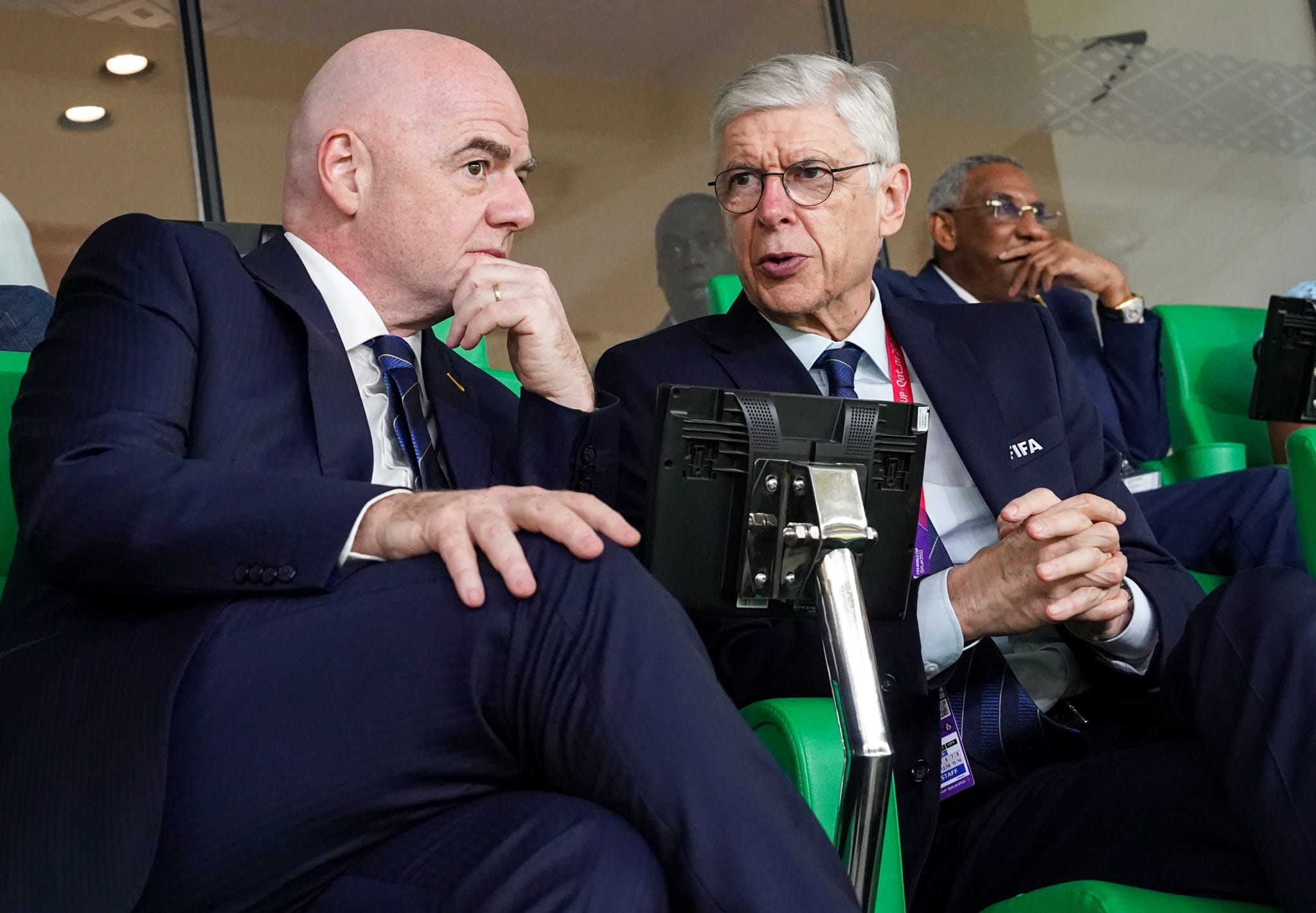
At the centre of the current discussion is the proposed trial of the so called daylight offside law, an idea long associated with Arsene Wenger. Now FIFA’s head of global football development, Wenger first raised this concept in 2020, driven by frustration at how offside decisions were being interpreted in the VAR era.
The principle is straightforward. An attacker would only be offside if there is clear daylight between them and the second to last defender. If any part of the attacker is level with the defender, they are onside. No marginal calls based on armpits, toes, or shoulders. No lines drawn across frozen frames to decide goals by millimetres.
The proposal is set to be trialled by the Canadian Premier League, subject to final IFAB approval. If successful, it could eventually be adopted globally, potentially as early as the 2027/28 European season.
Offside Law Debate, Does Football Need This Change?
The frustration that has led us here is understandable. Offside decisions have become one of the most contentious aspects of modern football. VAR was introduced to correct clear errors, yet offside has become an exercise in forensic measurement rather than footballing sense.
Supporters often say they do not mind decisions going against their team if they feel fair. The problem with current offside calls is not simply that they are tight, but that they feel arbitrary. When a goal is ruled out because a sleeve is marginally ahead of a defender’s boot, it is difficult to argue that the attacker has gained a real advantage.
The daylight rule attempts to restore common sense. It aims to reward attacking play, encourage forward movement, and reduce the sense that technology is overriding the spirit of the law. From that perspective, it is an attractive idea.
However, football is a game of balance. Any change that significantly favours attackers will have knock on effects. Defensive lines would likely drop deeper. High pressing systems might need rethinking. Space in midfield could shrink as teams adapt. More goals may arrive, but would they come at the cost of tactical variety?
VAR and Offside, Will Daylight Really End Controversy?
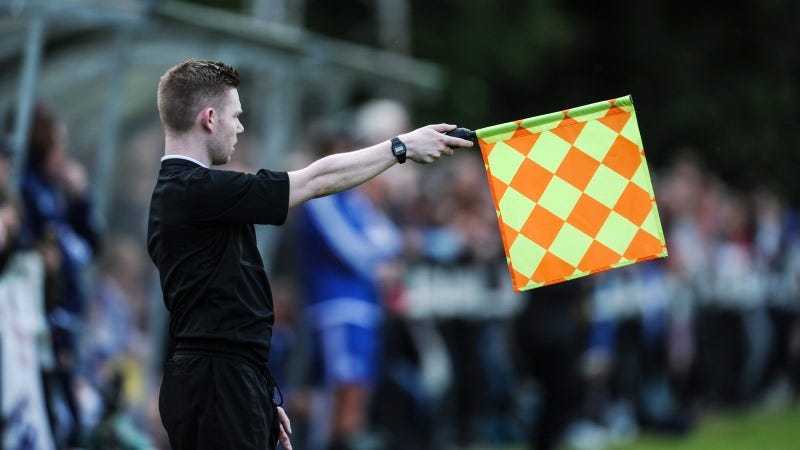
One of the key questions rarely addressed is whether daylight offside actually removes controversy in leagues that use VAR. The Canadian Premier League trial will take place without VAR, meaning officials will judge daylight with the naked eye. That alone introduces a different kind of subjectivity.
In VAR competitions, daylight would still need to be assessed using technology. How much daylight is enough? Is a sliver of green between pixels sufficient? At what point does interpretation creep back in? The lines might move, but the arguments may not disappear.
There is also the issue of consistency across competitions. Football already suffers from fans watching different interpretations of the same laws depending on the league or tournament. Introducing another layer of variation risks further confusion.
IFAB Focus on Time Wasting, Speeding Up the Game
Offside is only one part of a broader push by IFAB to address what it sees as excessive time wasting and tempo disruption. Several measures approved for upcoming tournaments underline this shift.
Countdowns are set to be introduced for goal kicks and throw ins. If a player takes too long, possession will switch, turning a delayed goal kick into a corner for the opposition. Substituted players will have ten seconds to leave the pitch, or their team will temporarily play with ten men. Injured players will be required to remain off the field for a defined period, potentially up to two minutes.
The logic is clear. Deterrents change behaviour more effectively than simply adding stoppage time. We have already seen how limits on goalkeepers holding the ball have reduced that particular form of delay.
Yet this raises another concern. Football referees are already tasked with managing physical contests, emotional flashpoints, and complex laws. Adding multiple countdowns and procedural checks risks turning officiating into an exercise in constant monitoring rather than flow management.
Lost Time in Football, Are Deterrents the Right Solution?
Few supporters enjoy watching players deliberately slow the game. That frustration is universal. The question is whether rigid sanctions are the best way to address it.
Time wasting often emerges as a symptom of deeper issues. Teams protect leads because they fear conceding. Players go down injured because the game has become faster and more physically demanding. Substitutions are delayed because coaches want to disrupt momentum.
By treating each behaviour in isolation, the lawmakers may be missing the wider picture. Football’s intensity, tactical complexity, and congested calendar all contribute to these habits. Punishing symptoms without addressing causes risks creating a game that feels overly policed.
VAR Corner Checks and Second Yellow Reviews
Another notable development is FIFA’s intention to allow VAR checks on corners at major tournaments. The argument is that these checks can be completed before the corner is taken, ensuring correct decisions without delaying play.
Domestically, there has been resistance to this idea, largely due to fears that VAR’s footprint on the game will continue to expand. Every additional check, even if quick, adds to the sense that football is under constant surveillance.
There is also agreement on allowing VAR intervention for clearly incorrect second yellow cards, while stopping short of reviewing all potential bookings. This feels like a compromise, aiming to correct obvious injustices without opening the floodgates.
Football Law Changes, What Is the End Goal?
Taken together, these proposals point towards a central question. What is the ultimate purpose of these law changes? Is it to make football fairer, faster, more entertaining, or more controllable?
Those goals are not always aligned. Speeding up the game may reduce tactical nuance. Increasing attacking advantage may unbalance competitions. Expanding technology may improve accuracy but reduce spontaneity.
Football’s greatest strength has always been its simplicity. Two teams, one ball, minimal equipment, and laws that could be understood on a park pitch. Each additional layer of regulation moves the professional game further away from that foundation.
Are These Changes Needed, Or Just Inevitable?
Perhaps the most honest answer is that some change is inevitable. Football is a global business now, watched by billions, analysed by data, and shaped by commercial pressures. The laws will continue to evolve.
But evolution should be cautious, evidence based, and rooted in the essence of the game. Trials like the daylight offside rule deserve scrutiny, not just enthusiasm. Time wasting measures deserve monitoring, not blind acceptance.
As supporters, we should keep asking the uncomfortable questions. Will this make football better, or simply different? Will it reduce controversy, or just relocate it? Are we enhancing the game’s soul, or sanding down its rough edges in pursuit of perfection?
Football does not need to be perfect. It needs to be human. The challenge for FIFA and IFAB is remembering that as they continue to reshape the laws of the world’s game.