

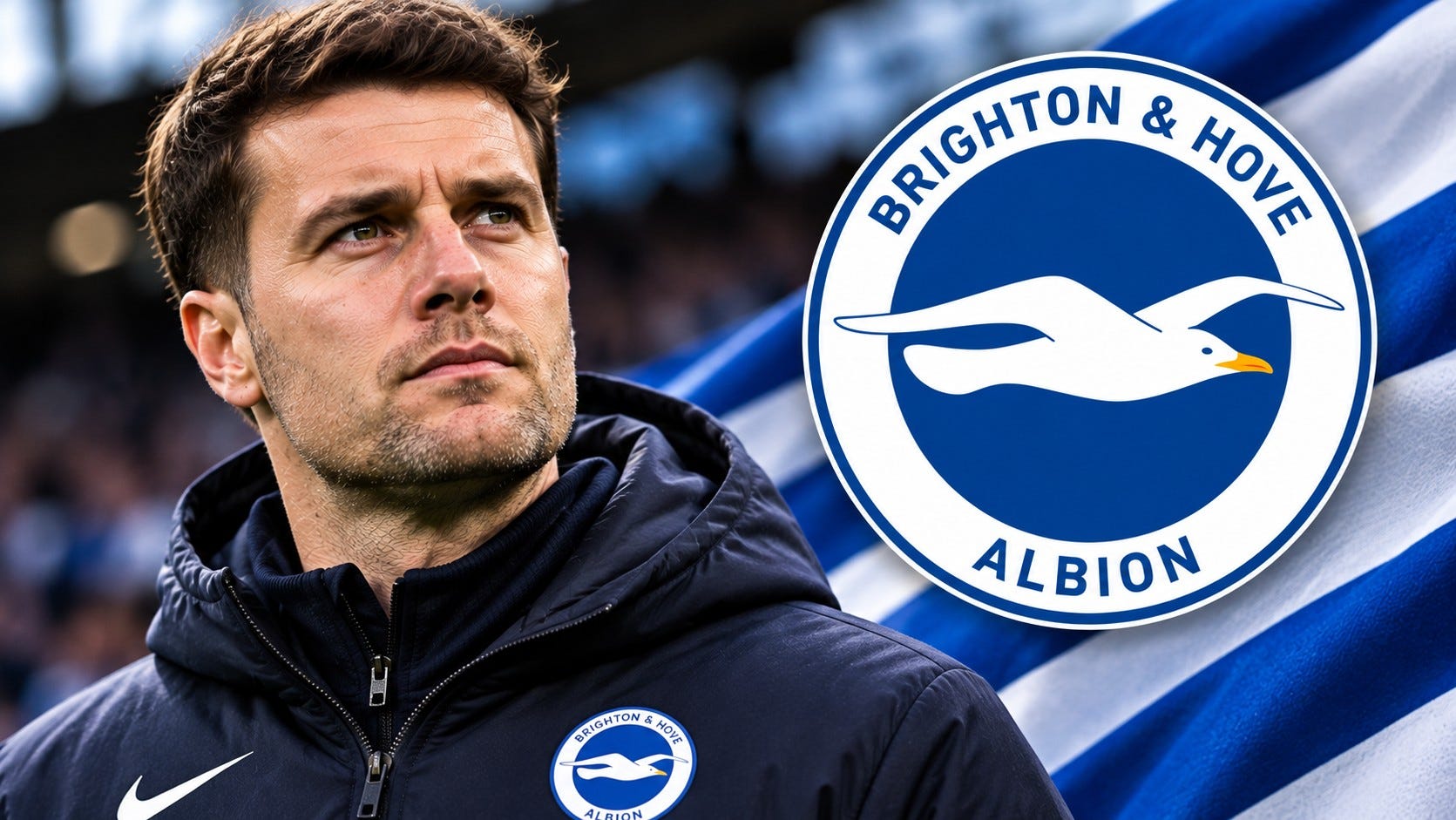
Second in the Premier League. Five points behind the leaders. Above Manchester City, Liverpool and Chelsea. Nobody wrote that sentence before the season started, and yet that is exactly where Brighton & Hove Albion sit heading into the November international break, after a 2-0 win over Brentford at the Amex Stadium sent Fabian Hurzeler's side into the break on the back of seven wins from their first ten league games.
It is the kind of position that invites a question, and the answer lies not on the training ground but in the boardroom. Brighton are owned by Tony Bloom, the professional gambler and poker player who took control of the club in 2009 and has spent the years since building something that now looks less like a plucky overachiever and more like a genuine model for how a mid-sized club can compete at the top of English football.
A rebuild that started in the third tier
It is worth remembering where this started. When Bloom secured a majority shareholding in 2009, Brighton were a club with a recent history of financial trouble and no permanent home of their own. They were promoted from League One as champions in 2011, the same year Bloom's £93 million investment in what is now the Amex Stadium finally gave the club a proper base after years of ground-sharing and temporary arrangements.
Promotion to the Premier League followed in 2017, and rather than settle for survival, Brighton kept climbing. A ninth place finish in 2021-22 was their best top flight return at the time. A sixth place finish the following season earned the club's first taste of European football. Managers have come and gone in that period, from Chris Hughton through Graham Potter and Roberto De Zerbi, each one improving on the last before moving on to a bigger job elsewhere. Hurzeler, appointed from German second division side St Pauli in 2024 and still only in his early thirties, is simply the latest custodian of a project that has outlasted every manager who has worked on it.
The numbers behind the dugout
What has made that continuity possible is the model underneath it. Bloom built his fortune through Starlizard, the private betting syndicate he founded in London, and later launched Jamestown Analytics, a data business that supplies recruitment and performance insight to clubs in football and beyond. Brighton have become the most visible example of that thinking applied to a Premier League squad: identifying undervalued players before bigger clubs notice them, selling at the right moment, and reinvesting intelligently rather than chasing reputation.
It is not a flawless system and Brighton have lost plenty of talented players to wealthier rivals over the years. But the squad Hurzeler has at his disposal this season looks the product of genuine long-term planning rather than a lucky run of form, and it is why so few people inside the game are dismissing this start as a fluke.
Scalps collected along the way
The results back that up. Brighton beat the reigning champions Arsenal 3-0 at the Amex in September, in a specially commissioned kit marking the club's 125th anniversary, ending Arsenal's perfect start to their title defence in the process. They won 1-0 away at Manchester City in October, days after taking City to penalties in the League Cup at the Etihad. They thrashed Crystal Palace 5-0 at home. Those are not results that happen by accident over the course of a season, and they have come while three of English football's traditional powers have had their own problems to deal with.
Manchester City are still waiting to learn the outcome of an appeal against a guilty verdict in their Premier League financial rules case. Liverpool and Chelsea are both still finding their feet under managers who only took charge this year. Manchester United, further back still, sacked their manager earlier this month. Brighton's rise has not happened in a vacuum. It has happened at a moment when several bigger clubs have handed them an opening, and they have been ruthless enough to take it.
Nobody inside the building is getting carried away
For all that, there is a notable absence of triumphalism around the club itself. Hurzeler, speaking after the Brentford win, was careful with his words. "Fans should always be excited if they watch our game, and that's our job to make them excited," he said, before adding that supporters "can dream" and "can have high expectations of us," while also stressing that results are "things we can't control." His focus, he said, stays on preparation and "excellence" rather than the table.
Pascal Gross went further in playing down the talk that has followed Brighton since the Brentford win. "We are not in a title race," he said, insisting the squad is "not getting carried away yet." It is a sensible position for a club with no European pedigree to defend and a squad considerably thinner than the three teams above and around them in the table. Brighton's next league fixture after the international break is away at Hull City on 22 November, the kind of unglamorous away trip that will do far more to answer the title question than any newspaper column can.
Nobody at the club will say out loud whether this turns into a genuine tilt at the biggest prize in English football or simply the best season in its history, and the coming months of fixtures will do the talking either way. What is already clear is that a club built on spreadsheets and patient recruitment, rather than oil money or billionaire vanity spending, has forced its way into a conversation most people assumed was reserved for a handful of clubs with vastly deeper pockets.
If you have enjoyed this piece, consider subscribing to It Was Always... Football for more of the stories shaping the modern game, alongside the history that got us here.