

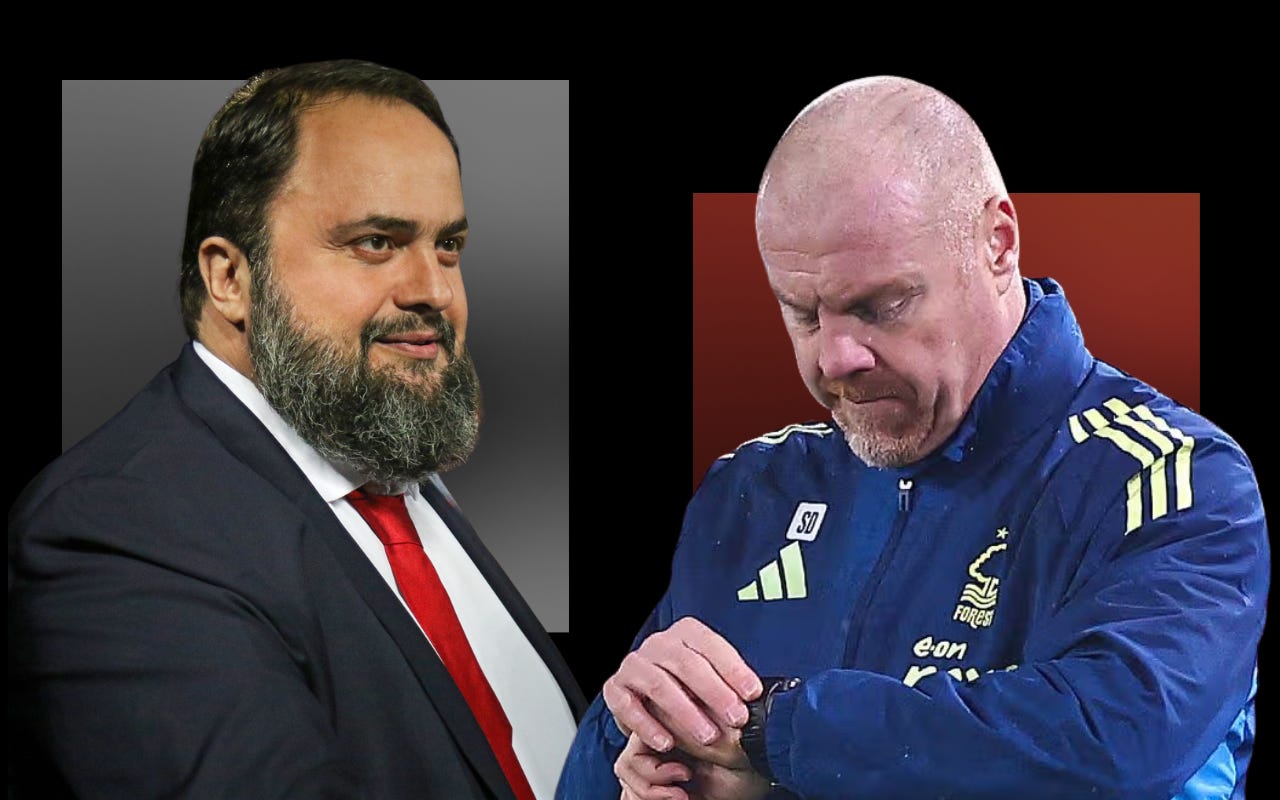
Nottingham Forest managerial chaos is a symptom, and the owner is the disease
Nottingham Forest have sacked Sean Dyche after a goalless draw with Wolverhampton Wanderers, and are already circling Vitor Pereira. It is the fourth Forest head coach search of the season, which reads less like a plan and more like a nervous reflex. Forest sit 17th, three points above the relegation places, and the owner has reached for the loudest lever again.
This is not a plea for Dyche. His football can feel like a wet overcoat on a spring afternoon. It is a plea for coherence, and a warning about a culture that is starting to look like a club sized tantrum.
Dyche was hired in October to clean up the mess after Ange Postecoglou lasted 39 days without a win, which itself followed the sacking of Nuno Espirito Santo in early September. Nuno had taken Forest into Europe and into seventh the previous season. Then came a public fracture, a change in relationships behind the scenes, and the whole structure began to creak like rotten wood.
When a club changes the manager this often, it is not really changing managers. It is changing its mind, and it is doing it in public, week after week, with the world watching.
Marinakis model: control, impatience, collateral damage
Evangelos Marinakis runs Forest like a man who cannot bear to be contradicted. Dictatorial is a word that gets thrown around too casually in football, but you can feel the shape of it here, the suspicion of anyone who asks for time, the demand for obedience, the quick punishment when results do not flatter the ego.
That approach does not create stability, it creates fear. Fear bleeds into recruitment, because players sense the next manager will want a different profile, a different tempo, a different truth. Fear bleeds into coaching, because the staff stop building and start firefighting. Fear bleeds into the stands, because supporters cannot see a road, only a series of sharp corners taken too fast.
Dyche looked like a man aware of the cliff edge. After Wolves he spoke like someone leaving the light on for his own exit. He knew the owner could pull the plug at will, and that knowledge is poison in a dressing room. You cannot demand calm from players when the top floor is throwing plates.
Managerial churn also costs real money. Every sacking means compensation, and every payout is a tax on the future. It tightens budgets, it forces sales, it makes January recruitment a panic shop, and it invites the sort of short term loans that keep a club afloat until the next bill arrives.
Forest have already paid for three managerial break ups this season. If they make it four, the bill will sit alongside the league table like a second relegation battle, one fought with accountants rather than full backs.
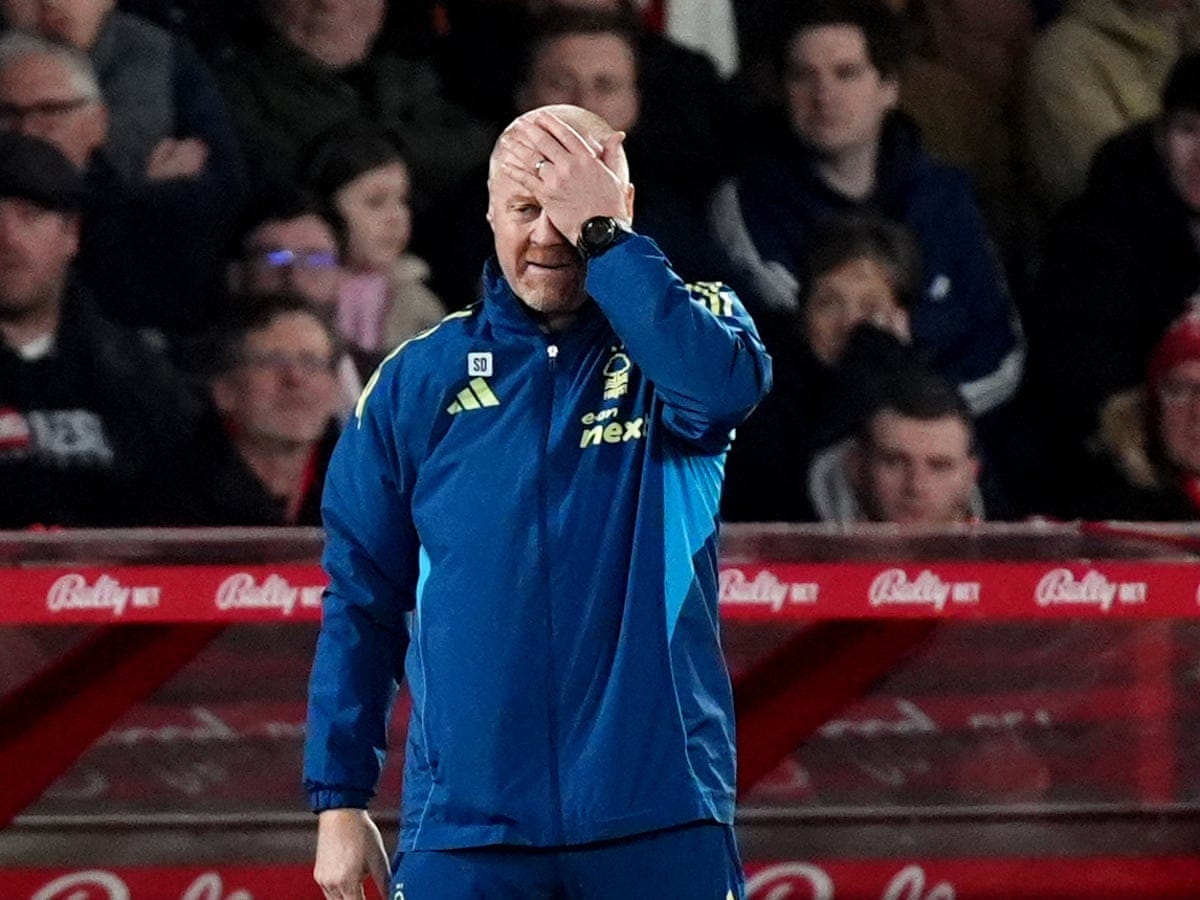
Dyche exit: tactical sins and structural scapegoating
Dyche will not be remembered kindly by everyone at the City Ground. Some fans watched his reluctance to change games and saw a stubbornness that bordered on negligence. Others saw a coach asked to save a team built for something else, a squad assembled for Europe, possession, ambition, then handed to a manager whose default language is grit, risk reduction, and set piece religion.
Both views can be true, and both are still missing the point.
Forest drew nil nil with the bottom club and it felt like a defeat because it was heavy, slow, and short on invention. The home crowd booed, and Dyche walked down the tunnel with the sound of it chasing him. Yet the league position did not suddenly collapse under him. Forest are still outside the relegation zone, and Dyche did oversee moments that mattered, including a European win that briefly suggested the season might be salvageable.
He also took a squad full of expensive parts and tried to make it into a single machine without the time, without the patience from above, and without a clear club identity behind him. If Forest wanted a progressive pressing team, they should have hired and supported one. If they wanted a low block side that lives on second balls, they should have recruited for that and lived with the bruises.
Instead they tried to do both, and then blamed the man on the touchline when the compromise looked like confusion.
This is where owners love the sacking. It is simple, it is visible, it performs decisiveness. It also hides the deeper failures, the scattergun recruitment, the shifting power centres, the unclear chain of command. It turns structural problems into a single human target. You can fire a manager in a morning. You cannot fix a broken culture that quickly, and you cannot hide it forever.
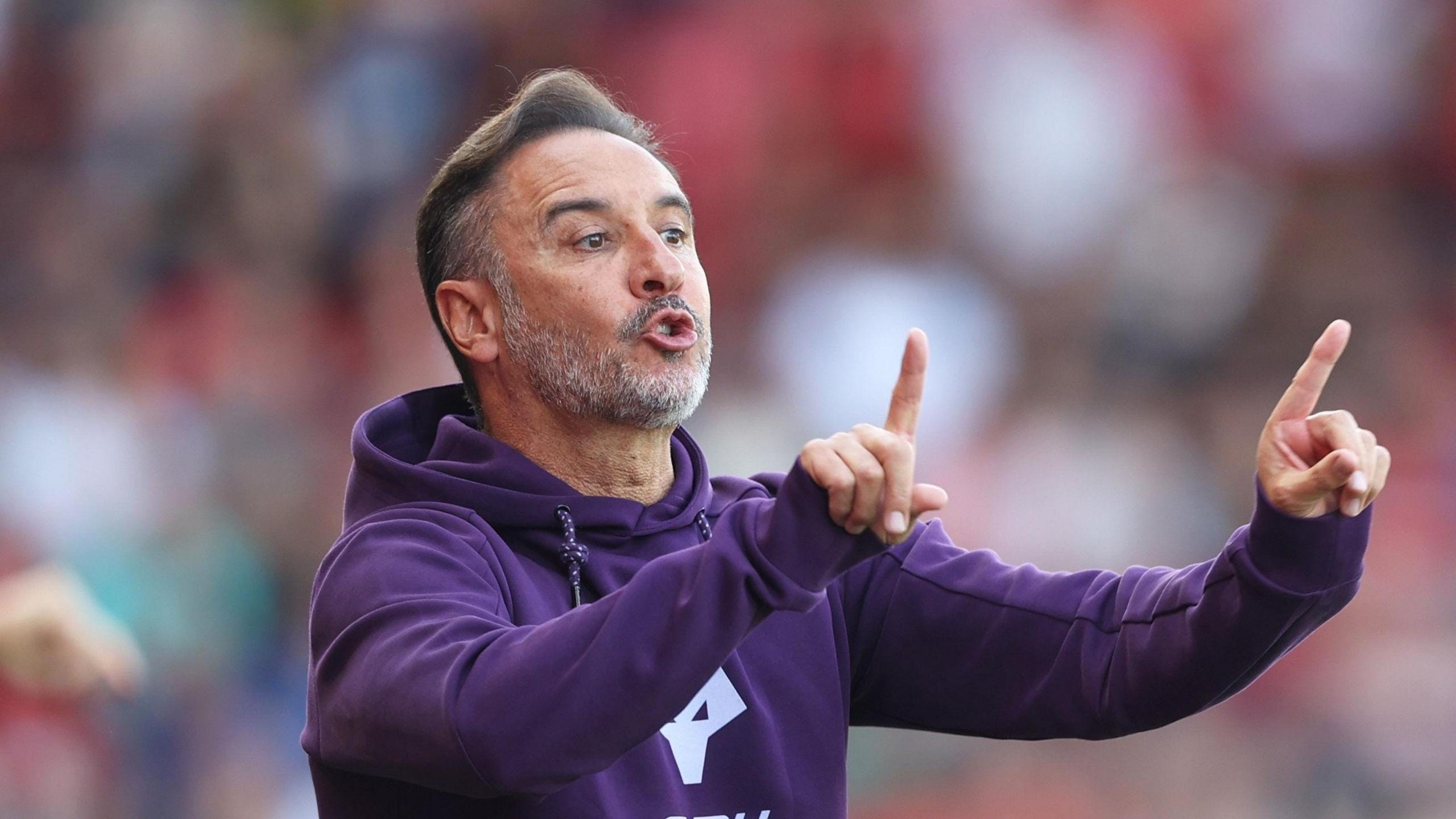
Vitor Pereira links: familiar face, familiar risks
Vitor Pereira makes sense in one narrow way, he is known to the owner, and familiarity is comforting when you want control. He has worked under Marinakis before, at Olympiacos, and he won trophies there. That will be the pitch, a proven relationship, a man who will accept the owner’s orbit, a coach who can arrive quickly and talk loudly.
But Forest are not Olympiacos, and the Premier League is not a domestic procession. Pereira’s recent record in England is mixed at best. He was sacked by Wolves in November after ten league games without a win. Yes, he was credited with helping Wolves improve after arriving the previous December, and yes, short bursts can happen when a new voice shocks a squad into life. But that is the point, it is a burst, not a foundation.
Forest do not need a bounce. They need a base.
If they appoint Pereira, they will be choosing a coach who has already shown how quickly a relationship can sour in this league when results do not arrive. They will also be choosing another stylistic shift, another reset, another set of promises to a group of players already tired of learning new accents and new rules.
Forest also have a European tie to manage, and the calendar is a relentless judge. A new coach would have to learn the squad while fighting two fronts. That is not impossible, but it is a handicap Forest have chosen to give themselves.
The obsession with big names and quick fixes has already floated through their season, and it has achieved nothing but noise. At some point a club has to accept that stability is a competitive advantage, not a luxury. Forest are treating it like an inconvenience.
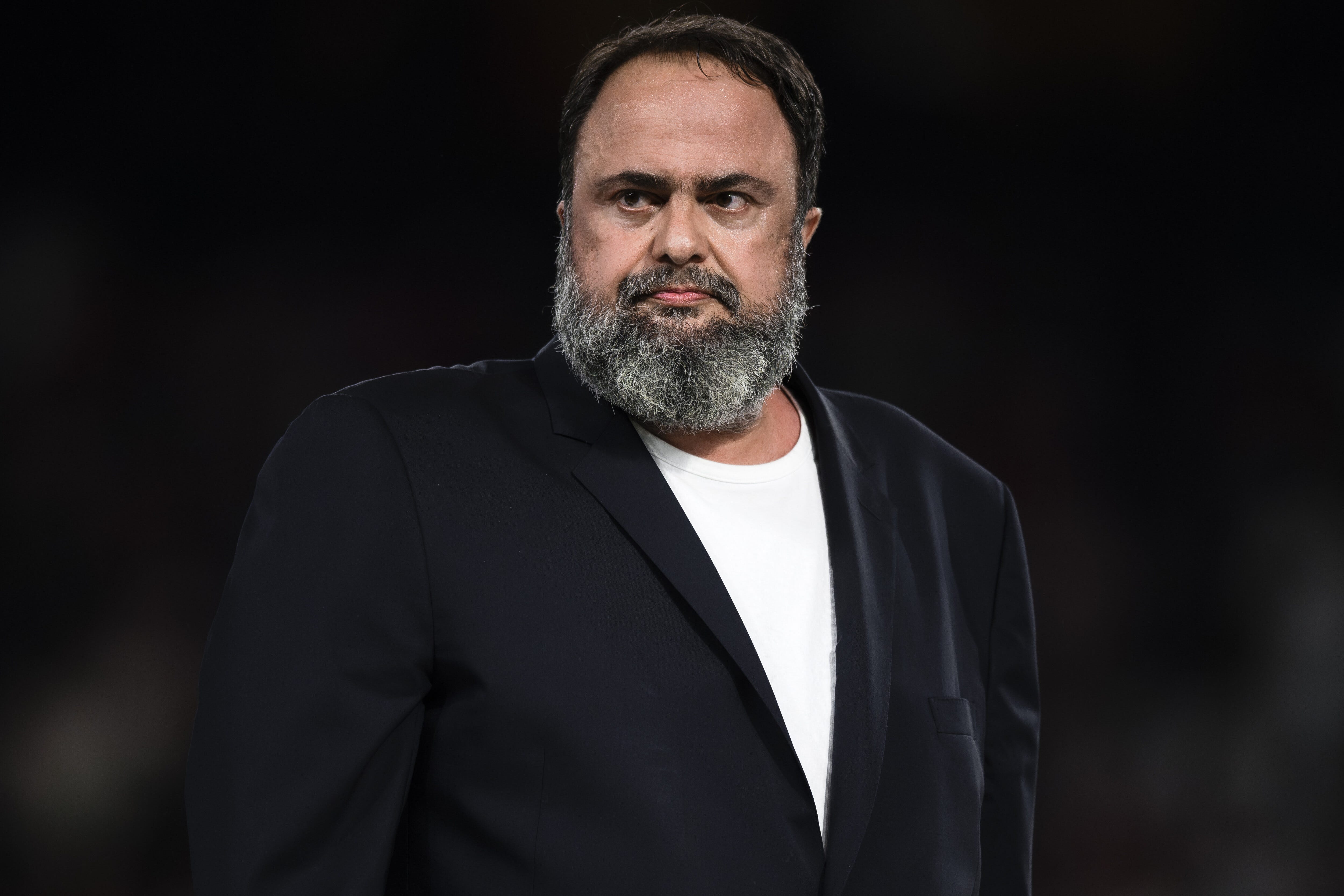
Relegation fight: what Forest must do next
Forest can still survive, but survival will come from clarity, not drama. The relegation battle punishes vanity. It rewards simple habits repeated under pressure.
First, stop treating the manager as a disposable shield. Choose a coach whose style matches the squad, or reshape the squad to match the coach, but pick one and stick with it. Anything else invites chaos, and chaos is the favourite food of relegation.
Second, simplify the on pitch priorities. Forest do not need a manifesto in February. They need a reliable defensive structure, a functional midfield that can hold possession long enough to breathe, and a front line plan that does not rely on hope and crosses. If the squad lacks a reliable goalscorer, be honest about it and play accordingly. Protect leads, value points, and stop gifting games through emotional decision making.
Third, rebuild credibility with supporters. Fans can accept struggle. They can even accept failure. What they cannot accept is being treated like extras in someone else’s power play. When supporters are joking that their club has become a managerial circus, that humour is a coping mechanism, not contentment. It is the sound of faith being rationed.
Finally, and this is the hard one, the owner has to step back. A club cannot be healthy when one man’s temper dictates its direction. Football owners love to talk about ambition. Real ambition looks like patience, investment in structure, and the humility to let football people do football work.
If Marinakis cannot do that, Forest will keep repeating this season in different costumes, different managers, the same anxiety. One day the luck runs out. When it does, the Championship will not care how many coaches were sacked on the way down.
Forest’s greatest threat is not Wolves away or a European trip or a rough run of fixtures. It is the top of the club, where decisions are made in heat and sold as vision. That is not leadership. It is theatre, and the price of theatre is often paid in points.