

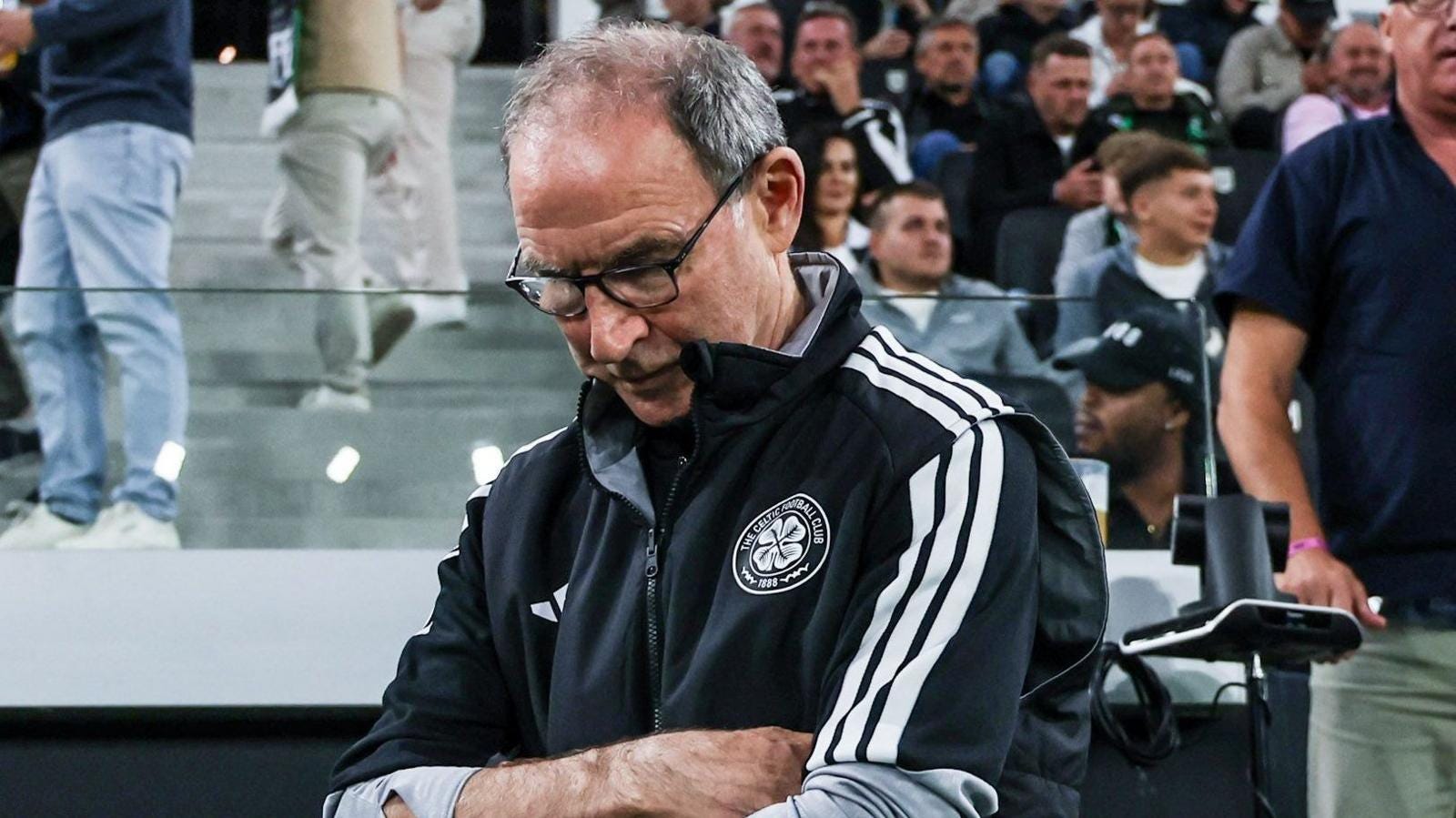
Celtic’s board has moved to publicly back Martin O’Neill through one of the toughest spells of his second spell in charge, hours after the club’s annual accounts revealed a swing from a £33.9m profit to a £4.8m loss for the year to the end of June.
Chief executive Michael Nicholson used the release of the figures to address the manager’s position directly, acknowledging that results have dipped badly at the worst possible moment for a club also absorbing a sharp fall in income. “The losses in the last week have been painful for us all,” Nicholson said. “We will now come together and support Martin and the players, as we focus our efforts on achieving success domestically and in the Europa League.”
It is worth remembering how O’Neill, now 74, ended up in this position in the first place. He returned to Celtic Park in October 2025 for an unlikely second spell as interim manager, turning an eight point deficit to Hearts into level points and leading the club to a League Cup final win over Rangers. When he stepped back in again later in the season following Wilfried Nancy’s departure, he steadied a dressing room and a boardroom under real strain, guided Celtic through the January window, and then produced the kind of finish few saw coming, winning the Premiership on the final day against Hearts before completing a domestic double with Scottish Cup success at Hampden. Signing a permanent one year deal in June, O’Neill added two more trophies to a Celtic managerial record that already ran to seven during his first spell between 2000 and 2005.
That history explains why goodwill towards O’Neill inside Celtic Park remains considerable, and why the club’s public tone this week has been one of patience rather than panic. It also makes the last few weeks harder to reconcile with what came before.
A brutal run of results
Celtic threw away a 3-0 first leg lead against LASK in their Champions League play off on 26 August, losing 5-1 in Austria after extra time to go out 5-4 on aggregate and drop into the Europa League instead. O’Neill called it the worst night of his managerial career, worse even than losing the 2003 UEFA Cup final, while captain Callum McGregor apologised to supporters, saying the team had looked “scared to go and win the game.”
The bad news kept coming. Celtic lost 1-3 at home to Ferencvaros in their Europa League opener on 17 September, then suffered a second Old Firm defeat in the space of a week when Rangers won 1-0 at Celtic Park in the Premiership on 20 September, Ryan Naderi scoring the only goal. Three defeats in quick succession, two of them to Rangers, left O’Neill admitting after the derby loss that he would “reflect” on his future and that it “might be time to wrap it up.”
The finances behind the figures
The accounts published this week explain why the timing of that run has alarmed the Celtic Park boardroom as much as the results themselves. Turnover fell 22.7% to £111m from £143.6m the previous year, a drop largely attributed to playing Europa League football rather than Champions League football across the period the accounts cover. Profit from player trading also fell sharply, down to £16m from £31.5m, while wages and amortisation costs both rose. The bank balance dropped from £77.3m to £66.4m, even after a summer in which Celtic spent £31.6m on new signings.
None of that is disastrous by itself for a club of Celtic’s scale, and the cash reserves remain healthy compared with most of Scottish football. But a second successive season outside the Champions League group stage, following this summer’s exit to LASK, would represent a further significant hit to next year’s revenue, which is why the board chose this moment to speak so publicly about O’Neill’s position. Interim chairman Brian Wilson made a point of praising the manager’s loyalty to the club, saying: “We owe a debt of gratitude to Martin O’Neill and his management team, who stepped up for Celtic, twice.”
Backing with a question mark attached
The message from Parkhead is clear enough for now. Nicholson and Wilson both want O’Neill to continue, and there is little appetite within the boardroom for a managerial change six games into a Premiership campaign Celtic still lead. What remains less certain is whether O’Neill himself shares that appetite after a week that visibly affected him. His comments after the Rangers defeat were not the words of a man simply shrugging off a difficult week, and suggestions from within the game that his tone was more emotional than a genuine resignation signal will only carry weight if results start to turn.
Celtic still sit top of the Premiership, two points clear of Rangers after seven matches, with a goal difference that reflects a team capable of playing well when confidence allows it. That is the argument for patience. The counter argument, sitting now alongside a set of accounts showing a near £39m swing from profit to loss, is that a club that spent £31.6m in a single summer cannot keep exiting Europe’s top competition and losing Old Firm games without consequences eventually catching up with someone.
What happens next
For now, O’Neill’s focus turns back to a Europa League campaign that offers a route to salvaging both the season and next year’s balance sheet, with Celtic needing results to arrest a difficult start in the competition. Domestically, the Premiership lead offers some cover, and another strong run in the league would likely be enough to settle the immediate question over his future. Given everything O’Neill produced in his first months back at the club, few inside Celtic Park will want this week to define his second spell in charge.
For more on the stories shaping Scottish and English football this season, subscribe to It Was Always… Football and get every new article straight to your inbox.