

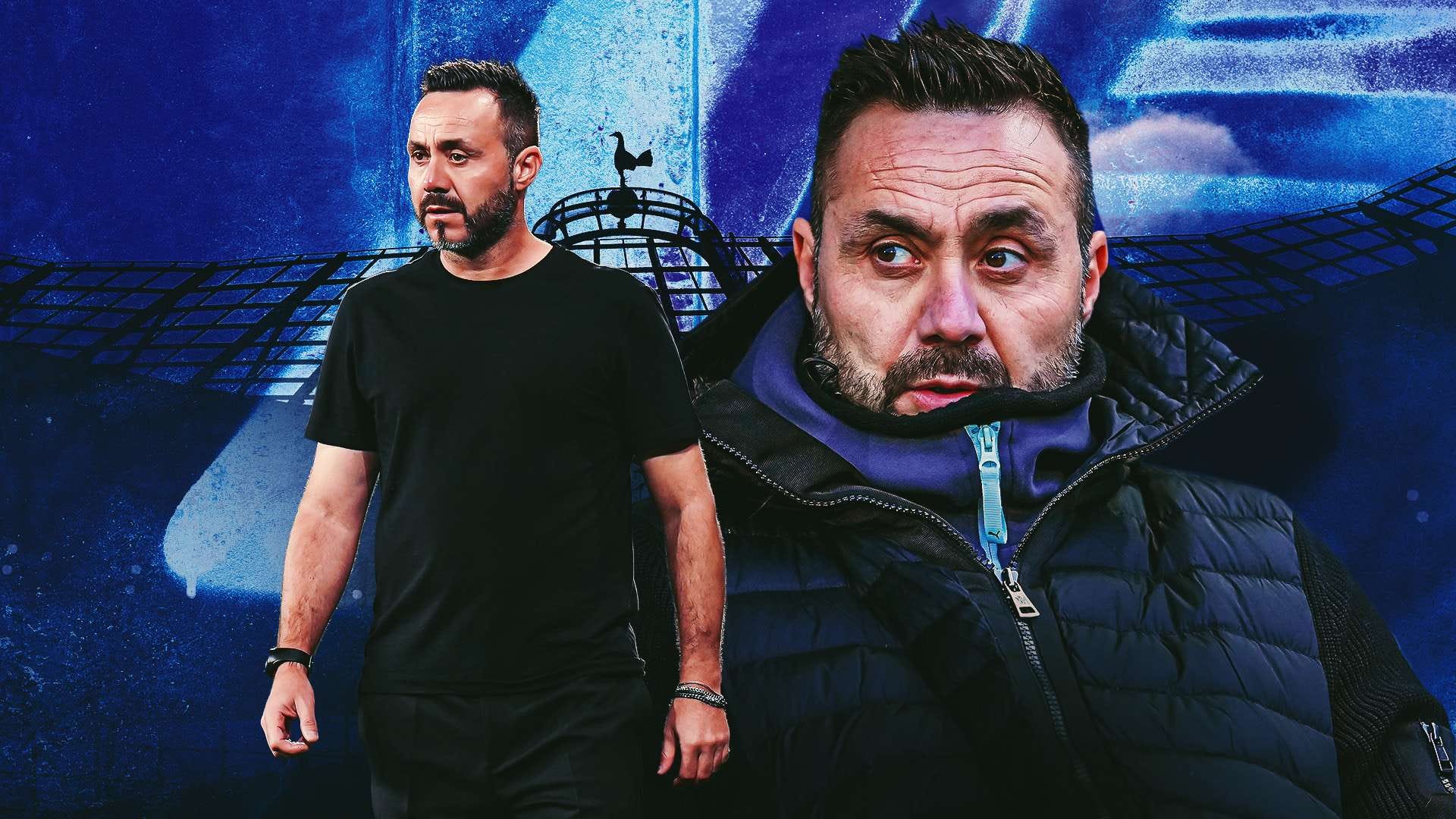
Picture a company on the brink of collapse calling in a visionary architect to redesign the headquarters while the building is still on fire. The blueprints might be magnificent, the ideas fresh and daring, but the flames do not wait for inspiration. That is the position Tottenham Hotspur have placed themselves in with the appointment of Roberto De Zerbi.
This is a club hovering just above the drop, short on confidence, fractured in direction, and now entrusted to a coach whose strength lies in long term construction rather than emergency repair. The contradiction is stark. The ambition is clear. The timing is extraordinary.
Crisis demands clarity
Tottenham have made a decision that speaks of identity rather than urgency. The easy move would have been to bring in a firefighter, a manager who simplifies, organises, stabilises. Someone to narrow games, protect leads, grind out points. Instead, they have chosen complexity, ideology and risk.
The failure of Igor Tudor forced their hand. His short spell offered no uplift, no coherence, no sense of recovery. Spurs did not improve, they regressed. That route was closed.
Yet abandoning pragmatism entirely is a different kind of gamble. De Zerbi does not deal in half measures. His football is structured, rehearsed, demanding. It requires understanding, trust, repetition. It asks players to take risks in dangerous areas, to invite pressure and escape it with precision. Those ideas are not absorbed overnight.
Seven matches remain. Tottenham are one point above the relegation zone. This is not a laboratory, it is a survival fight.
There is a sense here that the club have skipped a step. The question was how to stay in the division. The answer they have given is how they want to play once they are safe.
Style versus survival
De Zerbi’s methods are well established. Build from the back, draw the opposition forward, create overloads, attack through central spaces. It is bold, intelligent football. When it works, it is compelling.
When it does not, it leaves space behind, exposes defenders, and invites chaos.
That tension is central to Tottenham’s predicament. Their defensive record is already fragile. They concede too easily, track runners poorly, and make basic errors under pressure. Asking this group to execute a high line and intricate build up under relegation stress is a considerable demand.
There is evidence to suggest that adaptation takes time. Even in more stable environments, his teams have needed weeks to internalise his patterns. Early results can be erratic. Performances may improve before results follow. Spurs do not have that luxury.
Supporters recognise this. Some see the vision, a coach who brings clarity and purpose to a squad that has lacked both. Others see the mismatch, a system that cannot be implemented quickly enough to matter.
There is also a quiet hope among some that De Zerbi will compromise, that he will temper his instincts, simplify his approach, and focus on results. It would be a departure from his nature. His career suggests conviction rather than compromise.
Fanbase fracture grows
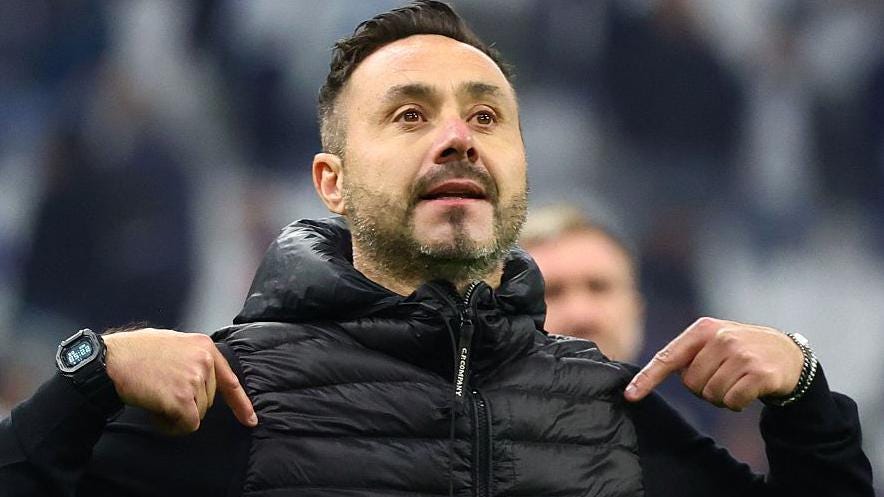
The reaction to this appointment tells its own story. This is not a fanbase united behind a bold move. It is a fanbase arguing with itself.
Some view De Zerbi as the best available option, a progressive coach who offers a future beyond survival. They accept the risk because the alternatives feel uninspiring. There is a belief that a strong personality and clear ideas might jolt the squad into life.
Others see desperation. A long term contract handed out in a moment of weakness. A manager with a reputation for volatility given control at a time when calm is required. The jokes about money, about payouts, about inevitable fallout are not just humour, they reflect a lack of trust in the decision making above.
Then there is the moral argument, louder and more uncomfortable. His public defence of Mason Greenwood at Marseille has left a section of Spurs supporters deeply uneasy. For them, this is not about tactics or results, it is about values. That debate has been fierce, personal, and unresolved. It has widened the gap between supporters and the club.
Overlay all of that with the usual Spurs anxiety, the expectation that things will unravel, and the mood becomes clear. This is not optimism. It is tension, curiosity, and in many cases, dread.
Long term vision, short term danger
Tottenham insist this was their preferred appointment for the future. That may well be true. De Zerbi aligns with the club’s traditional desire for attacking football, for identity, for entertainment. In a different context, with a pre season, with time to shape the squad, this would feel logical.
Context changes everything.
Seven matches do not allow for transformation. Injuries have stripped the squad of key profiles. The midfield lacks balance. The defence lacks reliability. These are not minor issues that can be coached away in a fortnight.
There is also the question of personality. De Zerbi is intense, demanding, and not always diplomatic. His record suggests that relationships can fray. Disagreements can escalate. That edge can drive performance, it can also destabilise a dressing room.
Tottenham need calm authority. They need a unifier. They have appointed a disruptor.
And yet, there is a case to be made that disruption is precisely what they require. The squad has drifted. Confidence has collapsed. A jolt, even a volatile one, might spark a response.
That is the gamble.
Can brilliance outweigh volatility
There is no doubt about De Zerbi the coach. His teams are coached, not just organised. Players improve. Patterns emerge. There is intelligence in his work, bravery in his ideas.
The concern lies elsewhere. Man management, emotional control, longevity. He has rarely stayed long in one place. Success often comes with friction. That cycle is familiar.
Tottenham have effectively signed both sides of that equation. The brilliance and the volatility.
For this to succeed, the timeline must shift. The storm must be weathered before the storm within begins. The players must respond quickly. The results must come early enough to build belief. The environment must remain stable long enough for his ideas to take hold.
That is a narrow path.
Failure does not require catastrophe. A slow start, a couple of defeats, a slide into the bottom three, and the pressure will intensify beyond reason. In that environment, even the most coherent ideas can fracture.
Tottenham have chosen a path that demands faith. Faith in a coach, faith in a philosophy, faith that the long term can influence the short term. It is a bold decision. It may even prove the right one.
But bold does not mean safe.
Return to that burning building. The architect stands with his plans, confident, visionary, convinced that the structure can be reshaped into something better. Around him, the fire still burns. The question is simple. Can he control the flames long enough to build, or will the building collapse before the design ever takes shape.
Spurs have made their choice. Now they must live with the consequences.