

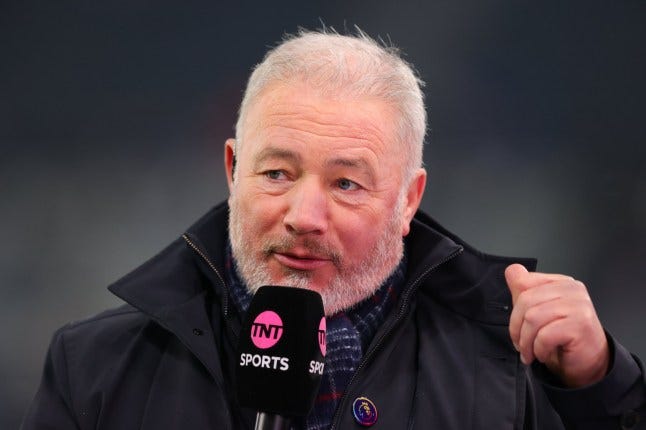
Ally McCoist turns 64 today, and it is worth pausing on just how much football one life can hold. He is Rangers’ all time leading goalscorer, a two time winner of Europe’s top scorer award, a Scotland international who very nearly missed out on the honour altogether, and a manager who took charge of his boyhood club through the most turbulent spell in its history. These days he is better known to a younger audience as the beaming face and unmistakable voice behind the microphone, but the punditry only tells half the story.
McCoist was born in Bellshill, Lanarkshire, and grew up in East Kilbride dreaming of a career in the game. He got his start at St Johnstone, making his debut in April 1979 and scoring 22 goals in 57 appearances before Sunderland made him their record signing for £400,000 in the summer of 1981. It did not work out on Wearside. Two seasons and just eight goals later, McCoist returned north in 1983 for a fee of £185,000, and Rangers supporters have been grateful ever since.
Ibrox’s record breaker
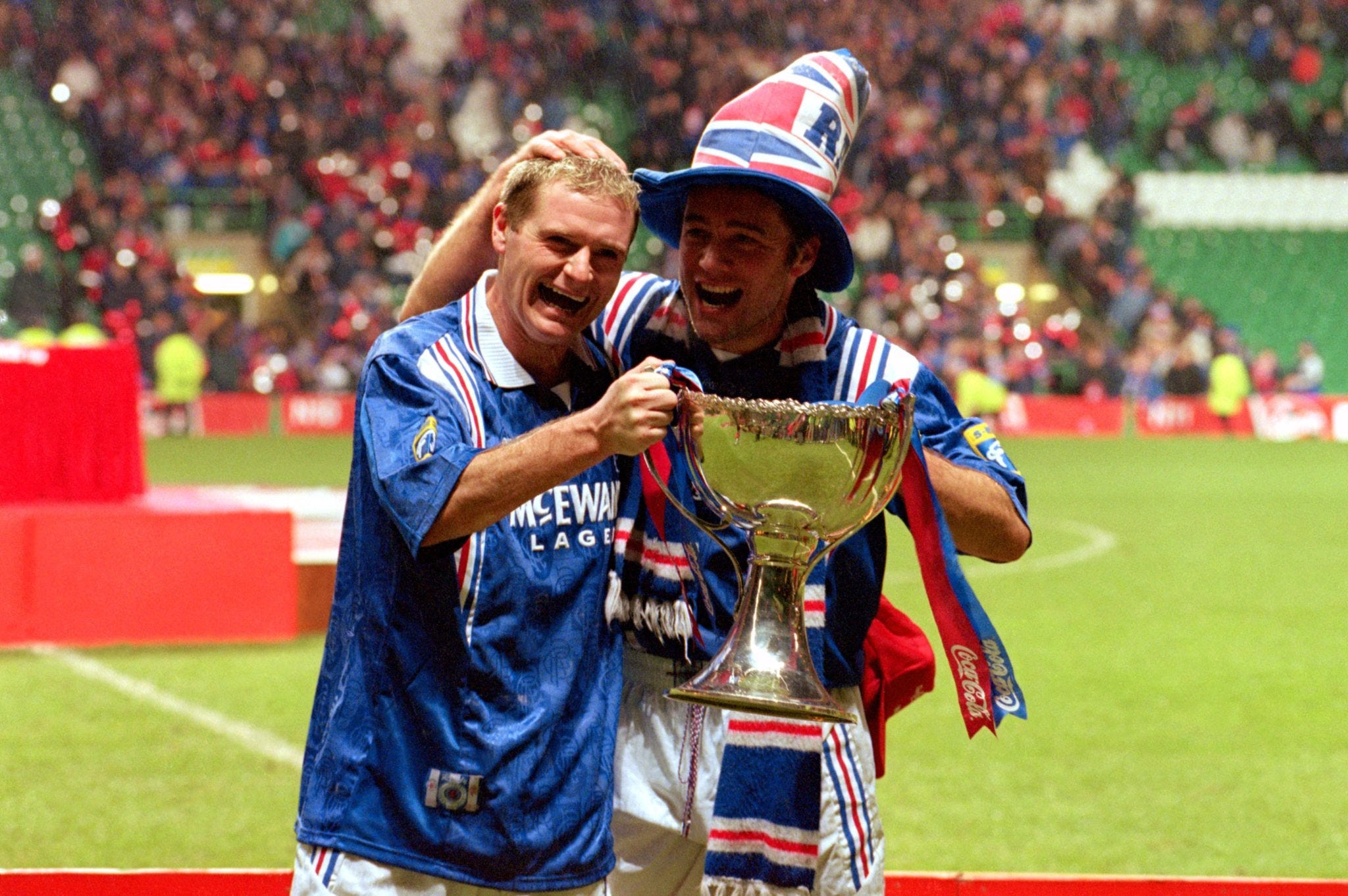
What followed was one of the great goalscoring careers in Scottish football. McCoist scored 355 goals in 581 appearances for Rangers across all competitions, a club record that still stands, and he did it in some style. There were ten league titles along the way, including the full run of nine in a row between 1989 and 1997, a Scottish Cup in 1992 and nine League Cups. He scored 34 league goals in 1991-92 and matched it again the following season, becoming the first player to win Europe’s Golden Shoe in successive years.
He was not just a penalty box predator either, though he was devastatingly effective there. McCoist formed one of Scottish football’s most feared strike partnerships alongside Mark Hateley through the early 1990s, and Ibrox regulars from that era will tell you there was no better sight than McCoist wheeling away in celebration, arms outstretched, after another poacher’s finish.
His Scotland career brought 61 caps and 19 goals between 1986 and 1998, taking in the 1990 World Cup and European Championships in both 1992 and 1996, where he scored a rare long range effort against Switzerland. It was not, however, an entirely straightforward international story. McCoist scored 16 goals in the 1997-98 season yet was left out of Scotland’s squad for the 1998 World Cup in France, an omission he later called a mistake that stung for years. He finished his playing career at Kilmarnock, bowing out in May 2001 at 38 with a 1-0 win over Celtic, a fitting final chapter for a man who spent his career tormenting them.
The impossible job
Nothing in that trophy laden playing career, though, quite prepared anyone for what came next. McCoist took over as Rangers manager in the summer of 2011 and won his first Old Firm derby 4-2 that September, with the team five games into the season conceding just a single goal. It looked, briefly, like the perfect start.
Instead, Rangers were plunged into financial crisis. The club entered administration in February 2012 and took a ten point deduction, and when a company voluntary arrangement was rejected, liquidation followed. A new company, still carrying the Rangers name and history but starting again from nothing, was placed in the Third Division, Scottish football’s basement tier. McCoist stayed on and led the rebuild, winning the Third Division title in his first season back and then going through the whole of the following campaign unbeaten to lift the League One title, the first Rangers side in 115 years to manage that feat over a full league season.
It was an extraordinary show of loyalty from a man who could have walked away and kept his reputation entirely intact. The climb back up the leagues eventually stalled, and after a difficult start to the 2014-15 Championship season, McCoist resigned in December 2014, formally leaving the club the following autumn. His overall record at Rangers, across every division that turbulent spell dragged the club through, reads 121 wins from 167 games, a win rate above 72%. Numbers alone do not capture what the job actually involved, holding a wounded institution together while it fought its way back to where it belonged.
A second career behind the microphone
McCoist’s second career has, in its own way, been just as remarkable as his first. He spent eleven years as a team captain on A Question of Sport, making a record 363 appearances on the show, and became one of British television’s most recognisable football voices long before he ever picked up a manager’s clipboard. Since leaving management he has thrown himself back into broadcasting, becoming one of the most sought after co-commentators in the business. His stint alongside Jon Champion at the 2018 World Cup was widely praised, he has been a fixture of Sky Sports and BT Sport’s Scottish football coverage, and he has commentated on Premier League football for Amazon Prime Video since 2019.
What makes McCoist such an enduring presence in the game is not simply the résumé, impressive as it is. It is the sense that here is someone who has never stopped loving football, whether he was scoring hat-tricks against Celtic, dragging his club up from the fourth tier, or cackling with laughter in a commentary booth at something a striker has just done wrong. He was appointed OBE in 2024 for his services to football and broadcasting, recognition that stretched well beyond his goalscoring feats.
Sixty four years old today, and still box office. That is not a bad way to be remembered.
Ally McCoist’s story is exactly the kind of football history we love telling here. If you enjoyed this, follow It Was Always… Football for more from the modern game and the eras that shaped it.