

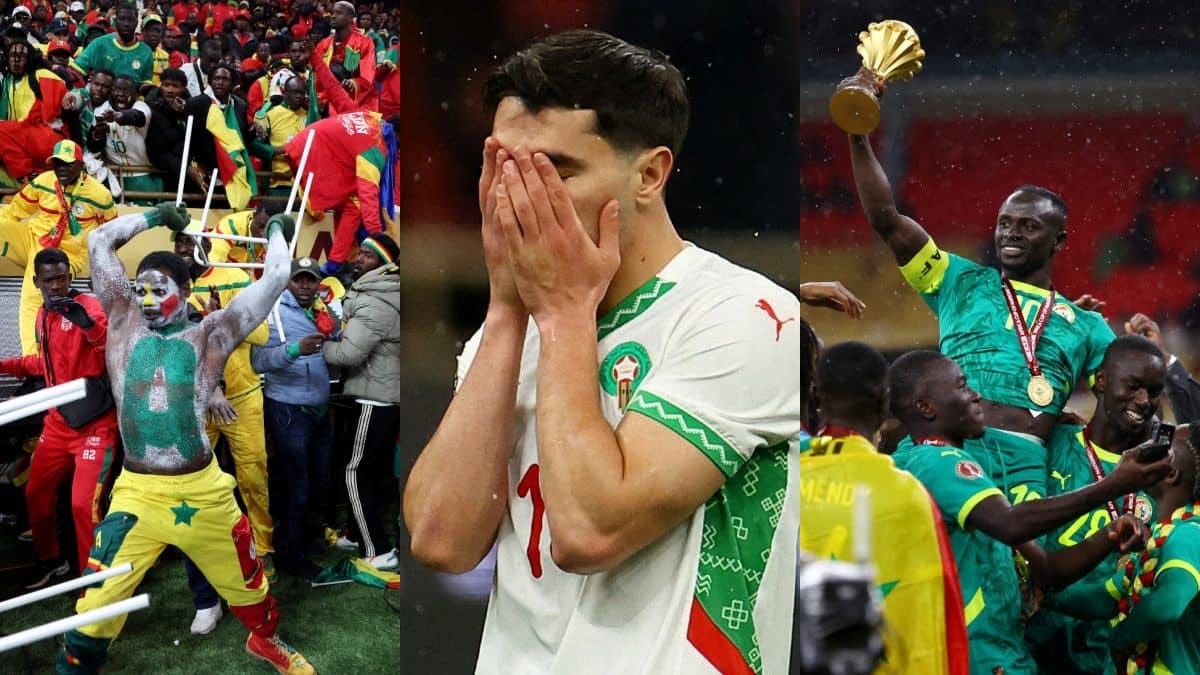
African football lives on a fault line. Pressure builds quietly, invisibly, for years, then releases itself in sudden and spectacular fashion. That is not romance, and it is not a slur. It is reality. Anyone who has followed the Africa Cup of Nations with clear eyes understands this.
What unfolded in the final moments of AFCON 2025 did not come from nowhere. It was not a freak incident, nor a uniquely shameful night that erased a month of football. It was the release of a force that has always existed within the competition, a force driven by history, politics, emotion, suspicion, pride, and the unbearable weight placed on players and supporters alike.
An AFCON final is the most combustible fixture in African football. Strip away the branding and infrastructure and you are left with something raw, desperate, and deeply human. Last night, that reality asserted itself with frightening clarity.
AFCON final pressure cooker
An AFCON final is not a normal match. It does not behave like one and it should not be judged like one.
For the players, it represents escape or condemnation. Careers are elevated or scarred forever. For coaches, it can mean national sainthood or a swift and brutal end. For supporters, it is identity made flesh. Entire cities, regions, and diasporas compress their hopes into ninety minutes that feel like a reckoning.
Add to this the reality of African football governance, uneven trust in officiating, and long standing grievances between federations, and you have conditions that no amount of polished stadiums can neutralise.
The idea that world class facilities alone could civilise this occasion was always naïve. Infrastructure does not drain emotion. It amplifies it. Bigger stages do not calm crowds, they give them somewhere to roar.
What happened in the final minutes was not a failure of African football culture. It was African football culture exposed without filters. Emotion outran control. Injustice, whether perceived or real, became intolerable. Order fractured because belief fractured first.
This was not football losing its way. This was football revealing exactly what it means in this part of the world.
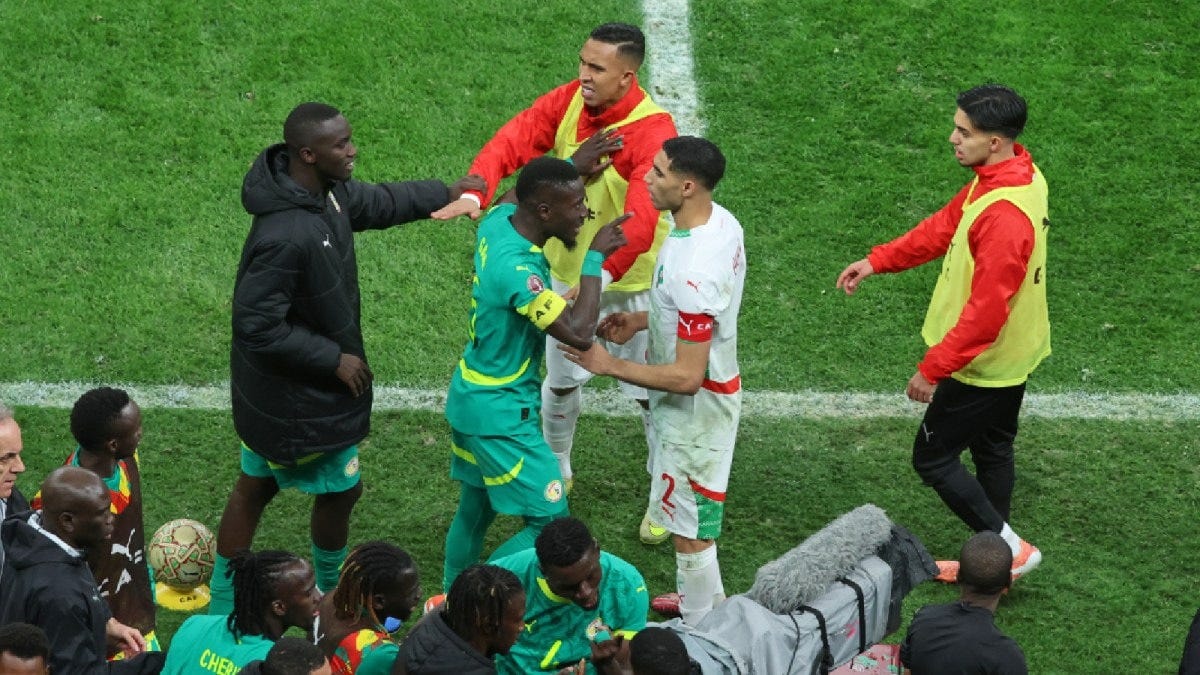
Refereeing mistrust and emotional spillover
Refereeing decisions do not exist in isolation at AFCON. They land on soil already cracked by suspicion.
African football carries a long memory. Decisions are rarely forgotten, federations rarely forgive, and fans rarely assume neutrality. Whether fair or not, the belief that power influences outcomes has become embedded in the psyche of the competition.
When a late decision goes against you in an AFCON final, it does not feel like a single moment. It feels like confirmation. It feels like history repeating itself. It feels like being unheard.
That is why reactions become disproportionate. That is why anger spreads so quickly. It is not the call alone; it is everything the call is thought to represent.
VAR was meant to bring clarity. Instead, in moments like these, it adds distance and delay, which only heightens paranoia. The pause becomes a vacuum filled with rage. Silence breeds certainty that something is being taken away.
Once that threshold is crossed, logic is powerless. Protest becomes performance. Leaving the pitch becomes an act of resistance rather than petulance. The match stops belonging to the officials and starts belonging to the emotions surrounding it.
At that point, the game is no longer being played. It is being contested in every possible sense.
Narrative power and selective memory
Tournaments are remembered not by balance but by endings. This is an uncomfortable truth, but it is a human one.
Months of excellence can be eclipsed by minutes of madness. That is not a media invention; it is how memory works. Drama imprints deeper than method. Disorder outlives control.
Yet language still matters. When chaos becomes shorthand, when implication replaces explanation, a line is crossed. African football has spent decades being reduced to moments rather than measured across its breadth.
What angered many observers was not the reporting of events, which was necessary and right. It was the suggestion that chaos is habitual, expected, somehow baked into the tournament’s DNA without qualification.
That framing ignores context. European football has its own catalogue of violence, disorder, and institutional failure. South American football has lived through horrors far worse. But those incidents are framed as tragedies, not traits.
African football does not ask for exemption. It asks for accuracy.
Last night should be remembered for chaos because chaos occurred. It should not be remembered as proof of something inherent or inevitable beyond the moment itself.
There is a difference between recognising a pattern of pressure and branding a competition as permanently broken.
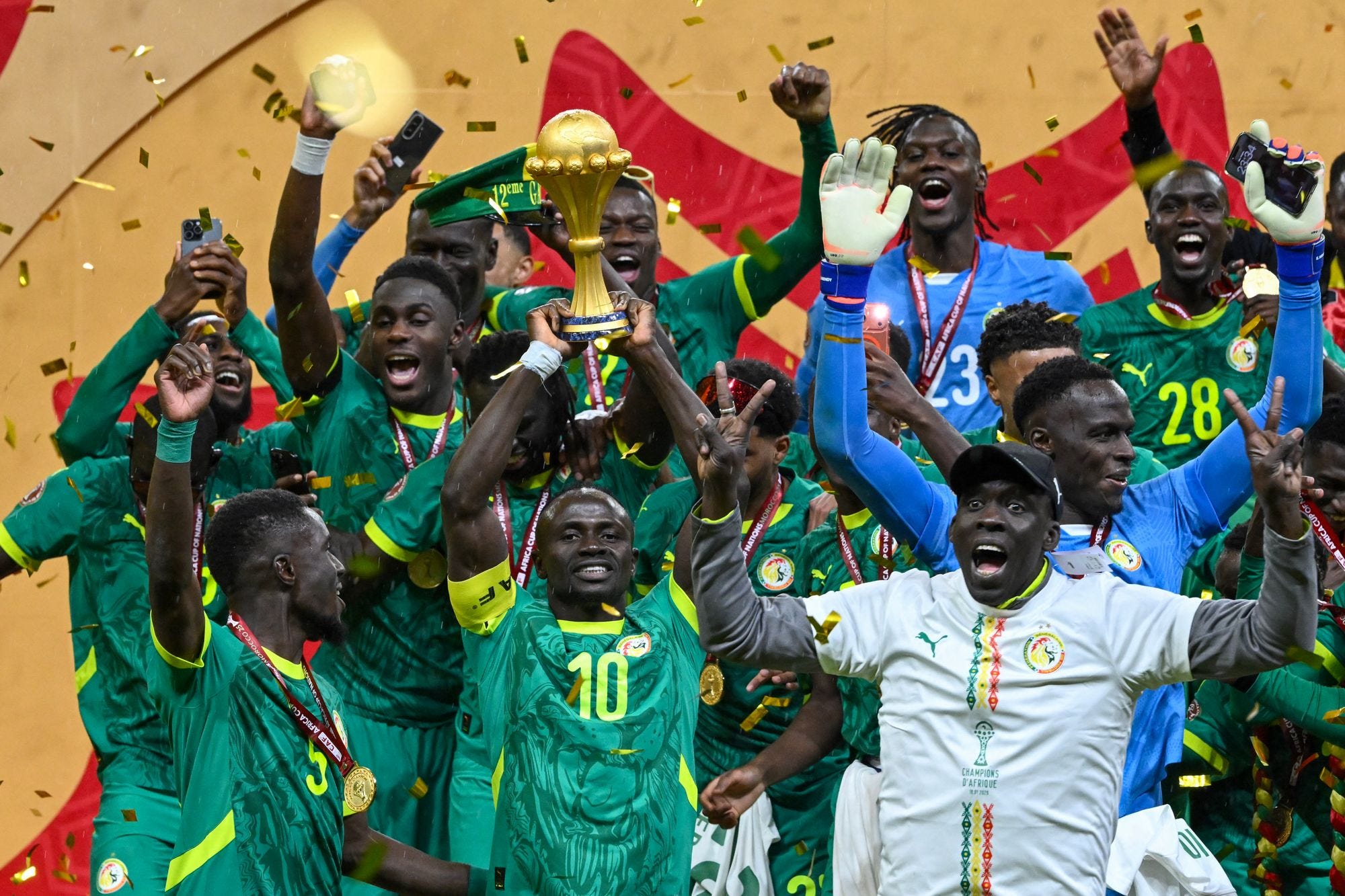
Powder keg reality of African football
African football is a powder keg because it matters too much to too many people with too little margin for error.
It exists in nations where football carries political meaning, economic promise, and emotional refuge. Victories are not celebrated lightly because defeats are not absorbed lightly either.
An AFCON final concentrates all of that into one evening. There is no release valve. There is no gentle landing. When something goes wrong, it does not ripple, it detonates.
That does not mean African football needs taming. It means it needs understanding. Attempts to sanitise it, to market it into something sleek and predictable, will always fail at the moment of greatest tension.
The lesson from this final is not that AFCON embarrassed itself. The lesson is that progress without trust is fragile. Organisation without belief is brittle. Calm imposed from above cannot survive emotional truth below.
The most telling images from the final were not the clashes or the stoppages. They were the moments when individuals tried to restore order through authority of character rather than instruction. Leadership mattered. Humanity mattered.
African football will move on, as it always does. The next AFCON will arrive with new heroes, new stories, and new promises. And the powder keg will still be there, waiting for the moment when everything aligns again.
That is not a flaw. It is the cost of caring at full volume.
AFCON finals are pressure cookers. History, suspicion, pride and desperation all collide at once. What happened last night wasn’t random, and it wasn’t unique. It was inevitable. My take on why African football lives on a fault line.
Wrote a piece on the intersection of faith and football, relative to the madness of the afcon final - feel free to check it out and subscribe if it resonates! https://substack.com/@asifmajid/note/p-185068426?utm_source=notes-share-action&r=733sgi